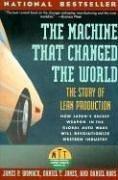
The Machine That Changed the World
MIT study that named lean production and made Toyota the benchmark.
Summary
This reports the results of the International Motor Vehicle Program at MIT, a five-year study that benchmarked assembly plants worldwide on productivity, quality, inventory and design time. It is the book that introduced the term lean production to a general audience.
The findings were stark. Japanese plants, principally Toyota's, assembled vehicles in roughly half the hours with roughly half the defects, held a fraction of the inventory, used a fraction of the space, and developed new models in substantially less time than American and European plants. The authors established that this was not explained by automation, by culture, by wage levels or by government support, and demonstrated it by measuring the NUMMI plant in California, where Toyota's system applied to an American workforce and a previously worst-in-class facility produced Toyota-level results.
The system they describe includes just-in-time inventory, the ability of any worker to stop the line, root cause problem solving, supplier partnerships based on target costing and shared improvement rather than annual bidding, and product development led by a heavyweight project manager with real authority. They argue lean production is a general system applicable beyond automobiles.
The study data is from the late 1980s and the productivity gaps have narrowed substantially since, partly because Western manufacturers adopted the methods. The book is also more confident about universal applicability than the subsequent record supports, since many lean implementations copied the visible tools without the supplier relationships, employment security or problem-solving culture that made them work.
Key takeaways 7
- Japanese assembly plants used roughly half the labour hours and produced roughly half the defects of American and European plants doing the same work.
- The productivity difference came from the production system rather than from automation, wage levels, culture or government support.
- The NUMMI plant demonstrated that the system produced the same results with an American workforce at a previously worst-in-class facility.
- Allowing any worker to stop the production line reduces total defects and total downtime, which contradicts the mass production assumption that the line must keep moving.
- Supplier relationships based on target costing and shared improvement produce lower costs than annual competitive bidding does.
- Product development led by a project manager with real authority over the functions cuts development time and cost substantially.
- Low inventory is not primarily a cost saving but a mechanism that exposes problems immediately, since there is no buffer to conceal them.
Who should read it
Operators in manufacturing or any process-driven business who want the benchmarking evidence behind lean production and the system's actual components.
Where it sits in the reference 5
Similar books 6
Chosen by shared topics, the entries that hold them, and the people who recommended both.