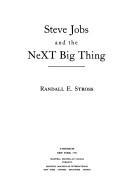
Steve Jobs & the Next Big Thing
Summary
Stross wrote this account of NeXT, the computer company Jobs founded after being forced out of Apple in 1985, covering the period through the early 1990s when the hardware business had failed.
The business material is a case study in a well-funded startup getting almost every decision wrong. NeXT built an expensive, technically sophisticated workstation for the higher education market, priced it beyond what universities would pay, built a fully automated factory in Fremont before there was demand to justify it, insisted on an optical drive that was too slow, refused to include a floppy drive, and shipped years late. Ross Perot invested twenty million dollars, Canon invested a hundred million, and the hardware business sold a small fraction of what any of the plans assumed before being abandoned in 1993.
Stross wrote before the ending. NeXTSTEP, the operating system that was the company's genuine achievement, was later acquired by Apple in 1996, became the foundation of Mac OS X and of iOS, and returned Jobs to Apple. The book therefore describes a failure whose asset turned out to be the most valuable thing Jobs built.
Stross had no cooperation from Jobs and the portrait is unsympathetic, treating the decisions as products of a founder whose confidence was not calibrated to his knowledge. Read as a study of how conviction and capital produce a well-executed wrong product, it is useful. Read as a judgement on Jobs it was made too early to stand.
Key takeaways 7
- NeXT built a technically sophisticated workstation priced beyond what its target market of universities would pay, which no amount of quality could correct.
- A fully automated factory was built before demand existed to justify it, converting a variable cost into a fixed one at exactly the wrong time.
- Abundant capital allowed the company to sustain wrong decisions for years, which delayed the feedback that would have corrected them.
- Product decisions driven by the founder's conviction rather than by customer evidence produced a machine that was admired and not bought.
- The company's genuine asset was the operating system rather than the hardware, and that was not evident until Apple acquired it years later.
- Shipping years late in a market with rapidly improving alternatives means the product competes against a different set of machines than it was designed against.
- The book was written before the outcome was known, and its judgement of Jobs did not survive what followed.
Who should read it
Founders and investors studying how capital and conviction sustain a wrong product, in an account written before the outcome was known.
About Randall E. Stross
Business historian and journalist, longtime professor at San Jose State University; wrote reported histories of Edison, Microsoft, Google and Y Combinator.
Each book reports one organisation from inside over a defined stretch of time: a year among Y Combinator's batch companies, Benchmark's partners through the dot-com IPO wave, Edison's Menlo Park laboratory. The result records how venture firms and inventors actually spent their days, which reads as evidence rather than retrospective summary.
Where it sits in the reference 2
Who recommended it 1
Similar books 6
Chosen by shared topics, the entries that hold them, and the people who recommended both.