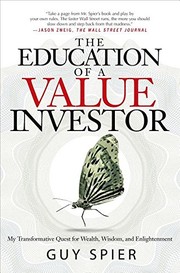
The Education of a Value Investor
Spier on the psychology and habits behind durable value investing.
Summary
Spier runs Aquamarine Fund and writes an account of his own transformation from a Harvard Business School graduate working at what he describes as a predatory brokerage firm to a value investor, framed around the influence of Buffett and Munger and around the 650,000 dollar charity lunch he and Mohnish Pabrai bought with Buffett in 2008.
The practical content concerns environment and process rather than analysis. Spier argues that an investor's decisions are shaped far more by their surroundings than by their intelligence, and he made specific changes accordingly: he moved from New York to Zurich to remove himself from the professional consensus, restructured his day so that reading occurs before any market interaction, removed the Bloomberg terminal, stopped speaking to management before analysing a company, and refused to check prices during the day.
His rules include avoiding conversations with people who want to sell you something, never buying anything a broker suggests, doing the analysis before speaking to anyone about it, and using a written checklist derived from his own past errors rather than from a general framework. The personal narrative about the brokerage firm and the reputational cost of having worked there is unusually candid.
The book contains no investment analysis and a reader looking for method will not find it. The fund's returns have been reasonable rather than exceptional, which readers should weigh against the advice. Its contribution is the argument that process and environment matter more than analytical capability, stated by someone who restructured his life around that conclusion.
Key takeaways 8
- An investor's environment shapes their decisions more than their analytical capability does, which makes environment design a legitimate part of the process.
- Physical distance from the professional consensus removes the pressure to hold the same positions as everyone else.
- Reading and analysis should occur before any exposure to prices or news, since the order determines what conclusions are reachable.
- A checklist should be built from your own past errors rather than adopted from a general framework, because the errors are personal.
- Speaking to company management before completing your own analysis contaminates the analysis, since executives are selected for persuasiveness.
- Anyone who wants to sell you something should be excluded from your information sources entirely.
- Working at a firm with a poor reputation imposes a lasting cost that is invisible at the time of joining.
- Spier's own returns have been reasonable rather than exceptional, which readers should weigh against the confidence of the advice.
Who should read it
Investors interested in process and environment design rather than in analytical technique, from someone candid about his own errors.
About Guy Spier
Founder and Manager, Aquamarine Fund
One well-regarded book about the making of a value investor plus a fully public letter archive; his influence rests on the memoir rather than an outsized record.
Where it sits in the reference 4
Who recommended it 3 · 3 direct
Similar books 6
Chosen by shared topics, the entries that hold them, and the people who recommended both.