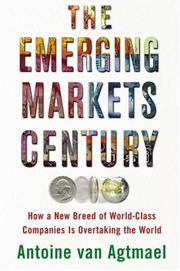
The Emerging Markets Century
By the man who coined the term 'emerging markets'; the case for world-class EM operating companies.
Summary
Van Agtmael coined the term emerging markets in 1981 while at the International Finance Corporation, replacing third world, and he spent his career running emerging market equity funds. This book argues that companies in these countries would produce world-class competitors rather than remaining low-cost suppliers.
The evidence is company-level. Van Agtmael profiles twenty-five firms he considered world class, including Samsung Electronics, TSMC, Infosys, Embraer, Cemex, Hyundai, Grupo Modelo and others, and argues that each competed on capability rather than on cost: process technology at TSMC, design and brand at Samsung, delivery model at Infosys, engineering at Embraer. He argues that Western investors and executives systematically underestimated these firms because they classified them by country rather than by capability.
His wider claims concern the shift in economic weight, the growth of middle-class consumption in these markets, and the argument that emerging market equities deserved a much larger allocation than institutional portfolios then held.
The company thesis has been substantially vindicated. Samsung and TSMC became global leaders, and emerging market firms compete at the frontier in several industries.
The investment thesis has not. Emerging market equity indices delivered poor returns over the fifteen years after publication, underperforming American equities substantially, because index composition included large weights in state-owned enterprises and commodity producers rather than in the firms van Agtmael profiled, and because valuation at the time of writing was already high. The book illustrates a general problem: identifying which companies will succeed does not by itself produce an investment return, because the index does not hold them and the price already reflects the expectation.
Key takeaways 7
- Emerging market firms began competing on capability rather than on cost, which Western analysts classified by country and therefore missed.
- TSMC's advantage came from process technology and the foundry model rather than from cheap labour.
- Samsung built brand and design capability that let it charge premium prices in markets its competitors had defined.
- Investors underestimate firms by classifying them by their country of origin rather than by their competitive position.
- Middle-class consumption growth in these markets creates demand that domestic firms are best positioned to serve.
- The term emerging markets was invented as a marketing device to make these countries investable to institutions.
- Correctly identifying which companies will succeed does not produce investment returns if the index does not hold them and prices already reflect it.
Who should read it
Investors in emerging markets who want the company-level case for capability-based competition, alongside the lesson that a correct thesis did not produce index returns.
Where it sits in the reference 3
Similar books 6
Chosen by shared topics, the entries that hold them, and the people who recommended both.