The Rise and Fall of Nations
Ten practical rules a country allocator can actually check; written by one who did the job.
Summary
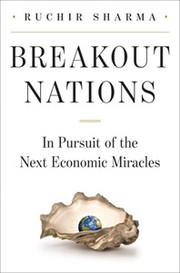
Sharma, then head of emerging markets at Morgan Stanley Investment Management, set out ten indicators he uses to judge whether a country's economic trajectory is about to improve or deteriorate over a five-to-ten-year horizon.
The rules are stated concretely. Population growth in the working-age cohort is the most powerful single input, and a country whose labour force is shrinking faces a headwind no policy overcomes. Political cycles matter: reformist leaders are most effective in their first term and after a crisis, and their effectiveness decays with time in office. Inequality is dangerous when billionaire wealth is high relative to output and is concentrated in rent-seeking sectors rather than in technology or manufacturing. State interference should be judged by whether government spending and state enterprise share are rising or falling rather than by their level. Geography matters through trade openness and through whether a country is positioned on trade routes. Investment as a share of output should be rising and directed to manufacturing rather than to construction. Inflation should be low relative to the country's own history. Currency should be cheap on real effective exchange rate and the current account should not be running a large deficit. Debt should be growing no faster than output, and the rule he emphasises most is that credit growing much faster than output for five years reliably precedes a crisis. Media coverage that is uniformly enthusiastic is a contrary signal.
The evidence is Sharma's own analysis across many country episodes rather than formal econometrics.
The rules are heuristics presented as such, and several conflict with each other in any actual case, which leaves the judgement where it started. The credit growth rule is the best supported in the academic literature. Sharma's record of country calls is not systematically presented, so the framework's predictive value cannot be assessed from the book.
Key takeaways 7
- Working-age population growth is the single most powerful determinant of a country's medium-term growth trajectory.
- Credit growing substantially faster than output for five years reliably precedes a financial crisis.
- Reformist political leaders are most effective in their first term and their effectiveness decays with time in office.
- Billionaire wealth concentrated in rent-seeking sectors signals a different problem from wealth concentrated in technology or manufacturing.
- Investment should be judged by whether it is rising and by whether it goes to manufacturing rather than to construction.
- A cheap real effective exchange rate combined with a manageable current account is a favourable starting condition.
- Uniformly enthusiastic international media coverage of a country is a contrary indicator.
Who should read it
Investors allocating across countries who want a working checklist of indicators, treating them as heuristics that frequently conflict.
Where it sits in the reference 3
Similar books 6
Chosen by shared topics, the entries that hold them, and the people who recommended both.