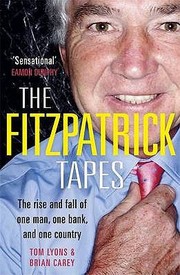
The FitzPatrick Tapes
Anglo Irish Bank's chairman in his own words, from recorded interviews.
Summary
Lyons and Carey, Irish journalists, built this account of Anglo Irish Bank's collapse around extended recorded interviews with Sean FitzPatrick, the bank's former chairman and chief executive, conducted after the collapse and before his criminal trials.
The interviews are the distinguishing feature. FitzPatrick describes his own reasoning, his relationships with developers, the bank's lending culture and the events of the final months in his own words, which no other account of the collapse has. He is defensive throughout and the authors set his version against the documentary record.
The substantive material covers the bank's business model: rapid growth in commercial property lending to a small number of Irish developers, funded increasingly in wholesale markets, with credit decisions made by a small group on relationship judgement. It covers the specific scandals: the directors' loans that FitzPatrick moved off the balance sheet at each year end by temporarily transferring them to another institution; the unwinding of Sean Quinn's contract-for-difference position through loans to ten clients who bought Anglo shares with the bank's own money; and the year-end deposit arrangement with Irish Life and Permanent that inflated the reported deposit base.
The political material covers the September 2008 night on which the Irish government guaranteed the liabilities of the banking system, and what Anglo's management told the government about the bank's condition.
The book was written before the criminal proceedings concluded and FitzPatrick was later acquitted in one trial. Readers should treat his account as self-serving and use the documented material. Carswell's Anglo Republic, also in this reference, is the more systematic account of the bank; this one supplies the protagonist's own version.
Key takeaways 7
- Directors' loans were moved temporarily to another institution at each year end so they would not appear in the published accounts.
- Anglo lent money to ten clients so they could buy Anglo shares, which transferred the bank's own share price risk into its loan book.
- Year-end deposits placed by another Irish institution inflated Anglo's reported deposit base without any economic substance.
- Credit decisions were made by a small group on relationship judgement rather than through a formal underwriting process.
- Wholesale funding rather than deposits financed the growth, which made survival dependent on continuous market access.
- The government guaranteed the banking system's liabilities based partly on what Anglo's management told it about the bank's condition.
- The protagonist's recorded account is defensive and self-serving, which is what makes it useful as evidence about how he understood his own conduct.
Who should read it
Readers who want the participant's own account of a banking collapse alongside the documentary record, particularly on governance failure.
Where it sits in the reference 3
Similar books 6
Chosen by shared topics, the entries that hold them, and the people who recommended both.