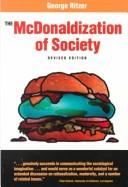
The McDonaldization of Society
The standardisation model that made the chain scalable.
Summary
George Ritzer, a sociologist, applies Max Weber's theory of rationalisation to contemporary society, arguing that the principles of the fast food restaurant have spread across institutions well beyond food service.
He identifies four dimensions. Efficiency, meaning the optimal method for getting from one point to another, which in practice means transferring work to the customer and standardising the path. Calculability, meaning the emphasis on quantity as a proxy for quality, so that portion size and speed of service substitute for judgements about what is good. Predictability, meaning that the product and experience are the same in every location and at every time. And control, principally through replacing human judgement with technology, so that the fryer beeps rather than the cook deciding.
His central concept, taken from Weber, is the irrationality of rationality: systems optimised on these four dimensions produce outcomes that are irrational from the standpoint of the people inside them, including dehumanisation of work, homogenisation of experience, and inefficiency of the kind produced by queues and automated telephone systems. He applies the analysis to education, health care, work, travel, retail and family life. The book is a teaching text, widely assigned and repeatedly revised. Critics argue that Ritzer understates consumer benefit, that the trend toward customisation runs against his thesis, and that the framework applies less well outside the American context. The four dimensions remain a usable diagnostic for any standardised service system.
Key takeaways 7
- Efficiency in rationalised systems generally means transferring work to the customer while calling it convenience.
- Calculability substitutes measurable quantity for unmeasurable quality, so systems optimise what they can count.
- Predictability requires eliminating the variation that skilled judgement introduces, which is why it requires deskilling.
- Control is achieved by replacing human judgement with technology that dictates the next action.
- Rationalised systems produce outcomes irrational from the standpoint of the people inside them, which Ritzer takes from Weber.
- The four dimensions are visible in education, health care, travel and retail as clearly as in food service.
- Critics argue that customisation and consumer benefit run against the thesis, and that it fits the American context better than others.
Who should read it
Operators designing standardised service systems who want a diagnostic for what standardisation costs, and readers of organisational sociology.
Where it sits in the reference 2
Similar books 6
Chosen by shared topics, the entries that hold them, and the people who recommended both.