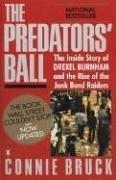
The Predators' Ball: The Junk Bond Raiders and the Man Who Staked Them
Written while Drexel was still ascendant.
Summary
Bruck documents Michael Milken and the high yield bond department at Drexel Burnham Lambert, which created the market for below-investment-grade debt and used it to finance leveraged buyouts and hostile takeovers through the 1980s. The title refers to Drexel's annual high yield conference in Beverly Hills.
The financial innovation was genuine. Milken's original insight, drawn from Braddock Hickman's research, was that a diversified portfolio of low-rated bonds produced better risk-adjusted returns than investment grade debt, because default rates were lower than the yield spread implied. He then extended this from buying fallen angels to underwriting new issues for companies that could not access investment grade markets, which gave capital to firms the established banks would not serve.
The part that became criminal was the network. Bruck documents how Milken assembled a group of buyers who would purchase whatever Drexel underwrote, how the highly confident letter allowed small acquirers to bid credibly for large companies, and how the relationships between issuers, buyers and Drexel produced obligations that were not disclosed. Milken pleaded guilty to securities violations in 1990 and Drexel went bankrupt.
Bruck wrote while the events were ongoing and Milken refused to cooperate, and his supporters dispute the account. She reports rather than analyses, so the question of whether the market's creation was net positive is left open. The book is the standard account of how the high yield market was built and of how a network of reciprocal obligations became the mechanism of both the business and the prosecution.
Key takeaways 8
- A diversified portfolio of low-rated bonds produced better risk-adjusted returns than investment grade debt, because default rates were lower than the spreads implied.
- Extending high yield from trading existing fallen angels to underwriting new issues gave capital to companies that established banks would not serve.
- Control of both the issuance and the buyer base allowed Drexel to guarantee placement, which is what made the highly confident letter credible.
- A letter stating confidence in raising financing allowed small acquirers to bid credibly for far larger companies, which changed the takeover market.
- The network of reciprocal obligations among issuers, buyers and the underwriter was the source of both the business advantage and the criminal exposure.
- Milken's compensation, reportedly exceeding half a billion dollars in a single year, reflected a position that no individual at a firm had previously held.
- The market survived the firm and the prosecution, which indicates that the financial innovation was separable from the conduct.
- Bruck wrote while events were ongoing without Milken's cooperation, and his supporters dispute the account.
Who should read it
Investors interested in how the high yield market was created and how a genuine financial innovation became inseparable from a network of undisclosed obligations.
About Connie Bruck
Staff writer at The New Yorker reporting on finance, media and politics.
The Predators' Ball is the primary account of Michael Milken's high-yield bond operation at Drexel Burnham Lambert and of the buyer network that financed the 1980s takeover wave, reported while the participants were still talking. Master of the Game follows Steve Ross from a funeral-home business to the Time Warner merger and sets out the compensation arrangements he negotiated at each step.
Where it sits in the reference 8
Who recommended it 1 · 1 direct
Similar books 6
Chosen by shared topics, the entries that hold them, and the people who recommended both.