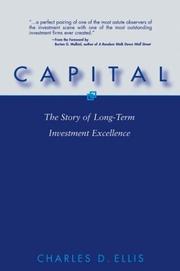
The Second Crash
Summary
Charles Ellis wrote this in 1973, at the end of the period in which American equity markets had been transformed by the growth of institutional investors, and he argued that the transformation had created risks that participants had not recognised.
His observation was that trading had shifted from individuals to institutions, that institutions were increasingly measured against each other over short periods, and that this produced concentrated positioning in a small number of large growth companies, the group later called the Nifty Fifty. When every institution holds the same securities and every institution is measured quarterly, any move to exit is simultaneous, and there is no natural buyer on the other side because the individuals who once provided liquidity have left the market. The first crash of his title was the ordinary market decline; the second was the liquidity failure that institutionalisation would produce.
The argument was substantially vindicated by the 1973 and 1974 decline, in which the concentrated growth positions fell far more than the market. Ellis went on to write Winning the Loser's Game and became a prominent advocate of indexing, and the reasoning is continuous: if institutions dominate trading, the average institution must underperform after costs, because institutions are the market. The book is short, dated in its market detail, and its central point about correlated institutional positioning and liquidity has recurred repeatedly since.
Key takeaways 7
- Institutional dominance of trading means the average institution cannot outperform the market after costs, because institutions are the market.
- Quarterly performance measurement produces correlated positioning, since managers hold what other managers hold.
- Concentrated institutional positioning removes the buyer on the other side when everyone attempts to exit simultaneously.
- Individual investors had supplied liquidity that institutions do not, so their departure changed the market's behaviour in stress.
- Ellis predicted that liquidity failure rather than valuation decline would be the market's characteristic new risk.
- The 1973 and 1974 decline in concentrated growth positions substantially confirmed the argument.
- Ellis's later advocacy of indexing follows directly from the arithmetic set out here.
Who should read it
Investors interested in the early identification of correlated institutional positioning as a liquidity risk, and in the origin of Ellis's indexing argument.
About Charles D. Ellis
Founder of Greenwich Associates; chair of the Yale endowment investment committee; author of 'The Loser's Game'
His 1975 essay 'The Loser's Game' is the primary source that reframed active management as a negative-sum contest, and the argument is still cited verbatim.
Where it sits in the reference 2
Similar books 6
Chosen by shared topics, the entries that hold them, and the people who recommended both.