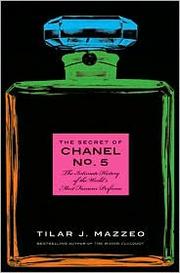
The Secret of Chanel No. 5
One product's history, including the Wertheimer deal that made the money.
Summary
Tilar Mazzeo, who has written on the history of luxury products, traces the creation and commercial history of Chanel No. 5 from its formulation in 1921 to the present.
The product history covers the perfumer Ernest Beaux, the use of aldehydes that gave the fragrance its distinctive abstract character rather than a recognisable floral identity, the jasmine and rose sourcing from Grasse, and the bottle and packaging design that broke with the ornate conventions of the period.
The commercial history is the more substantial content. Mazzeo covers the 1924 agreement under which Pierre Wertheimer's company Bourjois acquired the great majority of the perfume business, leaving Chanel with a small share of a product bearing her name; the decades of litigation and manoeuvre through which Chanel attempted to recover it, including her 1941 application under Vichy racial legislation to have the business transferred from its Jewish owners; the wartime production and the American soldiers who bought the perfume at the Paris boutique; and the postwar settlement in which the Wertheimers financed Chanel's return to fashion because the name's commercial value exceeded the cost. The book is popular history and Mazzeo's claims about specific formulation details have been questioned. The ownership history is well documented and is the part a business reader will want.
Key takeaways 7
- Chanel signed away the great majority of the perfume business in 1924 and spent decades attempting to recover it.
- The 1924 agreement left her with a small royalty on a product carrying her own name, which is the structural fact behind the entire history.
- Chanel applied under Vichy racial legislation in 1941 to have the perfume business transferred from its Jewish owners.
- The Wertheimers financed her postwar return to fashion because the commercial value of the name exceeded the cost of the settlement.
- The fragrance used aldehydes to produce an abstract character rather than a recognisable floral identity, which was a deliberate break with convention.
- American soldiers buying the perfume in Paris after the liberation built its position in the United States market.
- A brand name licensed away early can become the licensor's most valuable asset and the originator's permanent grievance.
Who should read it
Readers interested in luxury brand ownership structures and in what happens when a founder signs away rights to their own name.
Where it sits in the reference 2
Similar books 6
Chosen by shared topics, the entries that hold them, and the people who recommended both.