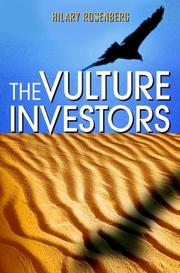
The Vulture Investors
How the first distressed funds worked the 1980s bankruptcies.
Summary
Rosenberg, a financial journalist, wrote the first popular account of the distressed debt investors who bought the bonds of failing companies during and after the leveraged buyout period. Her subjects include Michael Price, Martin Whitman, Wilbur Ross, Leon Black and others who built businesses buying claims on bankrupt estates.
The book works through several bankruptcies in detail, including the Texaco and Pennzoil litigation, Revco, Public Service Company of New Hampshire, and the aftermath of the Drexel collapse. What she shows is the process: buying claims at large discounts from original holders who cannot or will not hold defaulted paper, organising creditor committees, negotiating the plan of reorganisation, and converting debt into the equity of the reorganised company. She is clear that the returns come from the combination of forced selling by institutional holders whose mandates prohibit defaulted securities, the analytical work of valuing a claim through an uncertain legal process, and the ability to influence the outcome through committee position.
The reference has not independently verified the specific transaction figures reported. The book is from 1992 and the market has changed substantially since: distressed investing became an institutional asset class, the participants are far larger, and the tactics have evolved to include loan-to-own strategies and liability management exercises the book does not cover. Its value is as a readable introduction to the mechanics and to the personalities who established the field.
Key takeaways 7
- Distressed debt returns come substantially from forced selling by institutional holders whose mandates prohibit holding defaulted securities.
- The investor's analytical task is valuing a claim through an uncertain legal process, which is a different skill from valuing a business.
- Position on the creditors' committee gives influence over the plan of reorganisation, which means the investor can affect the outcome rather than only predict it.
- Converting purchased debt into the equity of a reorganised company is how the largest returns in the field are realised.
- Bankruptcy outcomes are negotiated among creditor classes, so understanding the other holders' constraints matters as much as understanding the assets.
- Litigation outcomes can dominate asset values in a distressed situation, as the Texaco and Pennzoil case demonstrated.
- The field was built by a small number of individuals in the 1980s and has since become an institutional asset class with different economics.
Who should read it
Investors new to distressed debt who want an accessible account of the mechanics and the origins of the field, with the market structure read as historical.
Where it sits in the reference 3
Who recommended it 1 · 1 direct
Similar books 6
Chosen by shared topics, the entries that hold them, and the people who recommended both.