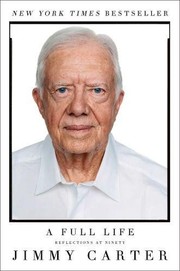
A Full Life
A former president looks back at ninety on Georgia, politics and humanitarian work.
Summary
Carter, the 39th president of the United States, looks back at ninety on his upbringing, his political career and his humanitarian work. He covers his childhood in rural Georgia, the US Naval Academy during the Second World War, and his service as a submarine officer during the Korean War, when he worked on advanced nuclear submarines. After his father James Earl Carter died, he returned home to run the family farm, and in 1962 he ran for the Georgia Senate with his wife Rosalynn beside him.
The memoir then follows his rise to the White House, the Camp David Accords with the Israeli prime minister Menachem Begin, and episodes from the Iran hostage crisis, including one involving the CIA. Carter says what he is proud of and what he would do differently, including his regret at losing re-election. The book runs to under 250 pages and moves quickly through the decades as a set of anecdotes. It was released on 7 July 2015.
Key takeaways 3
- Carter's path to the presidency ran through the Naval Academy, nuclear submarines, the family peanut farm and the Georgia Senate.
- He presents the Camp David Accords as a central achievement of his presidency.
- He names losing re-election as a regret and reflects on what he would change.
Who should read it
Readers who want a short first-person account of Carter's life, from rural Georgia to the presidency and after.
Who recommended it 2 · 2 direct
Similar books 6
Chosen by shared topics, the entries that hold them, and the people who recommended both.
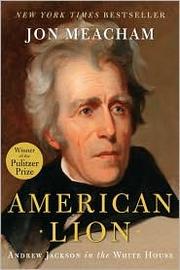
Andrew Jackson, his inner circle and how he made the modern presidency.
Recommended by: Mark Zuckerberg
How Truman and Senator Vandenberg built American foreign policy after the war.
Recommended by: Mohnish Pabrai
A biography of John F. Kennedy that asks what he was like as a man.
Recommended by: Patrick Arnold
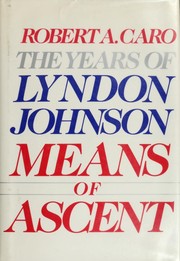
Lyndon Johnson's war service and his disputed Senate primary win by 87 votes.
Recommended by: Jim Collins, Patrick Collison
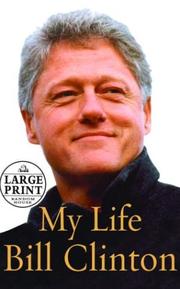
A president's years before public life, his years in politics and in the White House.
Recommended by: Mohnish Pabrai
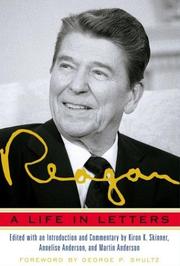
Over 1,000 letters from 1922 to 1994, grouped by themes such as friends and beliefs.
Recommended by: Mohnish Pabrai