Updates

  1. Person pages list letters, writing, profiles and links as sortable tables with filters, and show each person's companies as links; Fund letters show each letter's description in its own column.
  2. Experts show a checked job title and a short description of each person; 30 more people have photographs.
  3. Every company, fund, university and publication the experts work for has a page listing the people there.
  4. Fund letters show each letter's thesis and filter by it; 225 person pages list the essays, columns and newsletter issues the person wrote.
  5. Person pages list every essay and newsletter issue a person wrote, and their own books as a table in List view.
  6. Recommends shows the five largest kinds of book and the rest under More; browse pictures load sooner.
  7. Podcasts and talks link the original episode, filter by Audio and video or Press, and list each publisher once.
  8. Pages are wider, Recommends has List and Grid, and a filter clicked again turns off.
  9. Book cards sit in a ruled grid with Open Library and Goodreads links and each book's one-line note.
  10. Funds is now Investors; each investor's styles are buttons that filter the table.
  11. Podcasts and talks on a person's page filter by year and publisher and show as a list or a grid of pictures.
  12. Quotes show only people's own words: 472 summaries written by list sites are gone.
  13. Country pages open from Browse again, and every link on the shelf lands on a page.
  14. Subject and person pages show their sections as tabs, and each book appears once on a person's page.
  15. Book cards show the quote, who said it and the source; grids show five cards to a row.
  16. On a phone, a menu holds the sections, search, Updates, Feedback and dark mode.
  17. Feedback takes a screenshot of the page with no browser prompt, opens a screenshot full size when you click it, and clears itself once sent.
  18. Book cards are centred, search names the topic each book sits in, and any text cut short shows whole on hover.
  19. Search groups its results by kind: people, companies, geographies, subjects, topics, books, funds, fund letters and papers.
  20. The Books table lists who recommended each book by name, and the browser tab names the section you are in.
  21. Feedback can take a screenshot of the page, or one you paste or choose, and opens in the corner beside Updates.
  22. Each rail button reopens its section where you left it, and Browse, Table and People show on every book and subject page.
  23. Filters grey out choices that hold nothing instead of hiding them, and Books › People filters by authors or recommenders.
  24. Feedback takes a subject line and up to three screenshots.
  25. Biographies are grouped by the person they are about: 41 new pages, from Abraham Lincoln to Lee Kuan Yew.
  26. Sport splits into 23 sports, and Religion into one topic per faith.
  27. Book lists show as cards: the cover, one recommendation quote and every recommender by name.
  28. Seventeen subjects that had two or three pages under different names now have one page each.
  29. Every page lists its Experts as authors and recommenders, with a link to them on the Experts tab.
  30. Economics, Financial history, Financial panics and Accounting are subjects of their own, with one page per financial crisis.
  31. Book, person and subject pages open inside the app, so the tabs stay in view.
  32. 996 more book covers, and photographs or logos for 227 more people and companies.
  33. Books › Browse shows every subject as cards, and the rail holds Fund letters, Papers, Experts, Books and Funds.
  34. Every topic over 150 books splits into narrower topics, each with a page of its own.

Send feedback

What is it?
Screenshots, up to 3 (optional)
or paste one with Ctrl+V

We use your email only to reply to you.

A New Economic History of Argentina

A New Economic History of Argentina

Gerardo della Paolera, Alan M. Taylor
2003
T2 407 pages · about 6h 47m to read Open Librarygoodreads

The long-run data behind the country's century of relative decline.

Summary

The reference has not verified this book in detail; the summary states only what the title, author and subject establish.

Della Paolera and Taylor edited a collection of quantitative economic history chapters on Argentina, covering roughly 1810 to 2000, with contributions from economic historians working with reconstructed data series.

The reference has not verified the individual chapters. The organising question of the field, which the volume addresses, is why Argentina diverged. Around 1900 Argentina was among the richest countries in the world by income per head, comparable to Canada, Australia and much of Western Europe, and it grew rapidly on agricultural exports, foreign investment and mass immigration. Over the following century it fell steadily behind, and by 2000 its income per head was a fraction of the countries it once matched.

The explanations examined in the literature include the collapse of the open trading system after 1929 and Argentina's particular exposure to it; the shift to import substituting industrialisation and its consequences; the instability of monetary and fiscal institutions, with repeated currency collapses, defaults and inflations; the political conflict between agricultural export interests and urban industrial and labour interests; property rights and the absence of institutional durability across regime changes; and the recurring pattern of stabilisation programmes that succeeded briefly and then failed.

The volume covers monetary and banking history, trade and factor flows, public finance and the specific crisis episodes.

This is quantitative economic history written for specialists, and it assumes familiarity with the methods. Readers should consult the table of contents for the periods and questions relevant to them.

Key takeaways 6

  1. Argentina was among the world's richest countries by income per head around 1900 and fell behind steadily thereafter.
  2. Growth before 1914 rested on agricultural exports, foreign capital inflow and mass immigration under an open trading system.
  3. The collapse of open trade after 1929 hit Argentina harder than comparable countries because of its export concentration.
  4. Repeated currency collapses, defaults and inflations reflect the absence of durable monetary institutions rather than a series of accidents.
  5. Political conflict between agricultural export interests and urban industrial and labour interests shaped policy across regimes.
  6. Stabilisation programmes succeeded briefly and failed repeatedly, which indicates a problem with institutional commitment rather than with programme design.

Who should read it

Economic historians and analysts working on Argentina or on long-run divergence who need quantitative treatment by specialists.

Similar books 6

Chosen by shared topics, the entries that hold them, and the people who recommended both.
Paul Blustein · 2005

How Argentina and the IMF headed toward the 2001 default and devaluation.

Michael Mussa · 2002

The IMF's own former chief economist on the Fund's failures in Argentina.
Domingo Cavallo, Sonia Cavallo Runde · 2017

Insider: the economy minister who built convertibility defending the record.
Federico Sturzenegger, Jeromin Zettelmeyer · 2006

Sovereign debt restructurings from Russia in 1998 to Argentina, case by case.

Javier Martínez, Alvaro Díaz · 1996

How the productive structure and business class were remade after 1973.
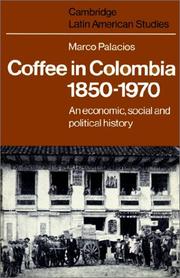
Marco Palacios · 1980

Economic history of the crop, the growers' federation and the export institutions built around it.

Where it sits in the reference 2

Geographies
Economics

Topics

EconomicsGeneral HistoryAsia, Africa, Latin America and the Middle East