Updates

  1. Person pages list letters, writing, profiles and links as sortable tables with filters, and show each person's companies as links; Fund letters show each letter's description in its own column.
  2. Experts show a checked job title and a short description of each person; 30 more people have photographs.
  3. Every company, fund, university and publication the experts work for has a page listing the people there.
  4. Fund letters show each letter's thesis and filter by it; 225 person pages list the essays, columns and newsletter issues the person wrote.
  5. Person pages list every essay and newsletter issue a person wrote, and their own books as a table in List view.
  6. Recommends shows the five largest kinds of book and the rest under More; browse pictures load sooner.
  7. Podcasts and talks link the original episode, filter by Audio and video or Press, and list each publisher once.
  8. Pages are wider, Recommends has List and Grid, and a filter clicked again turns off.
  9. Book cards sit in a ruled grid with Open Library and Goodreads links and each book's one-line note.
  10. Funds is now Investors; each investor's styles are buttons that filter the table.
  11. Podcasts and talks on a person's page filter by year and publisher and show as a list or a grid of pictures.
  12. Quotes show only people's own words: 472 summaries written by list sites are gone.
  13. Country pages open from Browse again, and every link on the shelf lands on a page.
  14. Subject and person pages show their sections as tabs, and each book appears once on a person's page.
  15. Book cards show the quote, who said it and the source; grids show five cards to a row.
  16. On a phone, a menu holds the sections, search, Updates, Feedback and dark mode.
  17. Feedback takes a screenshot of the page with no browser prompt, opens a screenshot full size when you click it, and clears itself once sent.
  18. Book cards are centred, search names the topic each book sits in, and any text cut short shows whole on hover.
  19. Search groups its results by kind: people, companies, geographies, subjects, topics, books, funds, fund letters and papers.
  20. The Books table lists who recommended each book by name, and the browser tab names the section you are in.
  21. Feedback can take a screenshot of the page, or one you paste or choose, and opens in the corner beside Updates.
  22. Each rail button reopens its section where you left it, and Browse, Table and People show on every book and subject page.
  23. Filters grey out choices that hold nothing instead of hiding them, and Books › People filters by authors or recommenders.
  24. Feedback takes a subject line and up to three screenshots.
  25. Biographies are grouped by the person they are about: 41 new pages, from Abraham Lincoln to Lee Kuan Yew.
  26. Sport splits into 23 sports, and Religion into one topic per faith.
  27. Book lists show as cards: the cover, one recommendation quote and every recommender by name.
  28. Seventeen subjects that had two or three pages under different names now have one page each.
  29. Every page lists its Experts as authors and recommenders, with a link to them on the Experts tab.
  30. Economics, Financial history, Financial panics and Accounting are subjects of their own, with one page per financial crisis.
  31. Book, person and subject pages open inside the app, so the tabs stay in view.
  32. 996 more book covers, and photographs or logos for 227 more people and companies.
  33. Books › Browse shows every subject as cards, and the rail holds Fund letters, Papers, Experts, Books and Funds.
  34. Every topic over 150 books splits into narrower topics, each with a page of its own.

Send feedback

What is it?
Screenshots, up to 3 (optional)
or paste one with Ctrl+V

We use your email only to reply to you.

American Kingpin

American Kingpin

Nick Bilton
2017
333 pages · about 5h 33m to read Open Librarygoodreads

Summary

Bilton reconstructs the creation and collapse of Silk Road, the anonymous online marketplace Ross Ulbricht built in 2011 using Tor and Bitcoin, which processed over a billion dollars in drug sales before the FBI arrested him in 2013. The technical and business material covers how anonymity was achieved through Tor hidden services and Bitcoin, how escrow and a reputation system solved the trust problem between anonymous buyers and sellers, how the commission structure worked, and how the site scaled while Ulbricht ran it largely alone.

The investigation is the more interesting half. Bilton follows agents at the FBI, DEA, IRS and Homeland Security working separately and often in competition, and shows that the case broke through ordinary investigative work rather than through any cryptographic weakness. Ulbricht was identified through an early forum post using an email address containing his name, made before he understood operational security. Two federal agents on the investigation stole Bitcoin from the site and were later prosecuted.

Bilton covers the murder-for-hire allegations, in which Ulbricht paid for killings that were staged by an agent and never occurred, which were used at sentencing without being charged.

The book is written as a thriller with reconstructed scenes and dialogue, which some readers object to. Ulbricht's supporters dispute Bilton's characterisation and his handling of the murder allegations. Ulbricht received a double life sentence without parole and was pardoned in 2025. The account of how anonymity failed through ordinary human error rather than through technology is the durable lesson.

Key takeaways 8

  1. Anonymity technology protected the marketplace while ordinary operational errors by its operator identified him.
  2. Ulbricht was located through a forum post made before the site launched, which used an email address containing his own name.
  3. An escrow system combined with seller reputation solved the trust problem between anonymous parties who could not enforce any contract.
  4. The marketplace scaled to over a billion dollars in transactions while being administered largely by one person.
  5. Federal agencies investigated in competition rather than in coordination, which delayed the case and produced conflicting operations.
  6. Two federal agents assigned to the investigation stole Bitcoin from the site and were prosecuted, which shows the exposure created by unaccountable access.
  7. Cryptographic anonymity fails at the boundary where the system touches ordinary identity, including payments, communications and past behaviour.
  8. Murder-for-hire allegations were used at sentencing without being charged or tested at trial, which remains the most disputed element of the case.

Who should read it

Readers interested in the practical limits of cryptographic anonymity and in how a marketplace solved trust between parties with no recourse.

Who recommended it 6 · 1 direct

Chris Dixonreported
Jeff Jordanreported

Similar books 6

Chosen by shared topics, the entries that hold them, and the people who recommended both.
Liam Vaughan · 2020

A trader in his parents' London house, and his link to the 2010 flash crash.
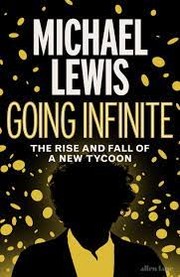
Michael Lewis · 2023

Sam Bankman-Fried's rise through Jane Street, Alameda and FTX to its collapse.

Recommended by: Andrew Wilkinson

Andrew Kirtzman · 2009

Fast first draft, published months after the arrest.
Where it sits in the reference 1

Financial history

Topics

Technology and ComputingBiography and MemoirCrypto and financial technology