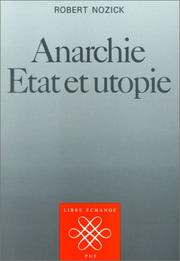
Anarchy, State, and Utopia
The case for a minimal state limited to protection, and against anything larger.
Summary
Nozick argues for a minimal state, "limited to the narrow functions of protection against force, theft, fraud, enforcement of contracts, and so on", and against any more extensive state. Writing against John Rawls's A Theory of Justice (1971) and in debate with Michael Walzer, he develops the night-watchman state, the entitlement theory of property and the Lockean proviso on acquisition.
The 1974 book is a work of analytic philosophy in the libertarian tradition. It reinterprets and combines the Lockean state of nature, Kant's view of persons as ends in themselves, and research in game theory and welfare economics, and it uses thought experiments that became famous: the utility monster, the experience machine, the Wilt Chamberlain argument and demoktesis, which tracks a progressive loss of self-ownership under democratic government. Philosophers, political theorists and American libertarians acclaimed it, though it remains controversial.
Key takeaways 4
- Nozick holds that only a minimal state, limited to protection against force, theft and fraud and the enforcement of contracts, can be justified.
- The book is the main libertarian reply to John Rawls's A Theory of Justice.
- Its thought experiments, the utility monster, the experience machine and the Wilt Chamberlain argument, became standard in political philosophy.
- Nozick combines Locke's state of nature and Kant's view of persons with game theory and welfare economics.
Who should read it
Readers of political philosophy who want the main libertarian answer to Rawls and the thought experiments still taught from it.
Who recommended it 2
Similar books 6
Chosen by shared topics, the entries that hold them, and the people who recommended both.
Why liberal democracy may be the end state of political change, and how people react.
Recommended by: Marc Andreessen, Peter Thiel
Why lasting political conflicts trace to two opposed visions of human nature.
“Two of Thomas Sowell's many brilliant books on how our current politics and culture came to be: A Conflict of Visions: Ideological Origins of Political Struggles by Thomas Sowell” — Marc Andreessen
Source: What I've Been Up To Lately — Marc Andreessen, a16z.com
Recommended by: Marc Andreessen
The principles of justice that free people would accept in a position of equality.
Recommended by: Ann Miura-Ko, Peter Thiel
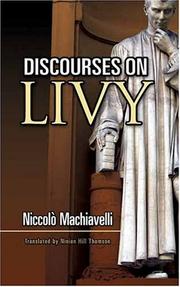
Politics drawn from the history of the Roman Republic in 142 discourses.
Recommended by: Peter Thiel
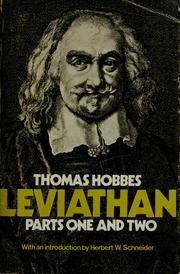
An early argument for the social contract and strong, absolute government.
Recommended by: Li Lu, Peter Thiel
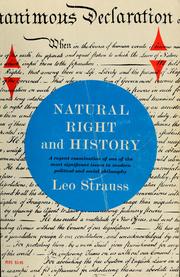
Argues that ethics and politics rest on a real distinction between right and wrong.
Recommended by: Peter Thiel