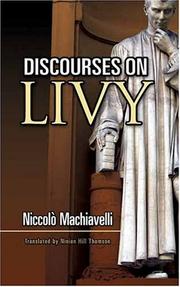
Discourses on Livy
Politics drawn from the history of the Roman Republic in 142 discourses.
Summary
The reference has not verified this book in detail; the summary states only what the title, author and subject establish.
Machiavelli uses the history of the Roman Republic, as told in the first ten books of Livy's Ab urbe condita, to set out his views on politics in 142 discourses. Their subjects include political violence, military strategy, corruption and reform, conspiracy, public opinion, and the role of religion in public life. The work is both complementary and critical towards the politics, culture and religion of Renaissance Italy.
It was published after Machiavelli's death, in 1531, a year before The Prince, and is among his most debated works. Some critics read it as a counterpoint or refutation of The Prince and a founding document of modern liberal republicanism. Others read the two as complementary, arguing that leaders of republics must act as The Prince prescribes if they are to keep their states free. The source read in this pass is the Standard Ebooks description, which does not give the arguments of individual discourses.
Key takeaways 4
- Roman republican history serves as a source of lessons for governing free states.
- Republics must deal with violence, conspiracy and corruption to survive.
- Religion plays a political role in holding a republic together.
- Whether the Discourses contradict or complete The Prince remains disputed.
Who should read it
Readers of political philosophy who want Machiavelli's republican thought, the counterweight to The Prince.
Who recommended it 1
Similar books 6
Chosen by shared topics, the entries that hold them, and the people who recommended both.
The principles of justice that free people would accept in a position of equality.
Recommended by: Ann Miura-Ko, Peter Thiel
The case for a minimal state limited to protection, and against anything larger.
Recommended by: Marc Andreessen, Peter Thiel
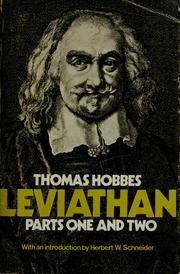
An early argument for the social contract and strong, absolute government.
Recommended by: Li Lu, Peter Thiel
Argues that ethics and politics rest on a real distinction between right and wrong.
Recommended by: Peter Thiel
A reading of Xenophon's Hiero, where a tyrant and a poet weigh the uses of tyranny.
Recommended by: Peter Thiel
The political defined by the distinction between friend and enemy.
“One of his books was The Concept of the Political - what defines politics. It's some of this division of friends and enemies that somehow is really foundational, and you shouldn't get sidetracked with all these other things.” — Peter Thiel
Source: Peter Thiel on Political Theology (Ep. 210) | Conversations with Tyler
Recommended by: Peter Thiel