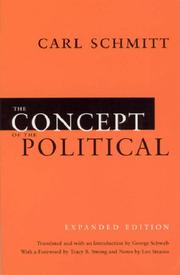
The Concept of the Political
The political defined by the distinction between friend and enemy.
Summary
Carl Schmitt, the German jurist and political philosopher, published The Concept of the Political in 1932, in the last days of Weimar Germany; he joined the Nazi Party the following year. It is his most influential work. For Schmitt the political reduces to the existential distinction between friend and enemy, which arises from human diversity: identities, beliefs and ways of life can in principle come into conflict.
Schmitt attacks the liberal and utopian idea that politics can be drained of conflict, arguing that conflict is built into existence and into human nature. He draws on the pessimism of traditional Catholic theology, with original sin at its centre, and calls political radicals deluded and pseudo-messianic. He also argues that liberalism, based on individual rights, cannot justify asking a person to sacrifice his life for the state. This edition includes George Schwab's introduction on Schmitt's path through the period that led to Hitler's one-party state, Leo Strauss's analysis of the thesis and a foreword by Tracy B. Strong placing it in contemporary context.
Key takeaways 4
- Schmitt defines the political by the distinction between friend and enemy.
- He argues that conflict cannot be removed from politics.
- Liberalism, he claims, cannot justify sacrifice for the state.
- His later membership of the Nazi Party shapes how the work is read.
Who should read it
Students of political theory and of the critique of liberalism.
Who recommended it 1 · 1 direct
“One of his books was The Concept of the Political - what defines politics. It's some of this division of friends and enemies that somehow is really foundational, and you shouldn't get sidetracked with all these other things.”
Similar books 6
Chosen by shared topics, the entries that hold them, and the people who recommended both.
The principles of justice that free people would accept in a position of equality.
Recommended by: Ann Miura-Ko, Peter Thiel
The case for a minimal state limited to protection, and against anything larger.
Recommended by: Marc Andreessen, Peter Thiel
Politics drawn from the history of the Roman Republic in 142 discourses.
Recommended by: Peter Thiel
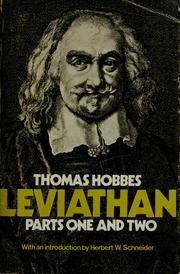
An early argument for the social contract and strong, absolute government.
Recommended by: Li Lu, Peter Thiel
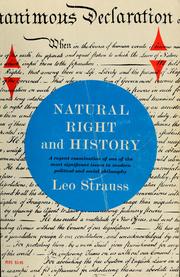
Argues that ethics and politics rest on a real distinction between right and wrong.
Recommended by: Peter Thiel
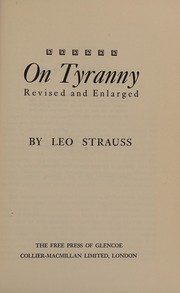
A reading of Xenophon's Hiero, where a tyrant and a poet weigh the uses of tyranny.
Recommended by: Peter Thiel