
Anything You Want
Lessons from building CD Baby from a side project to an $85 million business.
Summary
Sivers built CD Baby, a service selling independent musicians' CDs online, from a side project into a company with eighty-five employees and around eighty-five million dollars of sales, and sold it in 2008 for twenty-two million dollars, which he transferred to a charitable trust for music education. The book is roughly forty short chapters and takes about an hour to read.
The recurring argument is that a business exists to serve a purpose the founder chose, that growth and revenue are means rather than ends, and that most business advice assumes objectives the founder never actually selected.
His specific positions include that a business should start by solving your own problem for yourself, since that is how CD Baby began; that customer service is the entire business and should be treated as such; that a company should be designed around what the founder wants their daily life to be; that a plan should not be announced before it is built, since revenue is the only proof of demand; that saying no to most opportunities is what allows the remaining ones to work; that a founder should make themselves unnecessary to daily operations deliberately; and that ideas without execution are worth nothing, which he states as a multiplier where execution ranges from one to a thousand.
He is candid about his own errors, including a period when he stopped enjoying the business, delegated badly and made decisions that cost the company money. The book contains no evidence and generalises from one company in a market that no longer exists. The advice suits founders of small profitable businesses and contradicts what venture-funded companies require. Its brevity is deliberate and it makes its case without padding.
Key takeaways 8
- A business exists to serve a purpose the founder chose, and revenue and growth are means rather than objectives.
- The best businesses start by solving the founder's own problem, since the need is verified before anything is built.
- Customer service is the entire business for most companies rather than a department within it.
- A company should be designed around the daily life the founder wants, since that is the thing the founder will actually experience.
- Announcing a plan before building it produces no information, and revenue is the only evidence that demand exists.
- Saying no to most opportunities is what makes the remaining ones possible, and a founder who accepts everything achieves nothing.
- A founder should make themselves unnecessary to daily operations deliberately, which is what makes the business an asset rather than a job.
- Ideas are worth nothing without execution, and the multiplier between a good idea badly executed and well executed is very large.
Who should read it
Founders of small businesses who want a short honest account of building and selling one without outside capital.
Who recommended it 5 · 2 direct
“Anything You Want. I recommend people check it out.”
Similar books 6
Chosen by shared topics, the entries that hold them, and the people who recommended both.
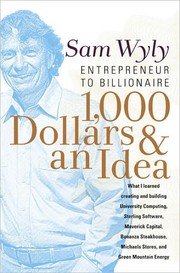
An entrepreneur's memoir of building and selling one company after another.
Recommended by: Mohnish Pabrai
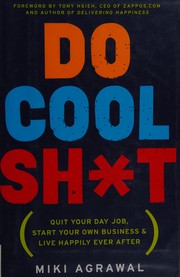
A manifesto for finding one's own path to entrepreneurship through bold action.
Recommended by: Jim Kwik, Tony Hsieh
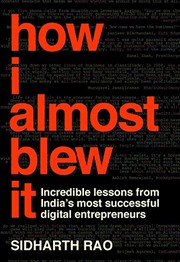
Indian entrepreneurs on the moments their companies nearly failed.
Recommended by: Girish Mathrubootham
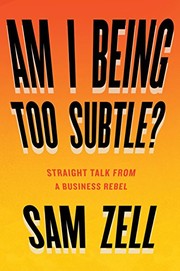
From student apartments in Ann Arbor to selling Equity Office to Blackstone in 2007.
“Sam Zell’s autobiography Am I Being Too Subtle? was awesome.” — Brad Feld
Source: Book: Am I Being Too Subtle? — Feld Thoughts
Recommended by: Brad Feld, Codie Sanchez
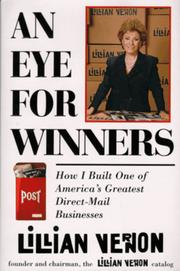
How Lillian Vernon built a mail-order business from her kitchen table.
Recommended by: Mohnish Pabrai