Updates

  1. Person pages list letters, writing, profiles and links as sortable tables with filters, and show each person's companies as links; Fund letters show each letter's description in its own column.
  2. Experts show a checked job title and a short description of each person; 30 more people have photographs.
  3. Every company, fund, university and publication the experts work for has a page listing the people there.
  4. Fund letters show each letter's thesis and filter by it; 225 person pages list the essays, columns and newsletter issues the person wrote.
  5. Person pages list every essay and newsletter issue a person wrote, and their own books as a table in List view.
  6. Recommends shows the five largest kinds of book and the rest under More; browse pictures load sooner.
  7. Podcasts and talks link the original episode, filter by Audio and video or Press, and list each publisher once.
  8. Pages are wider, Recommends has List and Grid, and a filter clicked again turns off.
  9. Book cards sit in a ruled grid with Open Library and Goodreads links and each book's one-line note.
  10. Funds is now Investors; each investor's styles are buttons that filter the table.
  11. Podcasts and talks on a person's page filter by year and publisher and show as a list or a grid of pictures.
  12. Quotes show only people's own words: 472 summaries written by list sites are gone.
  13. Country pages open from Browse again, and every link on the shelf lands on a page.
  14. Subject and person pages show their sections as tabs, and each book appears once on a person's page.
  15. Book cards show the quote, who said it and the source; grids show five cards to a row.
  16. On a phone, a menu holds the sections, search, Updates, Feedback and dark mode.
  17. Feedback takes a screenshot of the page with no browser prompt, opens a screenshot full size when you click it, and clears itself once sent.
  18. Book cards are centred, search names the topic each book sits in, and any text cut short shows whole on hover.
  19. Search groups its results by kind: people, companies, geographies, subjects, topics, books, funds, fund letters and papers.
  20. The Books table lists who recommended each book by name, and the browser tab names the section you are in.
  21. Feedback can take a screenshot of the page, or one you paste or choose, and opens in the corner beside Updates.
  22. Each rail button reopens its section where you left it, and Browse, Table and People show on every book and subject page.
  23. Filters grey out choices that hold nothing instead of hiding them, and Books › People filters by authors or recommenders.
  24. Feedback takes a subject line and up to three screenshots.
  25. Biographies are grouped by the person they are about: 41 new pages, from Abraham Lincoln to Lee Kuan Yew.
  26. Sport splits into 23 sports, and Religion into one topic per faith.
  27. Book lists show as cards: the cover, one recommendation quote and every recommender by name.
  28. Seventeen subjects that had two or three pages under different names now have one page each.
  29. Every page lists its Experts as authors and recommenders, with a link to them on the Experts tab.
  30. Economics, Financial history, Financial panics and Accounting are subjects of their own, with one page per financial crisis.
  31. Book, person and subject pages open inside the app, so the tabs stay in view.
  32. 996 more book covers, and photographs or logos for 227 more people and companies.
  33. Books › Browse shows every subject as cards, and the rail holds Fund letters, Papers, Experts, Books and Funds.
  34. Every topic over 150 books splits into narrower topics, each with a page of its own.

Send feedback

What is it?
Screenshots, up to 3 (optional)
or paste one with Ctrl+V

We use your email only to reply to you.

Architect of Prosperity

Architect of Prosperity

Neil Monnery
2017
T2 320 pages · about 5h 20m to read Open Librarygoodreads

Cowperthwaite and the fiscal rules that produced the low-tax model.

Summary

Monnery, a former consultant, wrote a biography of John Cowperthwaite, the colonial civil servant who served as Hong Kong's Financial Secretary from 1961 to 1971 and who presided over the policy framework during the territory's fastest growth.

The policy positions Cowperthwaite held are the substance. He refused industrial policy, declining to subsidise or protect any sector on the argument that officials could not identify which industries would succeed and would prevent capital moving to those that did. He kept public spending and taxation very low, resisting pressure to expand both, and insisted on balanced budgets and reserves. He maintained free trade and free capital movement. He refused to intervene in the currency or in prices. He declined to collect detailed national income statistics, on the stated ground that having them would create pressure for officials to act on them.

Monnery presents the outcome: Hong Kong's income per head rose from a fraction of Britain's to exceeding it within a few decades, with the growth coming from manufacturing, trade and later financial services, driven by refugee entrepreneurs and by capital fleeing the mainland.

Monnery is careful to note what Cowperthwaite did do: substantial public housing, which by the 1970s housed a large share of the population, education spending, and the maintenance of a competent and non-corrupt civil service. He also notes the qualifications: government owned all the land, which supplied revenue in place of taxation, and the territory's position as an entrepot for China was specific and not replicable.

The book is admiring and the framing is the free-market case. It gives less weight to the housing policy's scale, to the inequality that persisted, and to the argument that Hong Kong's growth reflected its unique position rather than its policy framework. Readers should treat it as advocacy supported by an interesting record.

Key takeaways 7

  1. Cowperthwaite refused industrial policy on the argument that officials cannot identify which industries will succeed.
  2. He declined to collect detailed national income statistics because their existence would create pressure to act on them.
  3. Government land ownership supplied revenue that permitted very low taxation, which is a condition other jurisdictions cannot replicate.
  4. Large-scale public housing was provided alongside the low-intervention framework rather than in contradiction to it.
  5. Balanced budgets and accumulated reserves were treated as constraints rather than as targets to be adjusted.
  6. Free trade and free capital movement were maintained without exception, including during periods of external pressure.
  7. Hong Kong's position as an entrepot for China was specific to its circumstances, which limits what the policy record demonstrates.

Who should read it

Readers interested in the practical case against industrial policy and in how one official maintained a policy framework against sustained pressure.

Similar books 6

Chosen by shared topics, the entries that hold them, and the people who recommended both.

Montek Singh Ahluwalia · 2019

Insider memoir by the architect of much of the reform programme.

Alice Poon · 2005

The clearest short account of how the property oligopoly extracts rent.
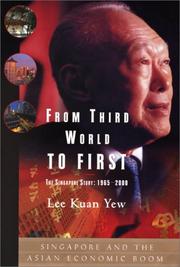
Lee Kuan Yew · 2000

How Singapore's leaders chose policies, from courting multinationals onward.

Graham Allison, Robert D. Blackwill, Ali Wyne · 2013

Lee Kuan Yew's views on China, the United States and world strategy, by topic.

Recommended by: Mohnish Pabrai, Shane Parrish

John Greenwood · 2007

The currency board explained by the economist who designed the peg.

David Lewis · 2011

The one readable overview of how the state, NGOs and business interlock.

Where it sits in the reference 2

Geographies
Economics

Topics

Biography and MemoirEconomicsPolitics and GovernmentPolitical Leaders and PolicymakersAsia and the PacificFinance ministers and central bankers