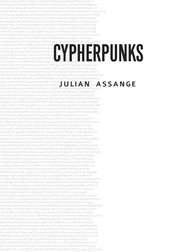
Cypherpunks: Freedom and the Future of the Internet
Four activists argue that the internet has become a tool of the police state.
Summary
Julian Assange and three Internet activists, Jacob Appelbaum, Andy Müller-Maguhn and Jérémie Zimmermann, argue that the Internet has become a tool of the police state and that the world is heading, without meaning to, towards a form of totalitarianism. In the foreword Assange calls the Internet, "our greatest tool for emancipation", the most dangerous facilitator of totalitarianism ever seen. Their answer is cryptography: strong encryption lets individuals and organisations protect themselves from state surveillance.
The book is mostly a transcript of the eighth episode of World Tomorrow, Assange's interview programme, a two-part conversation among the four. OR Books published it in 2012. Assange says in the introduction that it is "not a manifesto" but a warning. He told The Guardian that a well-designed algorithm can encrypt something quickly while decrypting it would take billions of years, so cryptography is the building block of independence for organisations on the Internet, as armies are for states.
Key takeaways 3
- Mass surveillance turns the Internet from a means of emancipation into an instrument of state control.
- Strong cryptography gives individuals a defence that states cannot cheaply break.
- Encryption plays for online organisations the role that armies play for states: the basis of their independence.
Who should read it
Readers who want the cypherpunk case against state surveillance in the words of WikiLeaks's founder and his collaborators.
Who recommended it 1 · 1 direct
Similar books 6
Chosen by shared topics, the entries that hold them, and the people who recommended both.
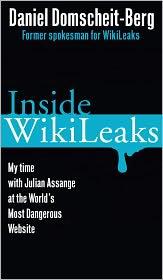
A former spokesman on WikiLeaks' workings, money and tensions with Julian Assange.
Recommended by: Patrick Collison
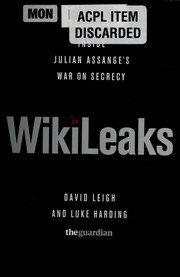
The history of WikiLeaks and its release of secret government documents.
Recommended by: Patrick Collison
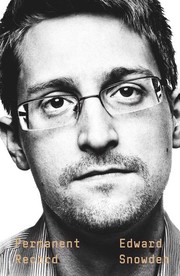
How a man helped build America's mass surveillance system, then exposed it.
Recommended by: Alexis Ohanian, Kara Swisher
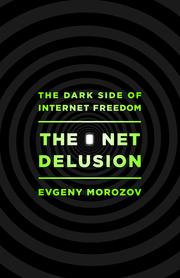
How the internet can entrench dictators and threaten dissidents.
Recommended by: Ryan Holiday
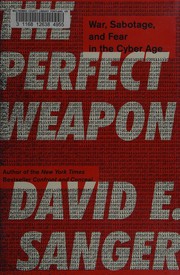
A decade of escalating cyber sabotage among Russia, China, Iran and the US.
Recommended by: Bill Gates
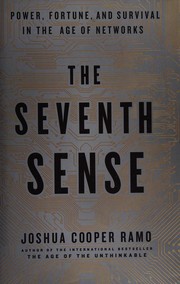
Why connection has become the main source of power, and what leaders miss.
Recommended by: Reid Hoffman