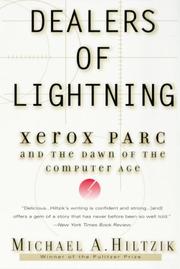
Dealers of Lightning
How Xerox PARC built the first personal computer and laser printer, and lost them.
The definitive history of PARC and the dawn of the computer age.
Summary
Hiltzik tells how Xerox gathered a group of engineers and computer researchers at its Palo Alto Research Center in the 1970s and 1980s, and how that group built the first personal computer, the laser printer and the graphical interface, among the main precursors of modern computing. Xerox's management rejected most of these inventions as products. Instead of giving up, several of the inventors carried their ideas out of PARC and built them into companies elsewhere.
The account rests on extensive interviews with the scientists, engineers, administrators and executives involved. It runs chronologically from PARC's founding through its years as a centre of invention, and it gives as much space to corporate politics as to technology. Hiltzik's question is why Xerox could never grasp or exploit the work its own laboratory delivered and how its managers' decisions almost kept the laboratory's work from succeeding at all.
Key takeaways 4
- Xerox PARC invented the personal computer, the laser printer and the graphical interface within a few years.
- A research laboratory's inventions create value for its parent only if the parent's management can see and sell them.
- Inventors whose company rejects their work often carry it out and build businesses on it elsewhere.
- Corporate machinations can come close to preventing a laboratory's work from succeeding, even when the work itself is first-rate.
Who should read it
Executives running research groups and investors in technology who want the standard case of a company that invented the future and failed to profit from it.
Who recommended it 3 · 2 direct
Similar books 6
Chosen by shared topics, the entries that hold them, and the people who recommended both.
A history of the second decade of Xerox's Palo Alto Research Center.
Recommended by: Patrick Collison
How Licklider and Pentagon-funded engineers built the network behind the internet.
Recommended by: Patrick Collison, Chris Dixon and 1 other
How Chester Carlson invented xerography and how it became the Xerox 914 copier.
How Xerox invented the personal computer and then ignored it.
The idea of personal computing and the people who pursued it, up to PARC.
J.C.R. Licklider's vision of computers that serve individuals, and how it came true.
Recommended by: Patrick Collison, Marc Andreessen