Updates

  1. Person pages list letters, writing, profiles and links as sortable tables with filters, and show each person's companies as links; Fund letters show each letter's description in its own column.
  2. Experts show a checked job title and a short description of each person; 30 more people have photographs.
  3. Every company, fund, university and publication the experts work for has a page listing the people there.
  4. Fund letters show each letter's thesis and filter by it; 225 person pages list the essays, columns and newsletter issues the person wrote.
  5. Person pages list every essay and newsletter issue a person wrote, and their own books as a table in List view.
  6. Recommends shows the five largest kinds of book and the rest under More; browse pictures load sooner.
  7. Podcasts and talks link the original episode, filter by Audio and video or Press, and list each publisher once.
  8. Pages are wider, Recommends has List and Grid, and a filter clicked again turns off.
  9. Book cards sit in a ruled grid with Open Library and Goodreads links and each book's one-line note.
  10. Funds is now Investors; each investor's styles are buttons that filter the table.
  11. Podcasts and talks on a person's page filter by year and publisher and show as a list or a grid of pictures.
  12. Quotes show only people's own words: 472 summaries written by list sites are gone.
  13. Country pages open from Browse again, and every link on the shelf lands on a page.
  14. Subject and person pages show their sections as tabs, and each book appears once on a person's page.
  15. Book cards show the quote, who said it and the source; grids show five cards to a row.
  16. On a phone, a menu holds the sections, search, Updates, Feedback and dark mode.
  17. Feedback takes a screenshot of the page with no browser prompt, opens a screenshot full size when you click it, and clears itself once sent.
  18. Book cards are centred, search names the topic each book sits in, and any text cut short shows whole on hover.
  19. Search groups its results by kind: people, companies, geographies, subjects, topics, books, funds, fund letters and papers.
  20. The Books table lists who recommended each book by name, and the browser tab names the section you are in.
  21. Feedback can take a screenshot of the page, or one you paste or choose, and opens in the corner beside Updates.
  22. Each rail button reopens its section where you left it, and Browse, Table and People show on every book and subject page.
  23. Filters grey out choices that hold nothing instead of hiding them, and Books › People filters by authors or recommenders.
  24. Feedback takes a subject line and up to three screenshots.
  25. Biographies are grouped by the person they are about: 41 new pages, from Abraham Lincoln to Lee Kuan Yew.
  26. Sport splits into 23 sports, and Religion into one topic per faith.
  27. Book lists show as cards: the cover, one recommendation quote and every recommender by name.
  28. Seventeen subjects that had two or three pages under different names now have one page each.
  29. Every page lists its Experts as authors and recommenders, with a link to them on the Experts tab.
  30. Economics, Financial history, Financial panics and Accounting are subjects of their own, with one page per financial crisis.
  31. Book, person and subject pages open inside the app, so the tabs stay in view.
  32. 996 more book covers, and photographs or logos for 227 more people and companies.
  33. Books › Browse shows every subject as cards, and the rail holds Fund letters, Papers, Experts, Books and Funds.
  34. Every topic over 150 books splits into narrower topics, each with a page of its own.

Send feedback

What is it?
Screenshots, up to 3 (optional)
or paste one with Ctrl+V

We use your email only to reply to you.

Dear Shareholder

Dear Shareholder

Martin J. Whitman
2006
T3 288 pages · about 4h 48m to read Open Librarygoodreads

Wiley catalogue record only; no evidence the book actually reached print.

Summary

The reference has not verified this book in detail; the summary states only what the title, author and subject establish.

This volume collects the shareholder letters Martin Whitman wrote for Third Avenue Value Fund, presenting his views on markets, securities analysis and specific positions as they were written over a period of years.

The reference has not verified the full contents or the exact date range covered. What the collection establishes is access to Whitman's thinking in its original form: his safe and cheap criteria, meaning strong financial position and a large discount to readily ascertainable net asset value; his insistence that balance sheet analysis matters more than earnings analysis; his distinction between the outside passive minority investor and the control investor; and his treatment of resource conversion events, meaning takeovers, restructurings, liquidations and reorganisations, as normal outcomes rather than exceptions.

Shareholder letters as a form give the reasoning at the time rather than in retrospect, including positions that did not work, which is their main value over a book stating a method.

Whitman's own books, particularly Value Investing: A Balanced Approach and The Aggressive Conservative Investor, set out the framework more systematically. This collection suits readers who already know the framework and want to see it applied to particular securities and market conditions. Whitman's approach performed poorly in the years after the financial crisis, when asset-heavy companies trading below net asset value stayed there.

Key takeaways 6

  1. Whitman's purchase criteria required strong financial position and a substantial discount to net asset value that could be readily determined.
  2. Balance sheet analysis and asset values guided his decisions more than projected earnings did.
  3. Corporate events including takeovers, recapitalisations and reorganisations are normal ways value is realised rather than exceptions.
  4. An investor must know whether they are analysing as a passive minority holder or as a potential control party.
  5. Shareholder letters written contemporaneously preserve the reasoning behind positions that later failed, which retrospective accounts remove.
  6. Whitman argued that most academic finance models the passive minority investor and therefore misses how value is actually realised.

Who should read it

Investors already familiar with Whitman's framework who want to see it applied to specific securities in the conditions of the time.

About Martin J. Whitman

Founder and Chairman, Third Avenue Management; portfolio manager, Third Avenue Value Fund 1990-2012

Four books plus three decades of unusually didactic shareholder letters built out safe-and-cheap and distress investing as a distinct branch of the value tradition.

Third Avenue Management

Similar books 6

Chosen by shared topics, the entries that hold them, and the people who recommended both.
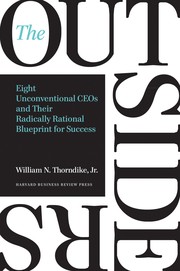
William N. Thorndike Jr. · 2012

Eight CEOs who beat the market by allocating capital, not by running operations.

“…books I've recommended, highlighted to death, or forced on friends.” — Andrew Wilkinson

Source: Andrew Wilkinson's Bookshelf, neverenough.com

Recommended by: Andrew Wilkinson, Dan Loeb, Francois Rochon and 12 others

Christopher Mayer · 2015

Subtitled Stocks That Return 100-to-1 and How to Find Them; expanded edition 2025.

Recommended by: Mohnish Pabrai
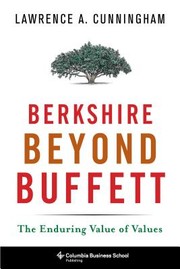
Lawrence A. Cunningham · 2014

Berkshire as an operating company: its subsidiaries' culture and whether it lasts.

Recommended by: Mohnish Pabrai
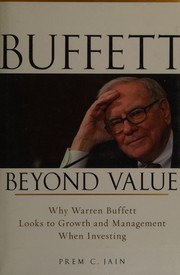
Philip Fisher · 1958

Buy a few outstanding growth companies, research them by scuttlebutt, and hold.

“The late Philip Fisher wrote several books that are very good [including] Common Stocks and Uncommon Profits.” — Arnold Van Den Berg

Source: Van Den Berg on Fisher's books

Recommended by: Arnold Van Den Berg, Bill Stewart and 10 others

Martin J. Whitman, Fernando Diz · 2009

Subtitled Principles and Technique.

Recommended by: Mohnish Pabrai

Where it sits in the reference 3

Investors
Investment styles
Investment styles

Topics

Investing