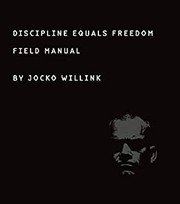
Discipline Equals Freedom
A former Navy SEAL's mental and physical practices for reaching goals.
Summary
The reference has not verified this book in detail; the summary states only what the title, author and subject establish.
Willink, a former Navy SEAL, sets out the mental and physical practices that shaped his career and that he uses to reach his goals. His argument is in the title: there is no shortcut or hack to becoming stronger, smarter, faster, healthier and free, only hard work, late nights, early mornings, practice, repetition, study and discipline. He calls discipline the root of all good qualities and the driver of daily execution, the thing that defeats the excuses of "not today" and "I will do it tomorrow".
The book appeared in 2017. The only source read in this pass is the publisher's description and the opening pages it quotes, so the specific routines are not recorded here.
Key takeaways 4
- There is no shortcut: improvement comes only from sustained hard work.
- Discipline in daily execution, not motivation, is what produces results.
- Excuses for delay are endless, and discipline is the practice of refusing them.
- Freedom, in Willink's sense, is the result of discipline rather than its opposite.
Who should read it
Readers who want a blunt, military-style case for self-discipline in work, training and daily life.
Who recommended it 1
Similar books 6
Chosen by shared topics, the entries that hold them, and the people who recommended both.
How one day of healthy choices, drawn from studies and old practices, builds a life.
Recommended by: Nat Eliason
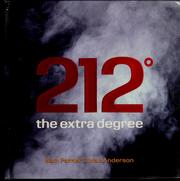
Why one extra degree of effort makes the difference.
Recommended by: Tony Hsieh
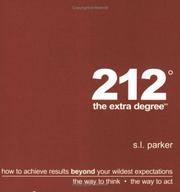
Why one extra degree of effort, in business and life, separates good from great.
Recommended by: Tony Hsieh
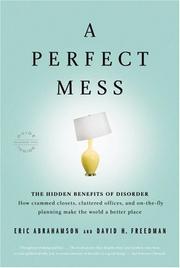
The case that disorder is often more efficient than imposed order.
“This idea comes from a wonderful book called A Perfect Mess” — Marc Andreessen
Source: The Pmarca Guide to Personal Productivity
Recommended by: Marc Andreessen
Build habits by making them obvious, attractive, easy and satisfying.
“Last October, my friend James Clear published the breakout hit book, Atomic Habits. As we both discovered in the months that followed, we have many readers in common.” — Cal Newport
Source: The Atomic Minimalist: My Conversation with James Clear
Recommended by: Ali Abdaal, Balaji S. Srinivasan and 22 others
Distraction comes from escaping discomfort, not technology, and how to manage it.
“A specific guide for how to avoid distraction in your life. 95% of it was how-to stuff I didn't find useful because I'm already doing all of it. If you're not, this book is much more useful to you. It had two interesting points for me: about dissatisfaction driving motivation, and filling your daily calendar with a template of how you want to spend your day.” — Derek Sivers
Source: Derek Sivers book notes (primary, rated list) · Rating: 2/10
Recommended by: Ana Fabrega, Balaji S. Srinivasan and 6 others