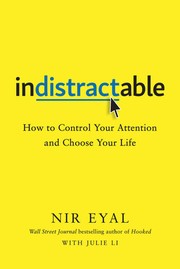
Indistractable
Distraction comes from escaping discomfort, not technology, and how to manage it.
Summary
Eyal, who wrote Hooked about building habit-forming products, addresses the user side and argues that distraction is not caused by technology but by the desire to escape discomfort, and that technology is the most available means rather than the cause.
His central distinction is between traction, meaning action that moves you toward your intentions, and distraction, meaning action that moves you away. Both are pulled by triggers, and he argues that the opposite of distraction is traction rather than focus.
The four-part method addresses internal triggers, external triggers, time and pacts. Mastering internal triggers requires identifying the discomfort that precedes the distraction, since Eyal argues all behaviour is motivated by escape from discomfort, and using techniques including a ten-minute delay, reimagining the task and reimagining the trigger itself. Making time for traction requires timeboxing the calendar according to values rather than working from a task list, and treating an unplanned activity as a distraction even if it is productive. Hacking back external triggers requires interrogating each notification, meeting and interruption to determine whether it serves you. Preventing distraction with pacts covers effort pacts, price pacts where money is at stake, and identity pacts, in which a person adopts a self-description that makes the behaviour inconsistent.
Eyal rejects the addiction framing of technology use and argues that it removes agency, which some readers and researchers dispute strongly given the deliberate design decisions he himself documented in his previous book. The research is secondhand and some claims rest on contested evidence. Timeboxing according to values and the definition of distraction relative to intention are the practical contributions.
Key takeaways 8
- Distraction is caused by the desire to escape internal discomfort rather than by technology, which is the most available means rather than the cause.
- The opposite of distraction is traction, meaning action toward your intentions, so the question is always what the action moves you toward.
- Anything unplanned is a distraction even if it is productive, because it displaced whatever the plan allocated the time to.
- Time should be allocated by timeboxing a calendar according to values rather than by working through a task list.
- Identifying the discomfort that precedes a distraction, and waiting ten minutes before acting on the urge, interrupts the automatic response.
- Every notification, meeting and interruption should be interrogated to establish whether it serves the recipient or only the sender.
- Pacts that impose an effort, a monetary cost or an identity commitment prevent distraction at the point where willpower fails.
- Eyal rejects the addiction framing of technology use, a position disputed by researchers and in tension with the design methods he documented previously.
Who should read it
Operators who have already removed the obvious distractions and still cannot concentrate, wanting the internal trigger analysis and timeboxing method.
Who recommended it 8 · 4 direct
“A specific guide for how to avoid distraction in your life. 95% of it was how-to stuff I didn't find useful because I'm already doing all of it. If you're not, this book is much more useful to you. It had two interesting points for me: about dissatisfaction driving motivation, and filling your daily calendar with a template of how you want to spend your day.”
Similar books 6
Chosen by shared topics, the entries that hold them, and the people who recommended both.
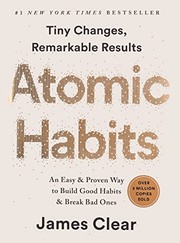
Build habits by making them obvious, attractive, easy and satisfying.
“Last October, my friend James Clear published the breakout hit book, Atomic Habits. As we both discovered in the months that followed, we have many readers in common.” — Cal Newport
Source: The Atomic Minimalist: My Conversation with James Clear
Recommended by: Ali Abdaal, Balaji S. Srinivasan and 22 others
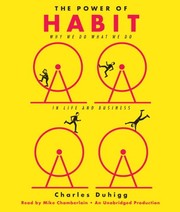
The habit loop of cue, routine and reward, and how to change a habit by its routine.
“Great dissection and analysis of what creates habits, and the power of changing just one of three steps in the habit loop.” — Derek Sivers
Source: Derek Sivers book notes (primary, rated list) · Rating: 7/10
Recommended by: Derek Sivers, Mohnish Pabrai, Nat Eliason and 7 others
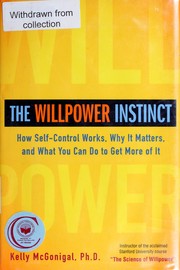
Self-control as a physical capacity, and how to build it, from a Stanford course.
“Amazing book about willpower from Stanford psychology professor who teaches just this. Killer first point: The best way to improve your self-control is to see how and why you lose control. This is a better book than the other book on Willpower here on my list, because it's more actionable, better written, better presented. Really amazing (IF you act on it!)” — Derek Sivers
Source: Derek Sivers book notes (primary, rated list) · Rating: 9/10
Recommended by: Derek Sivers, Mohnish Pabrai, Nat Eliason and 3 others
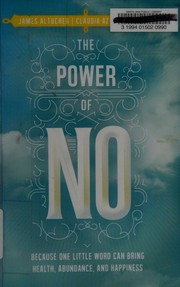
Answers to readers' questions on saying no to what harms a life.
“Quite scattered book, but inside the mess was a nice reminder of the importance of saying no to anything that doesn't serve you well.” — Derek Sivers
Source: Derek Sivers book notes (primary, rated list) · Rating: 3/10
Recommended by: Derek Sivers, Nat Eliason
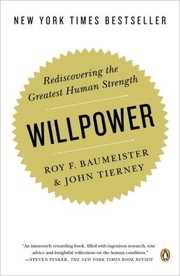
What research says about willpower, and practical ways to increase it.
“You have a finite amount of willpower that becomes depleted as you use it. Two traits that consistently predict “positive outcomes” in life: intelligence and self-control. Most major problems, personal and social, center on failure of self-control. When people were asked about their failings, a lack of self-control was at the top of the list. So let's talk about self-control....” — Derek Sivers
Source: Derek Sivers book notes (primary, rated list) · Rating: 8/10
Recommended by: Derek Sivers, Michael Mauboussin and 1 other
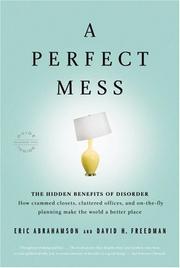
The case that disorder is often more efficient than imposed order.
“This idea comes from a wonderful book called A Perfect Mess” — Marc Andreessen
Source: The Pmarca Guide to Personal Productivity
Recommended by: Marc Andreessen