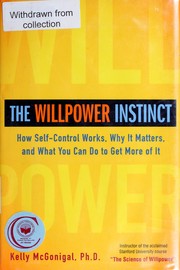
The Willpower Instinct: How Self-Control Works, Why It Matters, and What You Can Do to Get More of It
Self-control as a physical capacity, and how to build it, from a Stanford course.
Summary
McGonigal, a health psychologist who taught a course at Stanford on the science of willpower, presents self-control as a physiological capacity rather than a moral quality, and gives a set of practices for improving it. Her framework divides willpower into three components: I will power, meaning doing what you have decided to do; I won't power, meaning resisting what you have decided against; and I want power, meaning holding the longer-term objective in view while making the immediate choice.
The physiological material covers heart rate variability as a measurable indicator of self-control capacity, the effects of sleep, stress, exercise and blood glucose, and the argument that the stress response and the self-control response are physiologically opposed, so that anything raising stress reduces self-control.
The behavioural material covers moral licensing, in which a virtuous act produces permission to do the opposite afterwards; the effect of anticipated future virtue, where planning to do better tomorrow permits indulgence today; the finding that self-criticism after a failure increases the likelihood of repeating it while self-compassion reduces it; the difference between wanting and liking in the dopamine system; and ironic rebound, in which suppressing a thought increases its frequency.
Her practical recommendations include five-minute meditation, slow breathing, exercise, sleep, and surfing the urge rather than resisting it. The book relies substantially on ego depletion, particularly the glucose findings, which have largely failed to replicate and which represent a significant portion of the argument. The moral licensing and self-compassion findings have held up better. The physiological framing and the specific practices remain useful independent of the depletion model.
Key takeaways 8
- Self-control is a physiological capacity affected by sleep, stress, exercise and nutrition rather than a moral quality a person either has or lacks.
- The stress response and the self-control response are physiologically opposed, so anything that raises stress reduces the capacity for self-control.
- A virtuous act produces permission to do the opposite afterwards, which is why progress toward a goal frequently precedes abandoning it.
- Planning to do better tomorrow reliably produces worse behaviour today, because the intention delivers the psychological reward in advance.
- Self-criticism after a failure increases the likelihood of repeating it, while self-compassion reduces it, which reverses the standard assumption.
- Dopamine produces wanting rather than liking, which is why anticipated rewards are pursued more intensely than obtained ones are enjoyed.
- Suppressing a thought increases its frequency, so resisting a craving directly makes it stronger while observing it without acting does not.
- Substantial parts of the argument rest on ego depletion research that has largely failed to replicate.
Who should read it
Readers who want practical self-control techniques grounded in physiology, with the depletion-based sections treated as unreliable.
Who recommended it 6 · 4 direct
“Amazing book about willpower from Stanford psychology professor who teaches just this. Killer first point: The best way to improve your self-control is to see how and why you lose control. This is a better book than the other book on Willpower here on my list, because it's more actionable, better written, better presented. Really amazing (IF you act on it!)”
Similar books 6
Chosen by shared topics, the entries that hold them, and the people who recommended both.
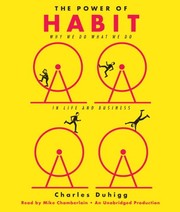
The habit loop of cue, routine and reward, and how to change a habit by its routine.
“Great dissection and analysis of what creates habits, and the power of changing just one of three steps in the habit loop.” — Derek Sivers
Source: Derek Sivers book notes (primary, rated list) · Rating: 7/10
Recommended by: Derek Sivers, Mohnish Pabrai, Nat Eliason and 7 others
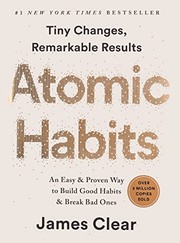
Build habits by making them obvious, attractive, easy and satisfying.
“Last October, my friend James Clear published the breakout hit book, Atomic Habits. As we both discovered in the months that followed, we have many readers in common.” — Cal Newport
Source: The Atomic Minimalist: My Conversation with James Clear
Recommended by: Ali Abdaal, Balaji S. Srinivasan and 22 others
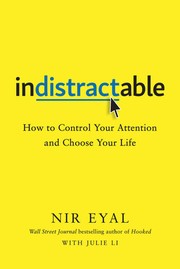
Distraction comes from escaping discomfort, not technology, and how to manage it.
“A specific guide for how to avoid distraction in your life. 95% of it was how-to stuff I didn't find useful because I'm already doing all of it. If you're not, this book is much more useful to you. It had two interesting points for me: about dissatisfaction driving motivation, and filling your daily calendar with a template of how you want to spend your day.” — Derek Sivers
Source: Derek Sivers book notes (primary, rated list) · Rating: 2/10
Recommended by: Ana Fabrega, Balaji S. Srinivasan and 6 others

Answers to readers' questions on saying no to what harms a life.
“Quite scattered book, but inside the mess was a nice reminder of the importance of saying no to anything that doesn't serve you well.” — Derek Sivers
Source: Derek Sivers book notes (primary, rated list) · Rating: 3/10
Recommended by: Derek Sivers, Nat Eliason
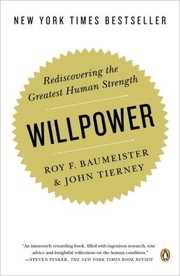
What research says about willpower, and practical ways to increase it.
“You have a finite amount of willpower that becomes depleted as you use it. Two traits that consistently predict “positive outcomes” in life: intelligence and self-control. Most major problems, personal and social, center on failure of self-control. When people were asked about their failings, a lack of self-control was at the top of the list. So let's talk about self-control....” — Derek Sivers
Source: Derek Sivers book notes (primary, rated list) · Rating: 8/10
Recommended by: Derek Sivers, Michael Mauboussin and 1 other
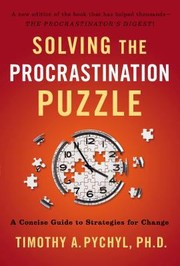
Why people put things off, with research-based strategies to stop.
Recommended by: Mohnish Pabrai