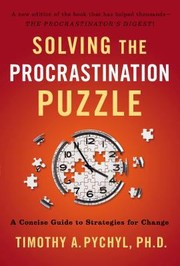
Solving the Procrastination Puzzle: A Concise Guide to Strategies for Change
Why people put things off, with research-based strategies to stop.
Summary
The reference has not verified this book in detail; the summary states only what the title, author and subject establish.
Timothy Pychyl, a psychologist who studies procrastination, asks why people sabotage their own intentions and how they can stop. He bases the book on current psychological research and pairs each finding with strategies for change, aimed at breaking the ideas and habits that lead people to delay.
The book is short and organised as a sequence of brief chapters, each combining research with practical tips and some humour. Pychyl writes for entrepreneurs, parents, students and anyone who wants to stop delaying and act on their goals. It was published in 2013 as a concise companion to his research on the subject. The available description is a short publisher blurb, so this summary covers only the book's aims and structure, not its specific findings or strategies.
Key takeaways 4
- Procrastination is a failure to act on one's own intentions, and research can explain why it happens.
- Changing the thoughts that justify delay is part of changing the habit.
- Small, concrete strategies help people start tasks they keep putting off.
- Students, parents and entrepreneurs face the same underlying problem.
Who should read it
Anyone who keeps postponing important work and wants research-based strategies in a short book.
Who recommended it 1 · 1 direct
Similar books 6
Chosen by shared topics, the entries that hold them, and the people who recommended both.
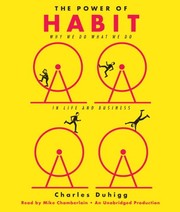
The habit loop of cue, routine and reward, and how to change a habit by its routine.
“Great dissection and analysis of what creates habits, and the power of changing just one of three steps in the habit loop.” — Derek Sivers
Source: Derek Sivers book notes (primary, rated list) · Rating: 7/10
Recommended by: Derek Sivers, Mohnish Pabrai, Nat Eliason and 7 others
Self-control as a physical capacity, and how to build it, from a Stanford course.
“Amazing book about willpower from Stanford psychology professor who teaches just this. Killer first point: The best way to improve your self-control is to see how and why you lose control. This is a better book than the other book on Willpower here on my list, because it's more actionable, better written, better presented. Really amazing (IF you act on it!)” — Derek Sivers
Source: Derek Sivers book notes (primary, rated list) · Rating: 9/10
Recommended by: Derek Sivers, Mohnish Pabrai, Nat Eliason and 3 others
What research says about willpower, and practical ways to increase it.
“You have a finite amount of willpower that becomes depleted as you use it. Two traits that consistently predict “positive outcomes” in life: intelligence and self-control. Most major problems, personal and social, center on failure of self-control. When people were asked about their failings, a lack of self-control was at the top of the list. So let's talk about self-control....” — Derek Sivers
Source: Derek Sivers book notes (primary, rated list) · Rating: 8/10
Recommended by: Derek Sivers, Michael Mauboussin and 1 other
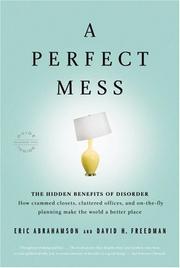
The case that disorder is often more efficient than imposed order.
“This idea comes from a wonderful book called A Perfect Mess” — Marc Andreessen
Source: The Pmarca Guide to Personal Productivity
Recommended by: Marc Andreessen
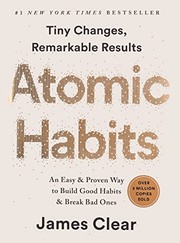
Build habits by making them obvious, attractive, easy and satisfying.
“Last October, my friend James Clear published the breakout hit book, Atomic Habits. As we both discovered in the months that followed, we have many readers in common.” — Cal Newport
Source: The Atomic Minimalist: My Conversation with James Clear
Recommended by: Ali Abdaal, Balaji S. Srinivasan and 22 others
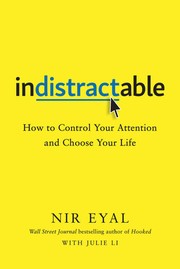
Distraction comes from escaping discomfort, not technology, and how to manage it.
“A specific guide for how to avoid distraction in your life. 95% of it was how-to stuff I didn't find useful because I'm already doing all of it. If you're not, this book is much more useful to you. It had two interesting points for me: about dissatisfaction driving motivation, and filling your daily calendar with a template of how you want to spend your day.” — Derek Sivers
Source: Derek Sivers book notes (primary, rated list) · Rating: 2/10
Recommended by: Ana Fabrega, Balaji S. Srinivasan and 6 others