
Updates

  1. Person pages list letters, writing, profiles and links as sortable tables with filters, and show each person's companies as links; Fund letters show each letter's description in its own column.
  2. Experts show a checked job title and a short description of each person; 30 more people have photographs.
  3. Every company, fund, university and publication the experts work for has a page listing the people there.
  4. Fund letters show each letter's thesis and filter by it; 225 person pages list the essays, columns and newsletter issues the person wrote.
  5. Person pages list every essay and newsletter issue a person wrote, and their own books as a table in List view.
  6. Recommends shows the five largest kinds of book and the rest under More; browse pictures load sooner.
  7. Podcasts and talks link the original episode, filter by Audio and video or Press, and list each publisher once.
  8. Pages are wider, Recommends has List and Grid, and a filter clicked again turns off.
  9. Book cards sit in a ruled grid with Open Library and Goodreads links and each book's one-line note.
  10. Funds is now Investors; each investor's styles are buttons that filter the table.
  11. Podcasts and talks on a person's page filter by year and publisher and show as a list or a grid of pictures.
  12. Quotes show only people's own words: 472 summaries written by list sites are gone.
  13. Country pages open from Browse again, and every link on the shelf lands on a page.
  14. Subject and person pages show their sections as tabs, and each book appears once on a person's page.
  15. Book cards show the quote, who said it and the source; grids show five cards to a row.
  16. On a phone, a menu holds the sections, search, Updates, Feedback and dark mode.
  17. Feedback takes a screenshot of the page with no browser prompt, opens a screenshot full size when you click it, and clears itself once sent.
  18. Book cards are centred, search names the topic each book sits in, and any text cut short shows whole on hover.
  19. Search groups its results by kind: people, companies, geographies, subjects, topics, books, funds, fund letters and papers.
  20. The Books table lists who recommended each book by name, and the browser tab names the section you are in.
  21. Feedback can take a screenshot of the page, or one you paste or choose, and opens in the corner beside Updates.
  22. Each rail button reopens its section where you left it, and Browse, Table and People show on every book and subject page.
  23. Filters grey out choices that hold nothing instead of hiding them, and Books › People filters by authors or recommenders.
  24. Feedback takes a subject line and up to three screenshots.
  25. Biographies are grouped by the person they are about: 41 new pages, from Abraham Lincoln to Lee Kuan Yew.
  26. Sport splits into 23 sports, and Religion into one topic per faith.
  27. Book lists show as cards: the cover, one recommendation quote and every recommender by name.
  28. Seventeen subjects that had two or three pages under different names now have one page each.
  29. Every page lists its Experts as authors and recommenders, with a link to them on the Experts tab.
  30. Economics, Financial history, Financial panics and Accounting are subjects of their own, with one page per financial crisis.
  31. Book, person and subject pages open inside the app, so the tabs stay in view.
  32. 996 more book covers, and photographs or logos for 227 more people and companies.
  33. Books › Browse shows every subject as cards, and the rail holds Fund letters, Papers, Experts, Books and Funds.
  34. Every topic over 150 books splits into narrower topics, each with a page of its own.

Send feedback

What is it?
Screenshots, up to 3 (optional)
or paste one with Ctrl+V

We use your email only to reply to you.

Economics of Shortage

Economics of Shortage

János Kornai
1979
T2 870 pages · about 14h 30m to read Open Librarygoodreads

The soft budget constraint: why state firms never run out of money and never allocate well.

Summary

Kornai published this two-volume work in 1979 and it established the analytical framework for understanding socialist economies from inside.

His method was to build a positive theory of how the system actually behaved rather than to compare it against an ideal. The observation he starts from is that shortage in these economies is not occasional but permanent and general, appearing across consumer goods, intermediate inputs, capital goods and labour simultaneously, which no explanation based on planning errors can account for.

His explanation is the soft budget constraint, the concept this book introduced. A state firm that loses money is not permitted to fail. It receives subsidies, additional credit, tax relief or a price adjustment. Because the firm knows this, its budget does not constrain its behaviour. It therefore demands inputs and investment without limit, since acquiring more is always better and the cost is not borne by the firm. Aggregate demand for inputs consequently exceeds supply regardless of the price level or the plan.

The consequences follow mechanically. Firms hoard inputs and labour against future shortage, which worsens the shortage. Firms integrate vertically to secure their own supply, which reduces specialisation and efficiency. Buyers accept whatever is available rather than what they want, which he calls forced substitution. Sellers face no competitive pressure, so quality deteriorates and customer responsiveness disappears. Queuing and rationing allocate what price cannot. Investment hunger produces projects started and not completed.

He also shows why partial reform fails: introducing market signals while the budget constraint remains soft means the signals are ignored.

The work is long, formal and written under censorship, which required care in how the argument was stated. The soft budget constraint has since been applied far beyond socialist economies, to state enterprises, to banks expecting rescue and to any organisation whose losses are covered by someone else.

Key takeaways 7

  1. Shortage in socialist economies was permanent and general rather than occasional, which no planning error explanation accounts for.
  2. A firm whose losses are always covered treats its budget as soft, so it demands inputs and investment without limit.
  3. Aggregate input demand consequently exceeds supply regardless of the price level or the quality of the plan.
  4. Firms hoard inputs and labour against future shortage, which makes the shortage worse.
  5. Firms integrate vertically to secure their own supply, which reduces specialisation across the whole economy.
  6. A permanent sellers' market eliminates any incentive for quality improvement or customer responsiveness.
  7. Introducing market signals while the budget constraint remains soft means the signals are received and ignored.

Who should read it

Economists and analysts who want the original theory of the soft budget constraint, which applies wherever an organisation expects its losses to be covered.

Similar books 6

Chosen by shared topics, the entries that hold them, and the people who recommended both.

János Kornai · 2006

An economist's path from young communist in Hungary to analyst of socialism.

János Kornai · 2008

Eight essays on the post-1989 move from socialism to capitalism.
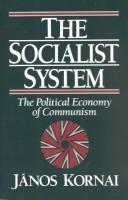
János Kornai · 1992

How socialist economies really worked: soft budgets, shortage and party power.

Ivan T. Berend · 1996

Economic history that explains the industrial base the Czechs privatised.

Marcin Piatkowski · 2018

How Poland achieved Europe's fastest sustained growth after 1989.
Tadeusz Kowalik · 2011

The critique of the transition's distributional cost.

Where it sits in the reference 2

Geographies
Economics

Topics

EconomicsPolitics and GovernmentEurope, Britain and Russia