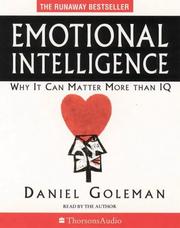
Emotional Intelligence
Why emotional intelligence matters as much as IQ for success in work and life.
Summary
Goleman argues that emotional intelligence matters as much as IQ for success in academic, professional, social and personal life. He asks why some people who are not the most intelligent live well, why the brightest student does not always become the most successful, and why some people handle setbacks and obstacles better than others. Emotional intelligence, in his account, is the ability to be aware of one's own emotions, understand others' feelings, tolerate pressure and frustration at work, work in teams and take an empathetic, social stance.
He holds that it is a skill that can be taught and strengthened in everyone, that its absence can undermine intellect or ruin a career, and he outlines ways to build emotional skills training into school curricula. Published in 1995, the book spent a year and a half on The New York Times bestseller list and is in print in 40 languages.
Key takeaways 4
- IQ alone does not predict who succeeds; emotional skills explain much of the difference.
- Self-awareness, empathy and tolerance of frustration are learnable skills.
- A lack of emotional skill can derail a career regardless of intelligence.
- Schools can teach emotional skills alongside academic subjects.
Who should read it
Managers, teachers and parents who want the book that popularised emotional intelligence.
Who recommended it 4 · 3 direct
“Then I stumbled across a book, Emotional Intelligence, by Daniel Goleman, and I was like, oh my god.”
“As Daniel Goleman wrote in his best-selling book, Emotional Intelligence: “In terms of the biological design for the basic neural circuitry of emotion, what we are born with is what worked best for the last 50,000 human generations, not the last 500 generations...The slow, deliberate forces of evolution that have shaped our emotions have done their work over the course of a million years; the last 10,000 years...have left …”
Similar books 6
Chosen by shared topics, the entries that hold them, and the people who recommended both.
How ideas and behaviour spread like epidemics, and the three factors that tip them.
“As Yogi Berra said, "It's tough to make predictions, especially about the future." As anyone who has read Malcolm Gladwell's book, THE TIPPING POINT, will understand, pressures for a significant reversal can build with no apparent effect until they reach a certain point.” — Christopher Browne
Source: Tweedy, Browne Fund Inc. N-CSR shareholder report, fiscal year ended March 31, 2006
Recommended by: Christopher Browne, Jim Collins and 6 others
Givers, takers and matchers, and why givers end up both at the bottom and the top.
“If you feel you are too generous, or too greedy, or are wary and insist on reciprocation, consider reading this research-based look at the subject of these different personality types. Counter-intuitive findings.” — Derek Sivers
Source: Derek Sivers book notes (primary, rated list) · Rating: 6/10
Recommended by: Derek Sivers, Mohnish Pabrai, Alex Lieberman and 4 others
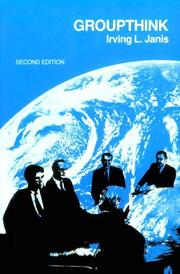
How the wish for agreement in close groups led to fiascos like the Bay of Pigs.
“Irving Janis, Groupthink: Psychological Studies of Policy Decisions and Fiascoes, 2nd ed. (Boston, MA: Houghton Mifflin, 1982)” — Michael Mauboussin
Source: Building an Effective Team: How to Manage a Team to Make Good Decisions, page 17
Recommended by: Adam Weiss, Barton Biggs, Michael Mauboussin
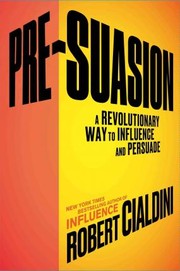
Where you direct attention just before a message shapes how it is received.
“An interesting look at a single topic: what someone encounters beforehand greatly affects the influence of what comes after. Priming.” — Derek Sivers
Source: Derek Sivers book notes (primary, rated list) · Rating: 6/10
Recommended by: Derek Sivers, Michael Mauboussin and 1 other
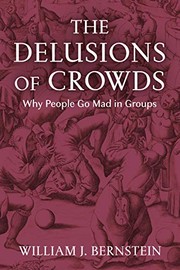
Five centuries of financial and religious manias, and why people go mad in groups.
“Narratives, says William Bernstein, author of The Delusions of Crowds: Why People Go Mad in Groups (2021), are “the pathogens that spread the bubble disease throughout a society.” — Jeremy Grantham
Source: Valuing AI: Extreme Bubble, New Golden Era - or Both?, page 4
Recommended by: Jeremy Grantham, Michael Mauboussin