Updates

  1. Every US-listed company has a page with its SEC filings. Company pages list their experts and their management, past and present. Fund managers sit under Investors. Each show has a page of its episodes, and an episode page names its guests and hosts. Biographies lists groups, then people. Breadcrumbs show where a page sits.
  2. Media lists every podcast episode, video, interview and talk, over 10,000, by person, company, publisher and event; each filter searches its own choices. Books opens on its table, then Browse, then Authors and Recommenders. A filter's count no longer covers its arrow.
  3. A book that no company, country or subject page lists shows its topics under Where it sits in the reference. On a phone, a page's tabs scroll sideways only. Descriptions read the same on every page. See them in the Experts tab lists every expert the page names.
  4. Every podcast episode, video and interview has its own page with a video or audio player and a link to the source. Investor pages show each company's sector and market cap; firms such as Berkshire Hathaway have one page that holds their letters and their company tabs. Letters tabs filter by company and search the theses. Companies filter by Public, Private and Defunct and link each company's website.
  5. Every tab, view and search has its own address, such as /books/table/asset or /letters/companies, so Back works and a link opens the same place. Page addresses no longer end in .html. Fund letters, Investors, Companies and Papers load about a fifth of the data they did.
  6. Fund letters has a Companies tab: every company the letters name, with its market cap, sector, country, and how many letters and investors name it. Investor pages link each investor's website. Lists in table cells end with “… and N more” at every width.
  7. 1,120 more book summaries; descriptions for 373 papers; pages for 137 more companies, each with the fund letters that discuss it; 215 official photographs; search has its own page.
  8. 411 more books have a summary; person pages list 930 more of the books they wrote; 147 people show their official photograph.
  9. Every investor has a page with its letters and the companies they discuss; company pages list the investors whose letters name them.
  10. A Companies section at the top of the rail lists every company the books, experts and fund letters name.
  11. Person pages list letters, writing, profiles and links as sortable tables with filters, and show each person's companies as links; Fund letters show each letter's description in its own column.
  12. Experts show a checked job title and a short description of each person; 30 more people have photographs.
  13. Every company, fund, university and publication the experts work for has a page listing the people there.
  14. Fund letters show each letter's thesis and filter by it; 225 person pages list the essays, columns and newsletter issues the person wrote.
  15. Person pages list every essay and newsletter issue a person wrote, and their own books as a table in List view.
  16. Recommends shows the five largest kinds of book and the rest under More; browse pictures load sooner.
  17. Podcasts and talks link the original episode, filter by Audio and video or Press, and list each publisher once.
  18. Pages are wider, Recommends has List and Grid, and a filter clicked again turns off.
  19. Book cards sit in a ruled grid with Open Library and Goodreads links and each book's one-line note.
  20. Funds is now Investors; each investor's styles are buttons that filter the table.
  21. Podcasts and talks on a person's page filter by year and publisher and show as a list or a grid of pictures.
  22. Quotes show only people's own words: 472 summaries written by list sites are gone.
  23. Country pages open from Browse again, and every link on the shelf lands on a page.
  24. Subject and person pages show their sections as tabs, and each book appears once on a person's page.
  25. Book cards show the quote, who said it and the source; grids show five cards to a row.
  26. On a phone, a menu holds the sections, search, Updates, Feedback and dark mode.
  27. Feedback takes a screenshot of the page with no browser prompt, opens a screenshot full size when you click it, and clears itself once sent.
  28. Book cards are centred, search names the topic each book sits in, and any text cut short shows whole on hover.
  29. Search groups its results by kind: people, companies, geographies, subjects, topics, books, funds, fund letters and papers.
  30. The Books table lists who recommended each book by name, and the browser tab names the section you are in.
  31. Feedback can take a screenshot of the page, or one you paste or choose, and opens in the corner beside Updates.
  32. Each rail button reopens its section where you left it, and Browse, Table and People show on every book and subject page.
  33. Filters grey out choices that hold nothing instead of hiding them, and Books › People filters by authors or recommenders.
  34. Feedback takes a subject line and up to three screenshots.
  35. Biographies are grouped by the person they are about: 41 new pages, from Abraham Lincoln to Lee Kuan Yew.
  36. Sport splits into 23 sports, and Religion into one topic per faith.
  37. Book lists show as cards: the cover, one recommendation quote and every recommender by name.
  38. Seventeen subjects that had two or three pages under different names now have one page each.
  39. Every page lists its Experts as authors and recommenders, with a link to them on the Experts tab.
  40. Economics, Financial history, Financial panics and Accounting are subjects of their own, with one page per financial crisis.
  41. Book, person and subject pages open inside the app, so the tabs stay in view.
  42. 996 more book covers, and photographs or logos for 227 more people and companies.
  43. Books › Browse shows every subject as cards, and the rail holds Fund letters, Papers, Experts, Books and Funds.
  44. Every topic over 150 books splits into narrower topics, each with a page of its own.

Send feedback

What is it?
Screenshots, up to 3 (optional)
or paste one with Ctrl+V

We use your email only to reply to you.

Evicted

Evicted

Eight Milwaukee families and two landlords through repeated evictions, 2008-09.

Matthew Desmond
2016
448 pages · about 7h 28m to read Open Librarygoodreads

Summary

Desmond, a sociologist, lived in a Milwaukee trailer park and in a rooming house on the north side of the city between 2008 and 2009, following eight families and two landlords through repeated evictions. The book won the Pulitzer Prize and is based on ethnographic fieldwork combined with original quantitative data he collected on eviction rates.

His central argument is that eviction is a cause of poverty rather than only a consequence of it. He documents the mechanism: an eviction record makes subsequent housing harder to obtain, which forces families into worse and more expensive units; each move costs money and possessions; children change schools repeatedly; job loss frequently follows; and the record follows people for years.

The economic material is the part most relevant to investors. Desmond documents that landlords in poor neighbourhoods frequently earn higher returns than those in affluent ones, because rents do not fall proportionally with property values or with maintenance standards, and because tenants with eviction records and poor credit have no alternatives. He follows two landlords in detail and reports their finances.

He also documents the effect of nuisance ordinances, which penalise landlords for tenant calls to police and therefore produce evictions of domestic violence victims. Desmond writes as an advocate and the concluding policy chapter argues for universal housing vouchers. Landlord organisations disputed the characterisation. The ethnographic method captures depth at the cost of generalisability, though the quantitative work supports the wider claims. The finding that poor neighbourhoods produce higher rental yields is the most commercially uncomfortable and best documented.

Key takeaways 8

  1. Eviction causes poverty rather than only resulting from it, through job loss, school disruption, lost possessions and a record that restricts future housing.
  2. Landlords in poor neighbourhoods frequently earn higher returns than those in affluent ones, because rents do not fall proportionally with property values.
  3. Tenants with eviction records and poor credit have no alternatives, which removes the market discipline that would otherwise constrain conditions.
  4. Most poor renting families spend more than half of their income on housing, which leaves no capacity to absorb any unexpected cost.
  5. A single unexpected expense triggers the sequence that ends in eviction, since there is no margin anywhere in the household budget.
  6. Nuisance ordinances that penalise landlords for tenant calls to police produce evictions of domestic violence victims.
  7. Eviction is far more common than the housing policy literature had recognised, which Desmond established with original data collection.
  8. The vast majority of eligible poor families receive no housing assistance, which makes the private rental market the actual housing policy.

Who should read it

Investors in residential property and anyone examining the economics of low-income housing, alongside readers wanting the ground-level account.

Who recommended it 6 · 1 direct

Barack Obamareported
Emmett Shearreported
Nick Crockerreported

Similar books 6

Chosen by shared topics, the entries that hold them, and the people who recommended both.
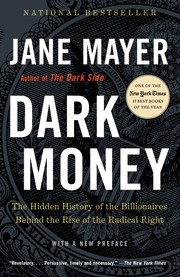
Jane Mayer · 2016

Recommended by: Brad Feld

Ralph Nader · 2009

A novel: 17 super-rich Americans, Warren Buffett among them, unite to fix government.

Recommended by: Mohnish Pabrai

Robert Putnam · 2015

Why fewer American children now have a chance to move up as inequality widens.

Recommended by: Jeff Jordan

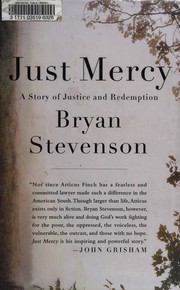
Bryan Stevenson · 1600

A lawyer's memoir of fighting wrongful convictions, such as Walter McMillian's.

William T. Vollmann · 2007

Poverty around the world in its hopelessness, brutality, pride and fear.

Recommended by: Emmett Shear

Where it sits in the reference 4

Sociology and CulturePolitics and GovernmentAmerican politics and presidentsWealth, poverty and inequality