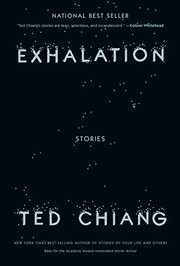
Exhalation
Nine science-fiction stories, each working through one idea with care.
Summary
Chiang's second collection contains nine stories, each built around a specific conceptual premise worked through rigorously. Chiang publishes rarely and the stories are unusually careful about their own logic.
The Merchant and the Alchemist's Gate uses a time travel mechanism in which the past cannot be changed, only understood, framed as a story in the style of the Thousand and One Nights. The title story describes a mechanical being dissecting its own brain to discover how memory works and what is actually running down in its universe. The Lifecycle of Software Objects, a novella, follows people raising artificial intelligences over years and addresses what obligations arise when a created being develops through experience rather than being programmed. Anxiety Is the Dizziness of Freedom uses a device that opens communication with branches of a quantum multiverse and examines what happens to moral responsibility when every choice was also made otherwise. Omphalos concerns a scientist in a world with clear evidence of creation who discovers evidence that humanity was not its purpose.
The recurring subject is free will, determinism and how a person should act if their choices were determined. Chiang's position, stated in the story notes, is that the question of whether free will exists matters less than whether people behave as though it does.
The stories are more interested in ideas than in character, and readers wanting emotional depth will find the earlier collection stronger in that respect. The story notes at the end explain the premise of each, which some readers find diminishes them. The artificial intelligence novella is the most directly relevant to technology readers and is more thoughtful about the subject than most non-fiction on it.
Key takeaways 8
- An artificial being that develops through years of experience acquires obligations from its creators that a programmed system would not.
- Raising an artificial intelligence takes as long as raising a child, which makes the economics incompatible with the products companies want to sell.
- A time travel mechanism in which the past cannot be changed produces understanding and acceptance rather than the paradoxes the form usually generates.
- Communication with alternative versions of your own choices dissolves moral responsibility unless the person decides to act as though their choice mattered.
- Whether free will exists matters less than whether people behave as though it does, which is Chiang's stated position.
- Evidence of purpose in the universe and evidence that humanity is that purpose are separate questions, and the second can fail while the first holds.
- The physical basis of memory and of consciousness can be investigated by a being examining its own mechanism, which the title story constructs literally.
- Each story works through a single premise rigorously rather than using it as a setting, which is the collection's method.
Who should read it
Readers who want rigorously constructed conceptual fiction, particularly the novella on obligations toward artificial minds.
Who recommended it 5 · 2 direct
“This contemplates the marvel of thermodynamics from the best sci-fi short story writer of our age.”
Similar books 6
Chosen by shared topics, the entries that hold them, and the people who recommended both.
Eight science fiction stories, among them the one behind the film Arrival.
Recommended by: Tim Ferriss, Naval Ravikant
Eight science-fiction stories, each working out one premise with rigour.
“My current favorite short story, sci-fi short story: probably "Understand" by Ted Chiang. It's in a collection called Stories of Your Life and Others.” — Naval Ravikant
Source: Naval's Recommended Reading — The Almanack of Naval Ravikant
Recommended by: Patrick Collison, Tim Ferriss and 3 others
A graphic novel of Batman's war on crime and how his story ends.
Recommended by: Naval Ravikant
An aging Batman returns to fight crime in a lawless Gotham, in black and white.
Recommended by: Naval Ravikant
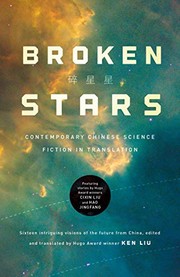
An anthology of Chinese science fiction short stories in English translation.
Recommended by: Matt Mullenweg
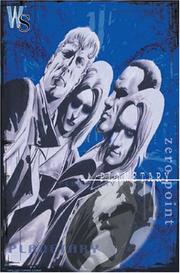
A comic about Elijah Snow, a 100-year-old man among archaeologists of the impossible.
“If you're open to the cartoony element of it, Transmetropolitan, The Boys, Planetary, and The Sandman ... some of these are, I think, among the finest works of art of our age.” — Naval Ravikant
Source: Naval's Recommended Reading — The Almanack of Naval Ravikant
Recommended by: Naval Ravikant