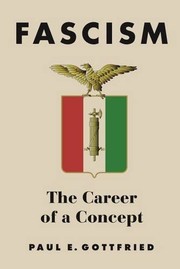
Fascism
What fascism was, against its use as a synonym for Nazism.
Summary
The reference has not verified this book in detail; the summary states only what the title, author and subject establish.
Paul Gottfried, an intellectual historian, asks what it means to call someone a fascist. Today the label is equated with calling someone a Nazi, but Gottfried argues that its meaning has shifted over the years. He traces the semantic turns the term has taken since the 1930s and examines the polemical work it does in present ideological struggles.
Like "conservatism" and "liberalism", he says, "fascism" has been used arbitrarily and now stands for a host of wrongs that progressives, multiculturalists and libertarians oppose, even though they offer no single, coherent account of the historical evil they condemn. The source read in this pass is the dust-jacket description, which calls the study provocative but even-handed.
Key takeaways 4
- The meaning of "fascism" has changed repeatedly since the 1930s.
- Gottfried argues that the word is now used mainly as a political insult.
- Those who use the label rarely agree on what historical fascism was.
- Political terms such as conservatism and liberalism have drifted in the same way.
Who should read it
Readers of political history interested in how the word fascism has been used and misused.
Who recommended it 1 · 1 direct
Similar books 6
Chosen by shared topics, the entries that hold them, and the people who recommended both.
A conservative history of antifascism, from early twentieth-century Europe to the US.
Recommended by: Marc Andreessen
How English-speaking peoples spread representative government and personal freedom.
Recommended by: Patrick Collison
The political repression of communist states, documented country by country.
Recommended by: Nick Szabo
Fascism and Nazism explained as fundamental revolutions.
Recommended by: Jim Collins
A history of the French Revolution and the modern world it created.
Recommended by: Marc Andreessen
The poisoning of a dissident former spy, and the investigation into his murder.
Recommended by: Marc Andreessen