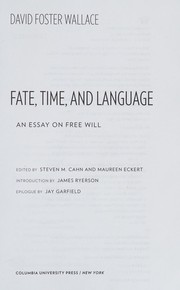
Fate, Time, and Language: An Essay on Free Will
A philosopher's reply to the argument that people cannot control the future.
Summary
In 1962 the philosopher Richard Taylor argued from six widely accepted premises that people cannot control what the future holds. As a student, years before he published any fiction or essays, David Foster Wallace wrote a thesis answering him. Wallace objected that Taylor's method confused how logic, language and the physical world relate to one another, and he located a semantic trick at the centre of the argument. Steven M. Cahn and Maureen Eckert edited the volume that prints the thesis.
The publisher reads the thesis as early evidence of Wallace's distrust of abstract reasoning when it is used to deny something more real. He was wary of the cerebral aestheticism of modernism and the gimmicks of postmodernism, both of which, he said, had given up on "the very old traditional human verities". Alongside the thesis the volume prints Taylor's original paper and the other writings on fatalism that Wallace cites. James Ryerson's introduction ties the early philosophy to the themes of Wallace's novels and stories, and Jay Garfield closes with a critical biographical epilogue.
Key takeaways 4
- Richard Taylor argued in 1962 that accepted premises leave people no control over the future.
- Wallace replied that Taylor confused logic, language and the physical world and relied on a semantic trick.
- James Ryerson's introduction links the thesis to the themes of Wallace's later fiction.
- The volume reprints Taylor's paper and the other works on fatalism Wallace cites.
Who should read it
Readers of David Foster Wallace and of philosophy interested in fatalism and free will.
Who recommended it 1 · 1 direct
Similar books 6
Chosen by shared topics, the entries that hold them, and the people who recommended both.
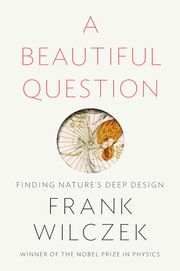
Whether the universe embodies beautiful ideas, from a Nobel physicist.
Recommended by: Patrick Collison
Essays on evolution, natural selection, science and religion.
Recommended by: Patrick Collison
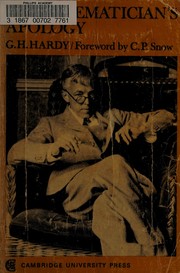
Why mathematics is worth doing for its beauty, apart from any use.
Recommended by: Patrick Collison, Paul Graham
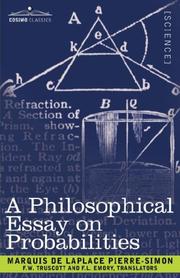
An introduction for lay readers to the concepts and uses of probability theory.
Recommended by: Patrick Collison
The anthropic principle and the observation selection effects in science.
Recommended by: Patrick Collison
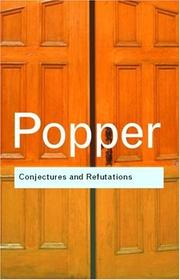
Knowledge grows by bold guesses that we then try to refute, not by proof.
Recommended by: Patrick Collison