Updates

  1. Person pages list letters, writing, profiles and links as sortable tables with filters, and show each person's companies as links; Fund letters show each letter's description in its own column.
  2. Experts show a checked job title and a short description of each person; 30 more people have photographs.
  3. Every company, fund, university and publication the experts work for has a page listing the people there.
  4. Fund letters show each letter's thesis and filter by it; 225 person pages list the essays, columns and newsletter issues the person wrote.
  5. Person pages list every essay and newsletter issue a person wrote, and their own books as a table in List view.
  6. Recommends shows the five largest kinds of book and the rest under More; browse pictures load sooner.
  7. Podcasts and talks link the original episode, filter by Audio and video or Press, and list each publisher once.
  8. Pages are wider, Recommends has List and Grid, and a filter clicked again turns off.
  9. Book cards sit in a ruled grid with Open Library and Goodreads links and each book's one-line note.
  10. Funds is now Investors; each investor's styles are buttons that filter the table.
  11. Podcasts and talks on a person's page filter by year and publisher and show as a list or a grid of pictures.
  12. Quotes show only people's own words: 472 summaries written by list sites are gone.
  13. Country pages open from Browse again, and every link on the shelf lands on a page.
  14. Subject and person pages show their sections as tabs, and each book appears once on a person's page.
  15. Book cards show the quote, who said it and the source; grids show five cards to a row.
  16. On a phone, a menu holds the sections, search, Updates, Feedback and dark mode.
  17. Feedback takes a screenshot of the page with no browser prompt, opens a screenshot full size when you click it, and clears itself once sent.
  18. Book cards are centred, search names the topic each book sits in, and any text cut short shows whole on hover.
  19. Search groups its results by kind: people, companies, geographies, subjects, topics, books, funds, fund letters and papers.
  20. The Books table lists who recommended each book by name, and the browser tab names the section you are in.
  21. Feedback can take a screenshot of the page, or one you paste or choose, and opens in the corner beside Updates.
  22. Each rail button reopens its section where you left it, and Browse, Table and People show on every book and subject page.
  23. Filters grey out choices that hold nothing instead of hiding them, and Books › People filters by authors or recommenders.
  24. Feedback takes a subject line and up to three screenshots.
  25. Biographies are grouped by the person they are about: 41 new pages, from Abraham Lincoln to Lee Kuan Yew.
  26. Sport splits into 23 sports, and Religion into one topic per faith.
  27. Book lists show as cards: the cover, one recommendation quote and every recommender by name.
  28. Seventeen subjects that had two or three pages under different names now have one page each.
  29. Every page lists its Experts as authors and recommenders, with a link to them on the Experts tab.
  30. Economics, Financial history, Financial panics and Accounting are subjects of their own, with one page per financial crisis.
  31. Book, person and subject pages open inside the app, so the tabs stay in view.
  32. 996 more book covers, and photographs or logos for 227 more people and companies.
  33. Books › Browse shows every subject as cards, and the rail holds Fund letters, Papers, Experts, Books and Funds.
  34. Every topic over 150 books splits into narrower topics, each with a page of its own.

Send feedback

What is it?
Screenshots, up to 3 (optional)
or paste one with Ctrl+V

We use your email only to reply to you.

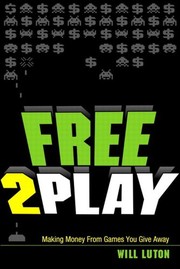
Free-to-Play

Free-to-Play

Will Luton
2013
T4 210 pages · about 3h 30m to read Open Librarygoodreads

Games operator on retention, whales and the shape of monetisation curves.

Summary

Luton, a game designer and consultant, wrote a practical guide to designing and monetising free-to-play games.

The economic premise is that a free game removes the purchase decision entirely, which produces a very large user base of whom a small fraction pay. Luton is explicit that the model works arithmetically: if the lifetime value of an average user exceeds the cost of acquiring one, the business scales with marketing spend. Everything else follows from that inequality.

The design content covers how to make it hold. Retention is the first requirement, since a user who leaves in the first session has no lifetime value, and Luton covers first-session design, tutorial construction and the early progression that establishes habit. Engagement over time requires a core loop that remains interesting, session pacing and reasons to return. Monetisation design covers what is sold: convenience through time acceleration, capability through items that improve performance, content through new levels or characters, and personalisation, with the argument that each appeals to a different motivation and that a game should offer more than one. He covers pricing, virtual currency as a device that separates the purchase decision from the spending decision, and the design of the moments at which a purchase is offered.

The analytics content covers the metrics: daily and monthly active users, retention curves at defined days, average revenue per user and per paying user, conversion rate, and the funnel from acquisition to first purchase.

Luton addresses the ethical questions briefly, including the concentration of revenue among a small number of heavy spenders and the design of mechanics that exploit compulsion.

The book is from 2013 and the market has changed substantially, including regulatory attention to loot boxes and to spending by minors, platform policy changes and privacy rules that broke the user acquisition targeting the model depended on. The design principles remain applicable.

Key takeaways 7

  1. A free-to-play business works when the lifetime value of an average user exceeds the cost of acquiring one, and everything else serves that inequality.
  2. Retention in the first session determines whether a user has any lifetime value at all, which makes early design the highest-leverage work.
  3. A small fraction of users generate nearly all revenue, so the model depends on serving heavy spenders without alienating everyone else.
  4. Games can sell convenience, capability, content or personalisation, and each appeals to a different motivation.
  5. Virtual currency separates the purchase decision from the spending decision, which changes how users evaluate cost.
  6. The moment at which a purchase is offered determines conversion more than the price does.
  7. Privacy changes that broke acquisition targeting altered the economics the model depended on after this book was written.

Who should read it

Game designers and operators of consumption-based digital products who want the design and monetisation mechanics of the free-to-play model.

Similar books 6

Chosen by shared topics, the entries that hold them, and the people who recommended both.
Eric Benjamin Seufert · 2013

The arithmetic of conversion rates, whales and lifetime value.
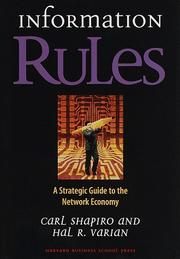
Carl Shapiro, Hal R. Varian · 1998

Economics for information goods: pricing, versioning, lock-in and network effects.

Stan Davis, Bill Davidson · 1991

Recommended by: Mohnish Pabrai

Where it sits in the reference 3

Business models
Business themes
Business themes

Topics

Games and PuzzlesBusiness and Management