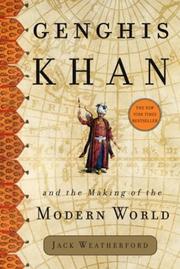
Genghis Khan and the Making of the Modern World
How the Mongol empire's trade and communication helped make the modern world.
Summary
Weatherford, an anthropologist, argues that the Mongol empire established under Genghis Khan created the conditions for the modern world through trade, communication and the transmission of technology across Eurasia, and that the standard Western picture of pure destruction is a later construction.
The biographical material covers Temujin's origins as an outcast, his rise through the steppe political system, and the specific innovations he introduced. Weatherford emphasises that Genghis reorganised his army by dividing tribal units and mixing them, which broke tribal loyalty and replaced it with loyalty to the structure; promoted on demonstrated ability rather than by birth, including men from defeated enemies; distributed loot by a system that included the families of the dead; and used terror deliberately and selectively, since cities that surrendered were spared and cities that resisted were destroyed as a demonstration.
The administrative material covers religious tolerance as policy, the suppression of torture, a written legal code applying to the ruler as well as the ruled, diplomatic immunity, the postal relay system, the standardisation of weights and the encouragement of long-distance trade. Weatherford's argument that this transmission of technology and ideas across Eurasia contributed directly to the European Renaissance is his most contested claim.
The book is written by an admirer and historians have criticised it for minimising the scale of destruction, for relying heavily on the Secret History of the Mongols as a source, and for overstating the Mongol contribution to European developments. The material on organisational design, meritocracy and the deliberate use of reputation is the part with the widest application.
Key takeaways 8
- Genghis Khan broke tribal loyalty by dividing tribal units across a new military structure, which replaced inherited allegiance with loyalty to the organisation.
- Promotion was by demonstrated ability including for men from defeated enemies, which converted opponents into capability rather than eliminating them.
- Terror was used selectively as a communication strategy, since cities that surrendered were spared and cities that resisted were destroyed publicly.
- Religious tolerance was imposed as policy across the empire, which removed a standing source of conflict and administrative cost.
- A written legal code applying to the ruler as well as the ruled established a form of accountability unusual for the period.
- The postal relay system moved information across the empire faster than any competing state could, which was a direct military and administrative advantage.
- Encouraging long-distance trade and protecting merchants transmitted technology and ideas across Eurasia on an unprecedented scale.
- Weatherford writes as an admirer and historians dispute both his minimisation of the destruction and his claims about the Mongol contribution to Europe.
Who should read it
Readers interested in organisational design, meritocratic promotion and the deliberate management of reputation, in a contested but readable history.
Who recommended it 5 · 1 direct
“What what really drove that home for me is I'm an enthusiastic student of history. And I read Genghis Khan and the Making of the Modern World.”
Similar books 6
Chosen by shared topics, the entries that hold them, and the people who recommended both.
Temujin's rise from outcast to Genghis Khan and the Mongol empire he built.
Recommended by: Patrick Collison
A biography of Cicero and the world of ancient Rome.
Recommended by: Patrick Collison
Paired biographies of famous Greek and Roman men.
Recommended by: Ryan Holiday, Susan J. Fowler
Nine of the Lives, on Romans from the early Republic to the start of the Empire.
Recommended by: Ryan Holiday
The real Rodrigo Díaz behind the legend of El Cid, hero of the Spanish reconquest.
Recommended by: Paul Graham
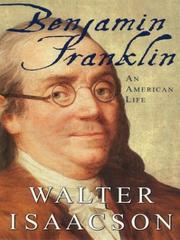
Franklin's life as printer, scientist, diplomat and founder.
“…books I've recommended, highlighted to death, or forced on friends.” — Andrew Wilkinson
Source: Andrew Wilkinson's Bookshelf, neverenough.com
Recommended by: Alfred Lin, Andrew Wilkinson, Brad Feld and 11 others