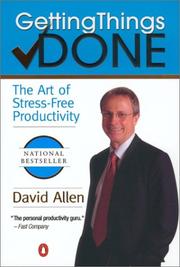
Getting Things Done
Get commitments out of your head into a trusted system, and decide next actions.
Summary
Allen presents a system for managing commitments based on the argument that the mind is a poor storage device and a good processing device, and that unresolved commitments held in memory consume attention regardless of whether they are being worked on. His term for that is open loops, and his objective is what he calls mind like water, meaning a state where nothing is held mentally because everything is captured in a trusted external system.
The workflow has five stages: capture everything into inboxes, clarify each item by deciding whether it is actionable and what the next physical action is, organise the results into project lists, next action lists by context, a calendar for time-specific items, waiting-for lists and a someday list, reflect through a weekly review, and engage by choosing what to do based on context, time available, energy and priority.
The operational specifics are what distinguish it. The two-minute rule says anything that takes under two minutes should be done immediately rather than tracked. A project is anything requiring more than one action. The next action must be a physical visible activity rather than a category, which Allen identifies as the most common failure since a list item like plan the offsite is not actionable. The weekly review is the component people most often skip and the one the system depends on.
The book is dated in its technology assumptions, describing filing systems and paper inboxes, and later editions update this awkwardly. The system carries real overhead and many people abandon it. Allen offers no research, only his consulting practice. The capture principle and the next action definition have entered general practice independent of the full method.
Key takeaways 8
- The mind holds unresolved commitments regardless of whether they can be acted on, which consumes attention until they are captured externally.
- Everything requiring attention must be captured out of the head into a trusted system, and the trust is what makes the capture effective.
- Every item must be clarified into a specific physical next action, and lists containing categories rather than actions are the most common reason systems fail.
- Anything that takes under two minutes should be done immediately rather than tracked, because tracking costs more than doing.
- Anything requiring more than one action is a project and needs both an outcome statement and a defined next action.
- Actions should be organised by context, since what can be done depends on where you are and what tools are available.
- A weekly review is required to keep the system trustworthy, and skipping it is what causes the whole method to collapse.
- Priorities can only be set usefully after the complete inventory of commitments is visible, which is why capture precedes prioritisation.
Who should read it
Operators with large numbers of simultaneous commitments who need a complete capture and review system rather than a prioritisation technique.
Who recommended it 9 · 3 direct
“Classic book with near-cult following. How to manage every last itty bitty tiny thing in your life. Keep your inbox empty. Re-read 16 years later. Still great.”
Similar books 6
Chosen by shared topics, the entries that hold them, and the people who recommended both.
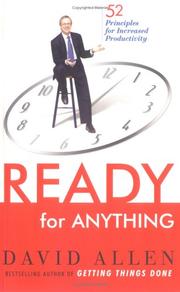
52 principles for getting things done with less stress: mindset, priorities, action.
“I read this in 2004, before Getting Things Done (same author), and liked it more, because it's more philosophical than instructional. It made a big impact on me then. I was just re-reading now for a little refresher.” — Derek Sivers
Source: Derek Sivers book notes (primary, rated list) · Rating: 5/10
Recommended by: Derek Sivers, Ev Williams
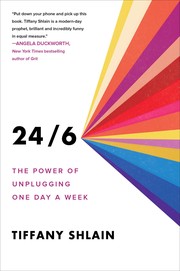
How turning off screens one day a week brings more time, creativity and connection.
Recommended by: Arianna Huffington
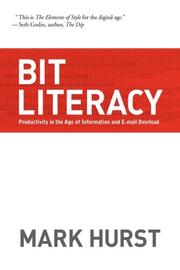
How to manage email, files and information without being overwhelmed.
Recommended by: Ev Williams
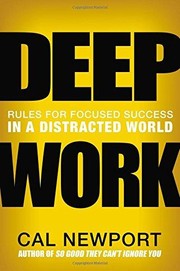
Why distraction-free concentration is rare and valuable, and how to train for it.
“Crucial subject, dear to me: shutting out distractions for deep productive concentrated work. No huge surprises but great supporting thoughts. I liked the point of considering the downside of the internet, instead of only the positives.” — Derek Sivers
Source: Derek Sivers book notes (primary, rated list) · Rating: 7/10
Recommended by: Derek Sivers, Nat Eliason, Nir Eyal and 7 others
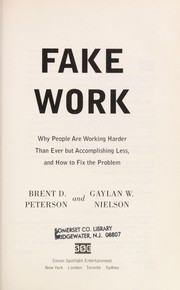
Why people work harder but achieve less, and how to replace fake work with real work.
Recommended by: Tony Hsieh
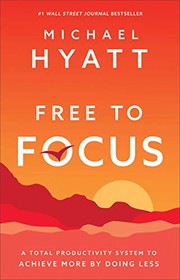
A system for managing time and raising personal productivity.
Recommended by: Arianna Huffington, Cal Newport