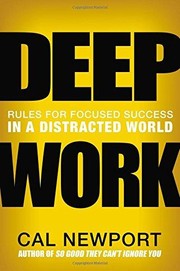
Deep Work
Why distraction-free concentration is rare and valuable, and how to train for it.
Summary
Newport defines deep work as professional activity performed in a state of distraction-free concentration that pushes cognitive capabilities to their limit, and shallow work as non-cognitively demanding logistical tasks performed while distracted. His economic argument is that two abilities will be valuable in the current economy, which are quickly mastering hard things and producing at an elite level, and that both depend on deep work while the working environment increasingly prevents it.
The first part makes the case, drawing on Anders Ericsson on deliberate practice, on Sophie Leroy's research on attention residue showing that switching tasks leaves attention on the previous one, and on the observation that most knowledge workers cannot measure their own productivity so they default to visible busyness as a proxy.
The second part gives four rules. Work deeply, using one of four scheduling philosophies from monastic to rhythmic, with rituals and defined locations. Embrace boredom, meaning training the ability to concentrate by not reaching for distraction during idle moments, since the capacity cannot be switched on when needed. Quit social media, applying what he calls the craftsman approach to tool selection, in which a tool is adopted only if its benefits substantially outweigh its costs for a specific important goal. Drain the shallows, by scheduling every minute of the workday, quantifying the depth of each activity and setting a fixed end time.
The evidence is a mix of research and profiles of successful people, which is selection-prone. The advice assumes autonomy over one's schedule that many employees do not have. Newport's later books refine the argument. The attention residue material and the fixed-schedule productivity practice are the strongest elements.
Key takeaways 8
- The ability to concentrate without distraction is becoming rarer while becoming more economically valuable, which makes it a source of advantage.
- Switching between tasks leaves attention residue on the previous task, so fragmented work performs worse than the time accounting suggests.
- Knowledge workers default to visible busyness because they cannot measure their own productivity, which is why activity substitutes for output.
- The capacity for concentration must be trained continuously, so reaching for distraction during idle moments degrades the ability to focus when it matters.
- A tool should be adopted only if its benefits substantially outweigh its costs against a specific important goal, rather than because it offers any benefit at all.
- Scheduling every minute of the working day, and revising the schedule as it breaks, produces more deep work than intention does.
- Setting a fixed time to stop work forces the selective refusal of shallow commitments that would otherwise expand to fill the day.
- Deep work has a daily ceiling of roughly four hours for people trained in it, so extending working hours cannot increase it.
Who should read it
Knowledge workers with enough schedule autonomy to restructure their days, who want the argument and the specific scheduling practices.
Who recommended it 10 · 3 direct
“Crucial subject, dear to me: shutting out distractions for deep productive concentrated work. No huge surprises but great supporting thoughts. I liked the point of considering the downside of the internet, instead of only the positives.”
Similar books 6
Chosen by shared topics, the entries that hold them, and the people who recommended both.
A method for finding the few activities that matter and dropping the rest.
“My favorite book of 2014. I bought it for the whole team at AppSumo.” — Noah Kagan
Source: The 25 Best Business Books I Ever Read (Out of 697)
Recommended by: Austen Allred, Matt Mullenweg, Nat Eliason and 10 others
Build habits by making them obvious, attractive, easy and satisfying.
“Last October, my friend James Clear published the breakout hit book, Atomic Habits. As we both discovered in the months that followed, we have many readers in common.” — Cal Newport
Source: The Atomic Minimalist: My Conversation with James Clear
Recommended by: Ali Abdaal, Balaji S. Srinivasan and 22 others
Why living well with technology means spending much less time using it.
“I finally got around to reading his most recent book, Digital Minimalism: Choosing a Focused Life in a Noisy World and my friends were correct. Newport is famous for being a millennial, computer scientist, and a book author who doesn’t have a social media account. Digital Minimalism is complementary to Jaron Lanier‘s book Ten Arguments for Deleting Your Social Media Accounts Right Now, but I found Newport a lot more comfortable and convincing.” — Brad Feld
Source: Book: Digital Minimalism — Feld Thoughts
Recommended by: Brad Feld, Nat Eliason, Alex Lieberman and 1 other
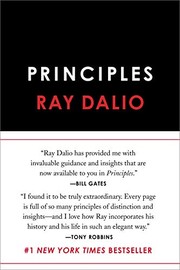
Decision rules from building Bridgewater: radical truth and radical transparency.
“Several people recommended Ray Dalio’s book Principles to me.” — Brad Feld
Source: Book: Principles by Ray Dalio — Feld Thoughts
Recommended by: Alfred Lin, Brad Feld, Derek Sivers and 31 others
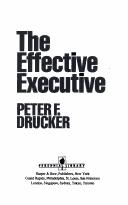
Effectiveness is learned practice: manage time, pick priorities, decide well.
“The second is The Effective Executive by Peter Drucker, and the central core of that book is really about it's very easy to mistake effort for effectiveness.” — Drew Houston
Source: The Tim Ferriss Show Transcripts: Drew Houston (#334)
Recommended by: Drew Houston, Ev Williams, Jim Collins and 6 others
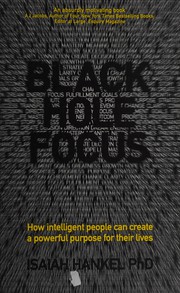
How to build a focus strong enough to give your life a powerful purpose.
Recommended by: Nat Eliason
Where it sits in the reference 2
As an Amazon Associate I earn from qualifying purchases.