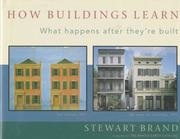
How Buildings Learn
Buildings as processes that change after they are built, and how to design for it.
Summary
Brand argues that buildings are best understood as processes rather than objects, since almost all of them are modified continuously after construction, and that architecture as a discipline ignores this because it is organised around the appearance of the finished building.
His central analytical device is the shearing layers of change, adapted from architect Frank Duffy. A building consists of site, which is eternal; structure, lasting thirty to three hundred years; skin, changing every twenty years; services, meaning wiring, plumbing and heating, changing every seven to fifteen; space plan, meaning interior layout, changing every three to thirty; and stuff, meaning furniture, changing constantly. Because these layers change at different rates, a building that binds them together, as many modern designs do, cannot be adapted without destroying it.
He distinguishes low road buildings, meaning cheap unloved structures that people modify freely and which therefore host innovation, from high road buildings, meaning well-built structures maintained over long periods, and argues that both work while designed magazine architecture does not.
His criticism of the profession is direct. He argues that architects are rewarded for photographs of new buildings, that they do not revisit their work, that innovation in form frequently produces leaking roofs and unusable spaces, and that occupant adaptation is treated as a failure of the design rather than as the normal condition. The shearing layers concept has been adopted well beyond architecture, particularly in software architecture and in organisational design. The book is illustrated heavily with before and after photographs, which carry much of the argument.
Key takeaways 8
- Buildings are processes rather than objects, since nearly all of them are modified continuously after construction.
- A building consists of layers that change at different rates, from site and structure through skin, services, space plan and contents.
- Binding layers together, so that changing the wiring requires opening the structure, prevents adaptation and shortens the building's useful life.
- Cheap unloved buildings host more innovation than designed ones, because occupants modify them freely without needing permission.
- Well-built structures maintained continuously over long periods also succeed, and the failures concentrate in buildings designed for appearance.
- Architects are rewarded for photographs of new buildings and rarely revisit their work, which removes the feedback that would improve the practice.
- Occupant modification is the normal condition rather than a failure of the design, and buildings should be designed to make it cheap.
- The shearing layers concept applies to any system with components that change at different rates, which is why software architects adopted it.
Who should read it
Anyone designing systems whose components change at different rates, including software and organisational architects as well as people commissioning buildings.
Who recommended it 7 · 4 direct
“Through Stewart Brand's work, beginning with How Buildings Learn (one of my favorite books) and his work with the Long Now Foundation, I learned to look at time differently, and technology differently, and to think about how time is cooked into everything we do today, especially as regards the ephemeral nature of all the time spent on computers and in online media.”
“I’ve read this book three times since 1999, and gifted it many times to others. It’s changed the way I look at buildings. I read it again now because I’m building a new house. Its main idea is that all buildings are predictions, and all predictions are wrong, so design to make them easy to change. I think of it metaphorically in life: assuming my predictions about what I want will probably be wrong, so make my life easy to change. Get the paper book because the photos are crucial.”
“His book is called How Buildings Learn by Stewart Brand.”
Similar books 6
Chosen by shared topics, the entries that hold them, and the people who recommended both.

What makes city streets work, and how 1950s planning and slum clearance broke them.
Recommended by: Patrick Collison, Chris Dixon, Daniel Burka and 2 others

Why well-designed cities are the key to America's national challenges.
Recommended by: Patrick Collison
Methods for studying how people use city streets and public spaces.
Recommended by: Patrick Collison
How cities can meet environmental, economic and social challenges.
Recommended by: Patrick Collison
Whether dense city living can make people happier, and how cities can be designed.
Recommended by: Mr. Money Mustache

Twenty-six imaginative maps of New York City and the lives lived within it.
Recommended by: Laura R Walker
Where it sits in the reference 4
As an Amazon Associate I earn from qualifying purchases.