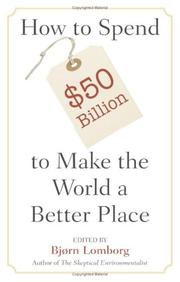
How to Spend $50 Billion to Make the World a Better Place
How to do the most good with limited money: global problems ranked.
Summary
Lomborg edits an abridged version of Global Crises, Global Solutions, built on the question of how to achieve the greatest good with limited money. It examines ten of the world's most serious challenges: climate change, communicable diseases, conflicts and arms proliferation, access to education, financial instability, governance and corruption, malnutrition and hunger, migration, sanitation and clean water, and subsidies and trade barriers.
Each problem is introduced by a leading expert who defines its scale and examines a range of policy options, and the book sets these out as a series of dialogues meant to start debate and discussion. It was published in 2006. The source read in this pass does not record the ranking of the options.
Key takeaways 3
- Global problems should be compared by how much good each dollar spent can do.
- Ten challenges, from disease to trade barriers, are weighed against each other.
- Experts set out the scale of each problem and the policy options before any ranking.
Who should read it
Readers in policy and philanthropy who want a framework for ranking global problems by how much good money can do.
Who recommended it 1
Similar books 6
Chosen by shared topics, the entries that hold them, and the people who recommended both.
Rich countries urge poor ones to adopt the opposite of the policies they once used.
How resource-rich developing countries can avoid the harm resource wealth brings.
Why about sixty poor countries are stuck, caught in traps such as conflict.
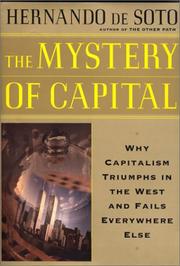
The poor hold assets but lack the property records that turn them into capital.
Recommended by: Mohnish Pabrai, Marc Andreessen
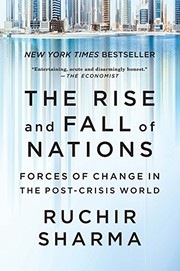
Ten rules for judging whether a country's economy will rise or fall.
Recommended by: Patrick Collison
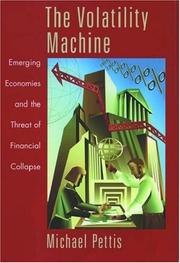
Emerging-market crises come from the structure of national balance sheets.