In an Unspoken Voice: How the Body Releases Trauma and Restores Goodness
Trauma as an injury held in the body, and how attention to the body heals it.
Summary
Peter A. Levine presents what the publisher calls the culmination of his life's work, drawing on his experience as a clinician, a student of comparative brain research, a stress scientist and an observer of animals in nature to explain the nature of trauma in the body, brain and psyche and how it can be transformed.
The book rests on the idea that trauma is neither a disease nor a disorder but an injury caused by fright, helplessness and loss, which can be healed by engaging the body's innate capacity to regulate high states of arousal and intense emotion. It combines a theoretical framework with case examples and blends findings from biology, neuroscience and body-oriented psychotherapy to argue that bringing together animal instinct and human reason can make people more whole.
Key takeaways 4
- Trauma is an injury caused by fright, helplessness and loss, not a disease.
- The body has an innate capacity to discharge extreme arousal.
- Animal behaviour offers clues to how humans can recover from trauma.
- Healing joins instinct and reason.
Who should read it
Therapists, clinicians and readers affected by trauma who are interested in body-based approaches.
Who recommended it 1 · 1 direct
Similar books 6
Chosen by shared topics, the entries that hold them, and the people who recommended both.
The standard text on group psychotherapy, revised with recent research.
Recommended by: Mohnish Pabrai
Why the number of people disabled by mental illness rose with psychiatric drugs.
Recommended by: Tim Ferriss
Mental disorders as metabolic disorders of the brain, and the treatments that follow.
Recommended by: Andrew Wilkinson
A neuroscientist examines his own former life on drugs and the science of addiction.
Recommended by: Nir Eyal
How sleep, diet and social media feed ADHD-like traits, with Trump as a case study.
Recommended by: Andrew Wilkinson
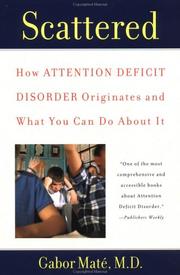
Attention deficit disorder as rooted in emotional environment, and how it heals.
Recommended by: Andrew Wilkinson