Updates

  1. Person pages list letters, writing, profiles and links as sortable tables with filters, and show each person's companies as links; Fund letters show each letter's description in its own column.
  2. Experts show a checked job title and a short description of each person; 30 more people have photographs.
  3. Every company, fund, university and publication the experts work for has a page listing the people there.
  4. Fund letters show each letter's thesis and filter by it; 225 person pages list the essays, columns and newsletter issues the person wrote.
  5. Person pages list every essay and newsletter issue a person wrote, and their own books as a table in List view.
  6. Recommends shows the five largest kinds of book and the rest under More; browse pictures load sooner.
  7. Podcasts and talks link the original episode, filter by Audio and video or Press, and list each publisher once.
  8. Pages are wider, Recommends has List and Grid, and a filter clicked again turns off.
  9. Book cards sit in a ruled grid with Open Library and Goodreads links and each book's one-line note.
  10. Funds is now Investors; each investor's styles are buttons that filter the table.
  11. Podcasts and talks on a person's page filter by year and publisher and show as a list or a grid of pictures.
  12. Quotes show only people's own words: 472 summaries written by list sites are gone.
  13. Country pages open from Browse again, and every link on the shelf lands on a page.
  14. Subject and person pages show their sections as tabs, and each book appears once on a person's page.
  15. Book cards show the quote, who said it and the source; grids show five cards to a row.
  16. On a phone, a menu holds the sections, search, Updates, Feedback and dark mode.
  17. Feedback takes a screenshot of the page with no browser prompt, opens a screenshot full size when you click it, and clears itself once sent.
  18. Book cards are centred, search names the topic each book sits in, and any text cut short shows whole on hover.
  19. Search groups its results by kind: people, companies, geographies, subjects, topics, books, funds, fund letters and papers.
  20. The Books table lists who recommended each book by name, and the browser tab names the section you are in.
  21. Feedback can take a screenshot of the page, or one you paste or choose, and opens in the corner beside Updates.
  22. Each rail button reopens its section where you left it, and Browse, Table and People show on every book and subject page.
  23. Filters grey out choices that hold nothing instead of hiding them, and Books › People filters by authors or recommenders.
  24. Feedback takes a subject line and up to three screenshots.
  25. Biographies are grouped by the person they are about: 41 new pages, from Abraham Lincoln to Lee Kuan Yew.
  26. Sport splits into 23 sports, and Religion into one topic per faith.
  27. Book lists show as cards: the cover, one recommendation quote and every recommender by name.
  28. Seventeen subjects that had two or three pages under different names now have one page each.
  29. Every page lists its Experts as authors and recommenders, with a link to them on the Experts tab.
  30. Economics, Financial history, Financial panics and Accounting are subjects of their own, with one page per financial crisis.
  31. Book, person and subject pages open inside the app, so the tabs stay in view.
  32. 996 more book covers, and photographs or logos for 227 more people and companies.
  33. Books › Browse shows every subject as cards, and the rail holds Fund letters, Papers, Experts, Books and Funds.
  34. Every topic over 150 books splits into narrower topics, each with a page of its own.

Send feedback

What is it?
Screenshots, up to 3 (optional)
or paste one with Ctrl+V

We use your email only to reply to you.

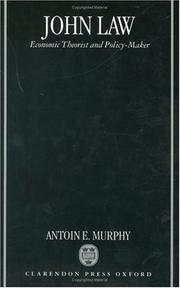
John Law

John Law

Antoin E. Murphy
1997
T3 408 pages · about 6h 48m to read Open Librarygoodreads

The scholarly treatment of Law as economic theorist and policymaker.

Summary

Antoin Murphy, an economist at Trinity College Dublin, wrote this as a rehabilitation of John Law's reputation as a monetary theorist. Law is remembered for the Mississippi Company and the French financial collapse of 1720, and Murphy argues that the theory behind the scheme was serious and in several respects anticipated later monetary economics.

Murphy reconstructs Law's thought from Money and Trade Considered and from his earlier proposals to the Scottish and Savoyard authorities. Law argued that money is a means of exchange rather than a store of value, that the quantity of money determines the level of activity in an economy operating below capacity, and that a paper currency backed by land or by a productive enterprise could expand supply without the constraint that metal imposed. Murphy traces how this became the System in France: the Banque Generale and then Banque Royale issuing notes, the Mississippi Company acquiring the tax farms and the trading monopolies, and the conversion of the French government's short-term debt into company shares.

The analytical point Murphy makes is that Law's scheme was an early debt-for-equity conversion at national scale, and that its failure came from the interaction between the share price and the note issue rather than from the underlying idea. When shareholders sold, Law supported the price with notes, which produced inflation, which produced further selling. The book is scholarly and demands attention to eighteenth-century finance. Murphy is a partisan for his subject, and readers should note that his revaluation is more generous than most economic historians accept.

Key takeaways 7

  1. Law argued that money is a means of exchange rather than a store of value, and that increasing its supply raises output in an underemployed economy.
  2. The Mississippi System was a conversion of French government debt into equity in a monopoly trading and tax-farming company.
  3. Law's fatal error was supporting the share price with note issuance, which linked the currency's value to the equity market.
  4. Paper money detached from metal allows an economy to expand its money supply with activity, and Law identified this before the theory existed.
  5. The System's collapse discredited banking in France for a century and delayed the development of French financial institutions.
  6. Murphy argues that Law was a theorist implementing a coherent programme rather than a gambler improvising.
  7. Combining the note-issuing bank and the equity company under one management removed the check that separate institutions would have provided.

Who should read it

Investors and financial historians interested in the intellectual origins of paper money and in the first large-scale attempt to convert sovereign debt into equity.

Similar books 6

Chosen by shared topics, the entries that hold them, and the people who recommended both.
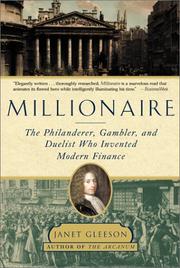
Janet Gleeson · 2000

John Law, the Mississippi bubble and the invention of paper money in France.

Timothy B. Smith · 2004

Welfare, insider protection and why French reform keeps stalling.

Richard Dale

The South Sea Bubble re-examined from investors' side: were they rational?

Recommended by: Patrick O'Shaughnessy

Bernard Connolly · 1995

An insider's attack on Europe's exchange rate mechanism and monetary union.

John Carswell · 1960

The standard account of 1720.

Anne Goldgar · 2007

The Dutch tulip episode of 1636 and 1637 from archives, and how its legend arose.

Where it sits in the reference 3

Geographies
Biographies
Financial panics

Topics

Biography and MemoirFinancial HistoryEconomics