Updates

  1. Person pages list letters, writing, profiles and links as sortable tables with filters, and show each person's companies as links; Fund letters show each letter's description in its own column.
  2. Experts show a checked job title and a short description of each person; 30 more people have photographs.
  3. Every company, fund, university and publication the experts work for has a page listing the people there.
  4. Fund letters show each letter's thesis and filter by it; 225 person pages list the essays, columns and newsletter issues the person wrote.
  5. Person pages list every essay and newsletter issue a person wrote, and their own books as a table in List view.
  6. Recommends shows the five largest kinds of book and the rest under More; browse pictures load sooner.
  7. Podcasts and talks link the original episode, filter by Audio and video or Press, and list each publisher once.
  8. Pages are wider, Recommends has List and Grid, and a filter clicked again turns off.
  9. Book cards sit in a ruled grid with Open Library and Goodreads links and each book's one-line note.
  10. Funds is now Investors; each investor's styles are buttons that filter the table.
  11. Podcasts and talks on a person's page filter by year and publisher and show as a list or a grid of pictures.
  12. Quotes show only people's own words: 472 summaries written by list sites are gone.
  13. Country pages open from Browse again, and every link on the shelf lands on a page.
  14. Subject and person pages show their sections as tabs, and each book appears once on a person's page.
  15. Book cards show the quote, who said it and the source; grids show five cards to a row.
  16. On a phone, a menu holds the sections, search, Updates, Feedback and dark mode.
  17. Feedback takes a screenshot of the page with no browser prompt, opens a screenshot full size when you click it, and clears itself once sent.
  18. Book cards are centred, search names the topic each book sits in, and any text cut short shows whole on hover.
  19. Search groups its results by kind: people, companies, geographies, subjects, topics, books, funds, fund letters and papers.
  20. The Books table lists who recommended each book by name, and the browser tab names the section you are in.
  21. Feedback can take a screenshot of the page, or one you paste or choose, and opens in the corner beside Updates.
  22. Each rail button reopens its section where you left it, and Browse, Table and People show on every book and subject page.
  23. Filters grey out choices that hold nothing instead of hiding them, and Books › People filters by authors or recommenders.
  24. Feedback takes a subject line and up to three screenshots.
  25. Biographies are grouped by the person they are about: 41 new pages, from Abraham Lincoln to Lee Kuan Yew.
  26. Sport splits into 23 sports, and Religion into one topic per faith.
  27. Book lists show as cards: the cover, one recommendation quote and every recommender by name.
  28. Seventeen subjects that had two or three pages under different names now have one page each.
  29. Every page lists its Experts as authors and recommenders, with a link to them on the Experts tab.
  30. Economics, Financial history, Financial panics and Accounting are subjects of their own, with one page per financial crisis.
  31. Book, person and subject pages open inside the app, so the tabs stay in view.
  32. 996 more book covers, and photographs or logos for 227 more people and companies.
  33. Books › Browse shows every subject as cards, and the rail holds Fund letters, Papers, Experts, Books and Funds.
  34. Every topic over 150 books splits into narrower topics, each with a page of its own.

Send feedback

What is it?
Screenshots, up to 3 (optional)
or paste one with Ctrl+V

We use your email only to reply to you.

The South Sea Bubble

The South Sea Bubble

John Carswell
1960
T2 314 pages · about 5h 14m to read Open Librarygoodreads

The standard account of 1720.

Summary

John Carswell wrote the standard modern history of the South Sea Bubble of 1720, using parliamentary records, company documents and correspondence.

The scheme's mechanics are the substance. The South Sea Company was created in 1711 to take over a portion of the British government's unfunded debt in exchange for annual interest and a monopoly on trade with Spanish America, which never produced meaningful commerce. In 1720 the company proposed to take over the great majority of the remaining national debt: holders of government annuities would exchange them for company shares at a conversion rate determined by the share price, so that the higher the share price, the fewer shares the company needed to issue and the more remained available for it to sell. This gave the directors a direct interest in driving the price up, and Carswell documents how they did it, including lending money to buyers of the stock and distributing shares to politicians on terms that guaranteed profit.

The collapse, the parliamentary inquiry, the confiscation of directors' estates and the political consequences including Robert Walpole's rise are covered in detail. Carswell also covers the parallel Mississippi scheme in France and the relationship between them. The book is scholarly and its explanation of the conversion mechanism is the clearest available; most popular accounts of the bubble do not explain why the share price mattered to the company's own economics.

Key takeaways 7

  1. The conversion terms meant that a higher share price let the company retire the same debt with fewer shares, which gave directors a direct interest in inflating it.
  2. The company's Spanish American trading monopoly, which was its nominal business, never produced meaningful commerce.
  3. Directors lent money to buyers of the company's own stock, which manufactured demand with the company's own resources.
  4. Shares were distributed to politicians on terms that guaranteed profit, which purchased the legislation the scheme required.
  5. The scheme was a debt conversion whose entire economics depended on the market price of the converting security.
  6. Parliament confiscated the directors' estates afterward, which is a resolution mechanism no subsequent bubble has produced.
  7. Carswell's explanation of the conversion mechanism is clearer than the popular accounts, which usually omit why the share price mattered to the company.

Who should read it

Investors and financial historians who want the mechanism of the first great speculative collapse rather than the anecdotes about it.

Similar books 6

Chosen by shared topics, the entries that hold them, and the people who recommended both.
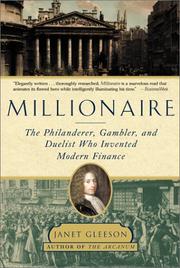
Janet Gleeson · 2000

John Law, the Mississippi bubble and the invention of paper money in France.

Anne Goldgar · 2007

The Dutch tulip episode of 1636 and 1637 from archives, and how its legend arose.

Antoin E. Murphy · 1997

The scholarly treatment of Law as economic theorist and policymaker.

Richard Dale

The South Sea Bubble re-examined from investors' side: were they rational?

Recommended by: Patrick O'Shaughnessy

T4 1929
Andrew Ross Sorkin · 2025

The 1929 Wall Street crash: the greed and folly behind America's greatest collapse.

Recommended by: Bill Gates, Howard Marks

Sidney Homer, Richard Sylla · 1963

Interest rates from Babylonian lending through Rome and Europe to modern bonds.

Recommended by: Mohnish Pabrai

Where it sits in the reference 1

Financial panics

Topics

Financial HistoryGeneral HistoryFinancial History