
Updates

  1. Person pages list letters, writing, profiles and links as sortable tables with filters, and show each person's companies as links; Fund letters show each letter's description in its own column.
  2. Experts show a checked job title and a short description of each person; 30 more people have photographs.
  3. Every company, fund, university and publication the experts work for has a page listing the people there.
  4. Fund letters show each letter's thesis and filter by it; 225 person pages list the essays, columns and newsletter issues the person wrote.
  5. Person pages list every essay and newsletter issue a person wrote, and their own books as a table in List view.
  6. Recommends shows the five largest kinds of book and the rest under More; browse pictures load sooner.
  7. Podcasts and talks link the original episode, filter by Audio and video or Press, and list each publisher once.
  8. Pages are wider, Recommends has List and Grid, and a filter clicked again turns off.
  9. Book cards sit in a ruled grid with Open Library and Goodreads links and each book's one-line note.
  10. Funds is now Investors; each investor's styles are buttons that filter the table.
  11. Podcasts and talks on a person's page filter by year and publisher and show as a list or a grid of pictures.
  12. Quotes show only people's own words: 472 summaries written by list sites are gone.
  13. Country pages open from Browse again, and every link on the shelf lands on a page.
  14. Subject and person pages show their sections as tabs, and each book appears once on a person's page.
  15. Book cards show the quote, who said it and the source; grids show five cards to a row.
  16. On a phone, a menu holds the sections, search, Updates, Feedback and dark mode.
  17. Feedback takes a screenshot of the page with no browser prompt, opens a screenshot full size when you click it, and clears itself once sent.
  18. Book cards are centred, search names the topic each book sits in, and any text cut short shows whole on hover.
  19. Search groups its results by kind: people, companies, geographies, subjects, topics, books, funds, fund letters and papers.
  20. The Books table lists who recommended each book by name, and the browser tab names the section you are in.
  21. Feedback can take a screenshot of the page, or one you paste or choose, and opens in the corner beside Updates.
  22. Each rail button reopens its section where you left it, and Browse, Table and People show on every book and subject page.
  23. Filters grey out choices that hold nothing instead of hiding them, and Books › People filters by authors or recommenders.
  24. Feedback takes a subject line and up to three screenshots.
  25. Biographies are grouped by the person they are about: 41 new pages, from Abraham Lincoln to Lee Kuan Yew.
  26. Sport splits into 23 sports, and Religion into one topic per faith.
  27. Book lists show as cards: the cover, one recommendation quote and every recommender by name.
  28. Seventeen subjects that had two or three pages under different names now have one page each.
  29. Every page lists its Experts as authors and recommenders, with a link to them on the Experts tab.
  30. Economics, Financial history, Financial panics and Accounting are subjects of their own, with one page per financial crisis.
  31. Book, person and subject pages open inside the app, so the tabs stay in view.
  32. 996 more book covers, and photographs or logos for 227 more people and companies.
  33. Books › Browse shows every subject as cards, and the rail holds Fund letters, Papers, Experts, Books and Funds.
  34. Every topic over 150 books splits into narrower topics, each with a page of its own.

Send feedback

What is it?
Screenshots, up to 3 (optional)
or paste one with Ctrl+V

We use your email only to reply to you.

Tulipmania

Tulipmania

Anne Goldgar
2007
T2 425 pages · about 7h 5m to read Open Librarygoodreads

The archival demolition of most of what people believe about the tulip bubble.

Summary

Goldgar, a historian of the Dutch Golden Age, examined the Dutch tulip episode of 1636 and 1637 using archival records including notarial documents, court records, estate inventories and correspondence, and concluded that almost everything commonly said about it is wrong.

The standard account, which descends from Charles Mackay's Extraordinary Popular Delusions and through him from moralising pamphlets published shortly after the events, holds that the whole Dutch population traded tulip bulbs, that prices reached absurd levels, that the collapse ruined thousands and that it produced a general economic depression.

Goldgar found otherwise. The trade involved a few hundred people, concentrated among wealthy merchants and skilled artisans who already knew each other, largely within Mennonite and other connected religious and social networks. The very high prices applied to a small number of rare bulbs, and most transactions were forward contracts for future delivery rather than cash purchases. When the market collapsed in February 1637, most contracts were simply not settled: buyers refused to pay and sellers had little recourse, since courts declined to enforce the contracts. She found very few bankruptcies attributable to tulips and no measurable effect on the Dutch economy.

Her argument about what actually happened is social. The episode damaged trust among people whose commercial relationships depended on personal reputation and on the honouring of informal agreements. The crisis was about credit in the older sense of the word, meaning reputation, and the pamphlet literature that produced the legend was a response to anxiety about commerce and value rather than a record of financial ruin.

The book is archival history and does not engage the finance literature on bubbles. Its correction is now widely accepted among historians while the legend persists in financial writing, which is itself the point.

Key takeaways 7

  1. The tulip trade involved a few hundred people rather than the whole Dutch population, and they were concentrated in existing social networks.
  2. Extremely high prices applied only to a small number of rare bulbs and were not general across the market.
  3. Most transactions were forward contracts for future delivery, so little money changed hands before the collapse.
  4. When prices fell, most contracts were simply not settled, and courts declined to enforce them.
  5. The archival record shows very few bankruptcies caused by tulips and no measurable effect on the Dutch economy.
  6. The legend derives from moralising pamphlets published immediately afterward rather than from any record of what occurred.
  7. The actual damage was to trust and reputation among merchants whose business depended on informal agreements being honoured.

Who should read it

Investors and writers who cite historical bubbles and need to know that the most-cited example did not happen as described.

Similar books 6

Chosen by shared topics, the entries that hold them, and the people who recommended both.
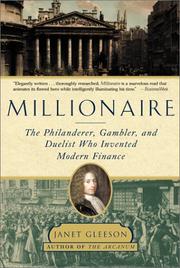
Janet Gleeson · 2000

John Law, the Mississippi bubble and the invention of paper money in France.

John Carswell · 1960

The standard account of 1720.

Lodewijk Petram · 2014

How trading in Dutch East India Company shares grew into the first stock market.

Joseph de la Vega · 1688

Dialogues on trading Dutch East India Company shares in 1680s Amsterdam.

Antoin E. Murphy · 1997

The scholarly treatment of Law as economic theorist and policymaker.

C. R. Boxer · 1965

The VOC and WIC as commercial and military enterprises.

Where it sits in the reference 2

Geographies
Financial panics

Topics

Financial HistoryGeneral HistoryFinancial History