Updates

  1. Person pages list letters, writing, profiles and links as sortable tables with filters, and show each person's companies as links; Fund letters show each letter's description in its own column.
  2. Experts show a checked job title and a short description of each person; 30 more people have photographs.
  3. Every company, fund, university and publication the experts work for has a page listing the people there.
  4. Fund letters show each letter's thesis and filter by it; 225 person pages list the essays, columns and newsletter issues the person wrote.
  5. Person pages list every essay and newsletter issue a person wrote, and their own books as a table in List view.
  6. Recommends shows the five largest kinds of book and the rest under More; browse pictures load sooner.
  7. Podcasts and talks link the original episode, filter by Audio and video or Press, and list each publisher once.
  8. Pages are wider, Recommends has List and Grid, and a filter clicked again turns off.
  9. Book cards sit in a ruled grid with Open Library and Goodreads links and each book's one-line note.
  10. Funds is now Investors; each investor's styles are buttons that filter the table.
  11. Podcasts and talks on a person's page filter by year and publisher and show as a list or a grid of pictures.
  12. Quotes show only people's own words: 472 summaries written by list sites are gone.
  13. Country pages open from Browse again, and every link on the shelf lands on a page.
  14. Subject and person pages show their sections as tabs, and each book appears once on a person's page.
  15. Book cards show the quote, who said it and the source; grids show five cards to a row.
  16. On a phone, a menu holds the sections, search, Updates, Feedback and dark mode.
  17. Feedback takes a screenshot of the page with no browser prompt, opens a screenshot full size when you click it, and clears itself once sent.
  18. Book cards are centred, search names the topic each book sits in, and any text cut short shows whole on hover.
  19. Search groups its results by kind: people, companies, geographies, subjects, topics, books, funds, fund letters and papers.
  20. The Books table lists who recommended each book by name, and the browser tab names the section you are in.
  21. Feedback can take a screenshot of the page, or one you paste or choose, and opens in the corner beside Updates.
  22. Each rail button reopens its section where you left it, and Browse, Table and People show on every book and subject page.
  23. Filters grey out choices that hold nothing instead of hiding them, and Books › People filters by authors or recommenders.
  24. Feedback takes a subject line and up to three screenshots.
  25. Biographies are grouped by the person they are about: 41 new pages, from Abraham Lincoln to Lee Kuan Yew.
  26. Sport splits into 23 sports, and Religion into one topic per faith.
  27. Book lists show as cards: the cover, one recommendation quote and every recommender by name.
  28. Seventeen subjects that had two or three pages under different names now have one page each.
  29. Every page lists its Experts as authors and recommenders, with a link to them on the Experts tab.
  30. Economics, Financial history, Financial panics and Accounting are subjects of their own, with one page per financial crisis.
  31. Book, person and subject pages open inside the app, so the tabs stay in view.
  32. 996 more book covers, and photographs or logos for 227 more people and companies.
  33. Books › Browse shows every subject as cards, and the rail holds Fund letters, Papers, Experts, Books and Funds.
  34. Every topic over 150 books splits into narrower topics, each with a page of its own.

Send feedback

What is it?
Screenshots, up to 3 (optional)
or paste one with Ctrl+V

We use your email only to reply to you.

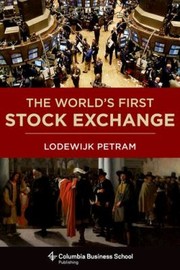
The World's First Stock Exchange

The World's First Stock Exchange

Lodewijk Petram
2014
T2 296 pages · about 4h 56m to read Open Librarygoodreads

How VOC shares actually traded: brokers, forwards, options, settlement.

Summary

Lodewijk Petram researched the Amsterdam securities market of the seventeenth century for his doctorate and wrote this account of how trading in Dutch East India Company shares developed from the company's founding in 1602.

The historical finding is that essentially every feature of a modern securities market appeared in Amsterdam within a few decades. Shares became transferable and a secondary market developed. Forward contracts allowed trading for future settlement, which meant positions could be taken without capital. Options were written and traded. Short selling appeared and was prohibited in 1610, and the prohibition was ignored. A clearing arrangement developed to net positions between traders. Trading concentrated in specific locations and then in a purpose-built exchange, and information circulated through coffee houses and printed price lists. Petram documents the small group of traders who dominated the market and the way social networks determined who could obtain credit and settlement.

His sources are notarial records, court cases and personal papers, which is how he reconstructs transactions that the company's own records do not show. The book is scholarly and readable and its central contribution is showing that these instruments and practices are not modern innovations but emerged immediately once transferable shares existed. It also documents that the market's problems, including manipulation, settlement failure and disputes about short selling, appeared at the same time.

Key takeaways 7

  1. Essentially every feature of a modern securities market appeared in Amsterdam within decades of the first transferable shares.
  2. Forward contracts allowed traders to take positions without capital, which made leverage available from the market's earliest years.
  3. Short selling was prohibited in 1610 and the prohibition was ignored, which established the pattern for every subsequent attempt.
  4. Clearing arrangements to net positions between traders developed from practical necessity rather than from regulation.
  5. Options on shares were written and traded within the market's first decades.
  6. Social networks determined access to credit and settlement, which meant the market was open in form and closed in practice.
  7. Manipulation, settlement failure and disputes over short selling appeared at the same time as the instruments themselves.

Who should read it

Investors and financial historians who want evidence that modern market instruments and their problems emerged immediately once transferable shares existed.

Similar books 6

Chosen by shared topics, the entries that hold them, and the people who recommended both.

Joseph de la Vega · 1688

Dialogues on trading Dutch East India Company shares in 1680s Amsterdam.
Anne Goldgar · 2007

The Dutch tulip episode of 1636 and 1637 from archives, and how its legend arose.
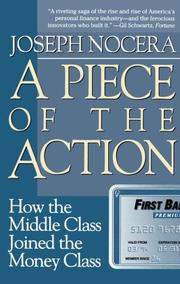
Joseph Nocera · 1994

How credit cards, money market funds and discount brokers reached ordinary Americans.

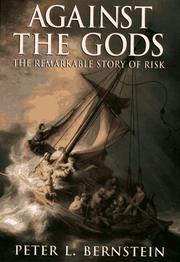
Peter L. Bernstein · 1996

How people learned to measure risk, from early probability to portfolio theory.

“I think some of the books that are a must would be Peter Bernstein's book about risk, Against the Gods: The Remarkable Story of Risk.” — Charles de Vaulx

Source: De Vaulx naming Bernstein's book a must-read on risk

Recommended by: Charles de Vaulx, Jim Collins and 8 others

Where it sits in the reference 2

Geographies
Financial history

Topics

Financial HistoryGeneral HistoryFinancial History