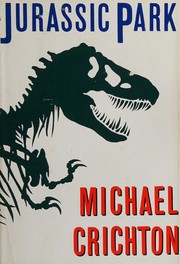
Jurassic Park
An amusement park of genetically re-created dinosaurs collapses into chaos.
Summary
Jurassic Park is a cautionary tale about genetic engineering: an amusement park showcasing genetically re-created dinosaurs collapses, and the collapse illustrates the mathematical concept of chaos theory and its real-world implications.
Crichton published the science fiction novel in 1990; Steven Spielberg bought the film rights before publication for $1.5 million through Universal Pictures, and the 1993 film was based on it. A sequel, The Lost World, followed in 1995, and in 1997 both novels were reissued together as Michael Crichton's Jurassic World. It won the Secondary BILBY Award in 1996.
Key takeaways 3
- Crichton uses the park's collapse to show chaos theory at work in a real system.
- Chaos theory is the novel's framework for why control of the park breaks down.
- Genetic engineering creates risks that commercial pressure can hide.
Who should read it
Readers who want a techno-thriller about genetic engineering and the limits of control.
Who recommended it 2 · 1 direct
Similar books 6
Chosen by shared topics, the entries that hold them, and the people who recommended both.
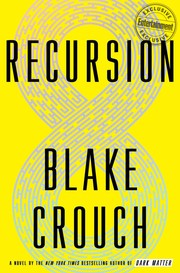
A New York detective looks into False Memory Syndrome, where memory makes reality.
“They are Blake Crouch’s book Recursion and Neal Stephenson’s book Fall; or, Dodge in Hell. All three of these books are outstanding.” — Brad Feld
Source: Book: Recursion, Permutation City, and Fall — Feld Thoughts
Recommended by: Brad Feld, Nat Eliason, Jordan Hughes and 1 other
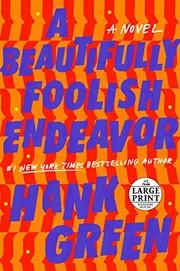
The sequel in which April May and others deal with the aftermath of the Carls.
Recommended by: Zoë Foster Blake
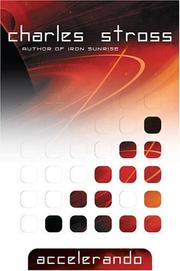
A novel of the Singularity, when artificial intelligence surpasses the human mind.
Recommended by: Marc Andreessen, Nat Eliason and 1 other
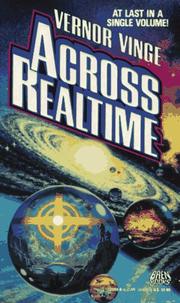
Two linked novels: The Peace War and Marooned in Realtime.
Recommended by: Stewart Brand
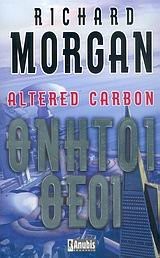
A noir science fiction novel in which minds are stored and moved between bodies.
Recommended by: Marc Andreessen, Ryan Shea, Zooko Wilcox
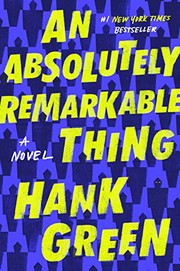
A novel of a young woman who becomes an overnight celebrity in something strange.
Recommended by: Zoë Foster Blake