Updates

  1. 137 new fund letters and reports, each with its own page: Kayne Anderson Rudnick (48 market briefings, KayneCast episodes and TV commentaries), Shelton Capital Management (48 shareholder reports and a commentary), Lakehouse Capital (10 Small Companies Fund letters), Smead (5 newsletters), RIT Capital Partners (5 monthly commentaries), Kovitz, Legal & General, Generation, Hosking, Marram, Munro, Oldfield and others.
  2. 200 new fund letters and reports, each with its own page: Spheria (41 monthly reports), Peapack Private (41 weekly recaps and planning newsletters), Fort Washington (23), Polen Capital (15), Aristotle Pacific (14), Riverwater (13), Chou (10), Apollo Asia Fund (8, back to 1998), Personal Asset Trust, Rockwood Strategic, J Capital Research, I/O Fund, Penn Davis McFarland, Pomona and others.
  3. Investor pages have one Investments tab with shares, changes, % owned, class, market cap and Market cap and Status filters, a Funds tab listing each fund the firm runs, and assets under management from Form ADV. The Investors table shows AUM and current investments, and its search finds investors by what they hold.
  4. Filters, search and sort stay as you left them when you come back to a section. Person cards look like book cards. Company pages name their Investors tab Ownership. Kind and Sector filters use four kinds and GICS sectors with industries. Dead links left the Links tabs.
  5. 190 more investors from fiscal.ai's list, with their sites, letters, partners and 13F holdings; 556 more partner descriptions. Experts now lists only people.
  6. Fund letters lists 144 new documents from 23 firms, each with its own page: a summary, key insights and quotes. Among them: 37 BlackRock articles, 21 Value Partners monthly notes, eight Baron Capital letters, six Stone Sentinel letters to partners, seven Value Line portfolio manager Q&As, BNY's 2026 earnings releases and Starboard Value's 2026 conference presentations.
  7. 584 more investors, with their websites, 6,776 letters from their own sites, 1,385 partners with pages and the 13F holdings of 213 firms. New letters arrive daily from 290 more archives.
  8. Media and Companies filter by GICS sector and industry group, taken from the companies an episode or page names. 1,860 more company pages show a logo, the SEC's list included.
  9. The home page counts what the platform holds and lists features such as the document reader, the player and saved marks. Settings sits at the foot of the rail. Book cards are a quarter wider, so rows hold fewer. Companies drops the Named in filter, and the Role list in your account runs A to Z.
  10. Investor pages of 13 firms show their newsroom's latest posts. New 13F filings are read as the SEC publishes them.
  11. Investor pages have an Investments tab: 13,975 holdings for 105 investors, from their 13F filings with the SEC and their own portfolio pages, with status and sector. 7,338 more companies have a page of their own.
  12. A podcast or YouTube episode keeps playing while you move around the site, in a bar with skip, speed and volume. Media tables show each episode's length and description.
  13. Press releases come from each company's own newsroom (167 companies); SEC filings sit on the Filings tab. Tickers name their exchange, and a company's Experts tab includes guests whose episode description names it.
  14. Letter types now include Market commentary, Fact sheet, Interim report, Annual report, Proxy circular and Governance document. The reader opens over the whole window.
  15. Partners of investment firms have 2,836 appearances and 580 pieces of writing on their pages; Derek Sivers's page lists every book he rates, with his rating.
  16. Fund letters lists three Akre Focus shareholder reports: the ETF's annual report for the year to July 2026, its semi-annual report to January 2026 and the fund's semi-annual report to January 2025, each with its own page: a summary, key insights and quotes.
  17. 837 partners of 73 investment firms now have their own pages, with title, description, photograph and social accounts; Andreessen Horowitz partners' pages also list their writing on a16z.com.
  18. Company pages have a Press releases tab: 8,229 releases for 203 companies, from SEC filings and company newsrooms. Companies filter by For-profit or Non-profit. Own media is a table with filters. Media filters by sector and industry. Publication pages link their publisher in the description.
  19. The Unilever page's Letters tab shows what each fund letter says about Unilever, word for word with its page, and whether the letter is bullish, bearish, mixed or neutral. Filter by sentiment, and see 10 letters at a time.
  20. 492 more fund letters and 3,183 more articles show the day they were published, read from each letter's first page or each article's own page.
  21. The PDF reader has a search box: type words to see every match in the document and step through them. About 540 letters that were web pages, among them Oakmark's commentaries, Bill Miller's letters and Howard Marks's memos, now open in the reader.
  22. Person pages: recommendations open with tier 1 books; one button per organisation; transcripts sit on their episodes; the books on 129 reading lists joined the Recommends tabs.
  23. Companies lists every company with a ticker on the SEC's list, with a Source filter. A quote on a company page opens the letter at that page with the words marked. A company's Media tab lists only episodes that name it, and a new Own media tab lists its podcasts, publications and YouTube channel. Show pages link their publisher. A page opened from a table no longer shows that table's filters beside it.
  24. Company, investor and person pages show more of their social accounts: Facebook, TikTok, Bluesky, Medium, GitHub, Discord and podcast shows. Investor pages list every partner the firm's own team page names: 965 people across 73 investors, 98 for Andreessen Horowitz.
  25. About 170 more letters and papers open in the reader: Mohnish Pabrai's letters and transcripts from his site's new folder, and free copies of papers by Asness, Harvey, Altman, Lo and others from their own or their schools' sites.
  26. Every company a fund letter names has a page, with the letters and quotes that name it: 47 new pages, among them Atom Computing, Hugging Face, Rolls-Royce Holdings and Westinghouse Electric. Company pages have a Quotes tab.
  27. A person's Writing tab has a Type column and filter (Article, Essay, Transcript, Speech, Foreword, Interview and the rest), and Publication names only the publication that published each piece.
  28. Fund letters opens on the newest published letter, and a letter or paper found by search opens its own page here instead of the publisher's site.
  29. A letter or paper with a copy on the site opens its PDF over its page, with a button to open it in a new tab. Select text to highlight or underline it; signed-in readers keep their marks in their account. Each quote opens the PDF at its page with its words marked, and a Source link leads to the publisher's original.
  30. Fund letters lists 61 more documents, each with its own page: Fairfax's 2025 and 2026 interim reports, proxy circulars and 2025 annual report (with their French editions), 26 Charlie Munger meeting transcripts, talks and essays, Third Point's 2026 monthly reports and Malibu Life's interim results, and a Seth Klarman interview. Papers adds Richard Thaler's two 2020 editorials on nudges.
  31. Fund letters lists Lux Capital's letters for Q2 and Q3 2026, by Josh Wolfe, each with its own page: a summary, key insights and quotes.
  32. Fund letters lists Brookfield's letter to shareholders for Q3 2026, by Bruce Flatt, with its own page: a summary, key insights and quotes.
  33. Fund letters lists Howard Marks's memo of 11 November 2026, A Layman Thinks About AI, with its own page: a summary, key insights and quotes.
  34. Fund letters lists 118 more letters, each with its own page: 44 weekly commentaries by Jeremy Siegel from 2026, 31 issues of Van Tharp's newsletter from 2018, 23 Pabrai Investment Funds letters from 2021 to Q3 2026, 13 Efficient Frontier essays by William Bernstein, Oakmark's three 3Q 2026 commentaries, two Lindsell Train reports, a John Hussman comment and Third Point's Q3 2026 letter.
  35. 2,027 more books carry a one-line description in the Books table and on their pages; 7,067 of 7,715 have one, every tier 1, 2 and 3 book among them.
  36. Fund letters lists 187 more letters from 19 firms, among them Permanent Equity, Social Capital, Lux Capital, Square Peg, Bestinver, Cobas, Sequoia Fund, Marketfield and EquityCompass; each shows on its investor's page and has a page of its own.
  37. 2,928 more books carry a one-line description in the Books table and on their pages, so every tier 1, 2 and 3 book has one; 5,040 in all.
  38. Every publication on Newsletters has its own page: its writing, its writers, its staff and who recommends it. Investor pages have a Management tab; a company's Experts tab now leaves out its own people, who list under Management. Tabs on a phone move sideways only.
  39. Every fund letter and research paper has its own page: the thesis, the PDF, the companies and books it names, and for 176 letters and 24 papers so far a summary, key insights and quotes with their page.
  40. 99 books that no page listed now sit under their topics in Books, among them Caste, American Prometheus and Pale Blue Dot.
  41. Newsletters lists every newspaper, magazine, investment newsletter, journal and blog the reference holds, 442 in all, with the people who write there. The search box keeps your last 20 searches. You can create an account.
  42. 283 books that fund managers recommend in their letters are on the shelf, each with the letter's own words and page; investor pages have a Recommends tab.
  43. Person, company, investor and show pages link their own accounts on X, Threads, Instagram, LinkedIn, YouTube and Substack: 275 people, 552 companies and organisations, 88 investors and 478 shows.
  44. 716 more book recommendations name their source: the person's own reading list, letter, blog post, speech or interview, or an article that reports it. 232 of them quote the person's own words about the book, on the book card and on the book's page.
  45. Every US-listed company has a page with its SEC filings. Company pages list their experts and their management, past and present. Fund managers sit under Investors. Each show has a page of its episodes, and an episode page names its guests and hosts. Biographies lists groups, then people. Breadcrumbs show where a page sits.
  46. Media lists every podcast episode, video, interview and talk, over 10,000, by person, company, publisher and event; each filter searches its own choices. Books opens on its table, then Browse, then Authors and Recommenders. A filter's count no longer covers its arrow.
  47. A book that no company, country or subject page lists shows its topics under Where it sits in the reference. On a phone, a page's tabs scroll sideways only. Descriptions read the same on every page. See them in the Experts tab lists every expert the page names.
  48. Every podcast episode, video and interview has its own page with a video or audio player and a link to the source. Investor pages show each company's sector and market cap; firms such as Berkshire Hathaway have one page that holds their letters and their company tabs. Letters tabs filter by company and search the theses. Companies filter by Public, Private and Defunct and link each company's website.
  49. Every tab, view and search has its own address, such as /books/table/asset or /letters/companies, so Back works and a link opens the same place. Page addresses no longer end in .html. Fund letters, Investors, Companies and Papers load about a fifth of the data they did.
  50. Fund letters has a Companies tab: every company the letters name, with its market cap, sector, country, and how many letters and investors name it. Investor pages link each investor's website. Lists in table cells end with “… and N more” at every width.
  51. 1,120 more book summaries; descriptions for 373 papers; pages for 137 more companies, each with the fund letters that discuss it; 215 official photographs; search has its own page.
  52. 411 more books have a summary; person pages list 930 more of the books they wrote; 147 people show their official photograph.
  53. Every investor has a page with its letters and the companies they discuss; company pages list the investors whose letters name them.
  54. A Companies section at the top of the rail lists every company the books, experts and fund letters name.
  55. Person pages list letters, writing, profiles and links as sortable tables with filters, and show each person's companies as links; Fund letters show each letter's description in its own column.
  56. Experts show a checked job title and a short description of each person; 30 more people have photographs.
  57. Every company, fund, university and publication the experts work for has a page listing the people there.
  58. Fund letters show each letter's thesis and filter by it; 225 person pages list the essays, columns and newsletter issues the person wrote.
  59. Person pages list every essay and newsletter issue a person wrote, and their own books as a table in List view.
  60. Recommends shows the five largest kinds of book and the rest under More; browse pictures load sooner.
  61. Podcasts and talks link the original episode, filter by Audio and video or Press, and list each publisher once.
  62. Pages are wider, Recommends has List and Grid, and a filter clicked again turns off.
  63. Book cards sit in a ruled grid with Open Library and Goodreads links and each book's one-line note.
  64. Funds is now Investors; each investor's styles are buttons that filter the table.
  65. Podcasts and talks on a person's page filter by year and publisher and show as a list or a grid of pictures.
  66. Quotes show only people's own words: 472 summaries written by list sites are gone.
  67. Country pages open from Browse again, and every link on the shelf lands on a page.
  68. Subject and person pages show their sections as tabs, and each book appears once on a person's page.
  69. Book cards show the quote, who said it and the source; grids show five cards to a row.
  70. On a phone, a menu holds the sections, search, Updates, Feedback and dark mode.
  71. Feedback takes a screenshot of the page with no browser prompt, opens a screenshot full size when you click it, and clears itself once sent.
  72. Book cards are centred, search names the topic each book sits in, and any text cut short shows whole on hover.
  73. Search groups its results by kind: people, companies, geographies, subjects, topics, books, funds, fund letters and papers.
  74. The Books table lists who recommended each book by name, and the browser tab names the section you are in.
  75. Feedback can take a screenshot of the page, or one you paste or choose, and opens in the corner beside Updates.
  76. Each rail button reopens its section where you left it, and Browse, Table and People show on every book and subject page.
  77. Filters grey out choices that hold nothing instead of hiding them, and Books › People filters by authors or recommenders.
  78. Feedback takes a subject line and up to three screenshots.
  79. Biographies are grouped by the person they are about: 41 new pages, from Abraham Lincoln to Lee Kuan Yew.
  80. Sport splits into 23 sports, and Religion into one topic per faith.
  81. Book lists show as cards: the cover, one recommendation quote and every recommender by name.
  82. Seventeen subjects that had two or three pages under different names now have one page each.
  83. Every page lists its Experts as authors and recommenders, with a link to them on the Experts tab.
  84. Economics, Financial history, Financial panics and Accounting are subjects of their own, with one page per financial crisis.
  85. Book, person and subject pages open inside the app, so the tabs stay in view.
  86. 996 more book covers, and photographs or logos for 227 more people and companies.
  87. Books › Browse shows every subject as cards, and the rail holds Fund letters, Papers, Experts, Books and Funds.
  88. Every topic over 150 books splits into narrower topics, each with a page of its own.

Send feedback

What is it?
Screenshots, up to 3 (optional)
or paste one with Ctrl+V

We use your email only to reply to you.

CN

Cyberpunk, near future and dystopias

Novels about networks, artificial intelligence, uploaded minds, biotechnology and the societies of the coming decades, from Gibson and Stephenson to Atwood and Robinson.

Start here

  1. AccelerandoCharles Stross, 1900
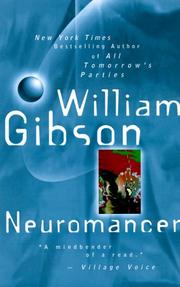
  2. NeuromancerWilliam Gibson, 1984
  3. True NamesVernor Vinge, 1984
  4. The Handmaid's TaleMargaret Atwood, 1985
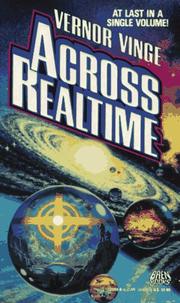
  5. Across RealtimeVernor Vinge, 1986
Charles Stross · 1900

A novel of the Singularity, when artificial intelligence surpasses the human mind.

William Gibson · 1984

The first novel of the Sprawl trilogy and the classic of cyberpunk.

“Neuromancer also, and I believe, and I'm not alone in this, that sci-fi is a great place to go looking for the future, right?” — Tim Ferriss

Source: The Tim Ferriss Show Transcripts: Max Levchin, PayPal and Affirm — The Path from The Soviet Union to Building Multi-Billion Dollar Companies (Plus: Real-World Socialism vs. Capitalism) (#869)

Recommended by: Tim Ferriss, Naval Ravikant
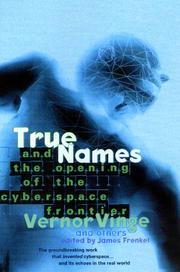
Vernor Vinge · 1984

A novella that mixes hard science fiction with sword-and-sorcery imagery.

Recommended by: Marc Andreessen

Margaret Atwood · 1985

A dystopian novel set in Gilead, a patriarchal theocracy in near-future New England.

Vernor Vinge · 1986

Two linked novels: The Peace War and Marooned in Realtime.

Recommended by: Stewart Brand
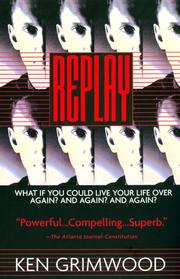
Ken Grimwood · 1986

A man dies and wakes up 25 years younger, living his life again and again.

“Novelette about a man who dies of a heart attack but then is suddenly back in college, at it was, repeating his life, so he decides to make changes this time but still dies of a heart attack at the exact same moment, sending him back to college again, but a little later. After many repeats I think I was supposed to learn a lesson, but instead just captivating entertainment.” — Derek Sivers

Source: Derek Sivers book notes (primary, rated list) · Rating: 3/10

Recommended by: Derek Sivers, Noah Kagan

Michael Crichton · 1990

An amusement park of genetically re-created dinosaurs collapses into chaos.

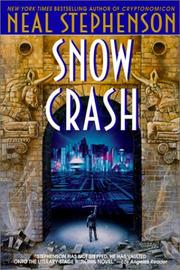
Neal Stephenson · 1992

A novel of a hacker in a corporate-run America and its virtual world, the Metaverse.

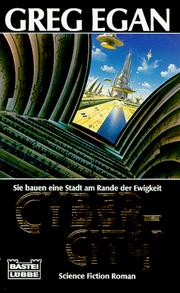
Greg Egan · 1994

A man's plan to create immortality through simulated life grows beyond his control.

“I didn’t read much last month, but I got an email this morning from someone who mentioned that I’d like Greg Egan’s Permutation City. I read it in April when I was in Japan on my Q219 Vacation with Amy but never really blogged much about it.” — Brad Feld

Source: Book: Recursion, Permutation City, and Fall — Feld Thoughts

Recommended by: Brad Feld, Matt Mullenweg, Naval Ravikant
Greg Egan · 1995

A science fiction novel of a journalist investigating a future world.

Recommended by: Naval Ravikant
Neal Stephenson · 1995

A novel of a nanotech future and a stolen copy of an interactive teaching book.

Ken MacLeod · 1995

A future of intelligent weapons and software where humanity struggles to recover.

Recommended by: Marc Andreessen

Ken MacLeod · 1996

A clone arrives on New Mars, where the free market rules and death is minor.

Recommended by: Marc Andreessen
Greg Egan · 1997

A hard science fiction novel of a thirtieth century where minds live in networks.

Recommended by: Naval Ravikant
Ken MacLeod · 1997

Centuries after a catastrophe, a young scholar helps humanity return to space.

Recommended by: Marc Andreessen
Ken MacLeod · 1998

A soldier of a utopian Solar Union's defence force, set in the 24th century.

Recommended by: Marc Andreessen

Naomi Alderman · 1998

A novel in which teenage girls gain a physical power that overturns sex roles.

Kōshun Takami, Masayuki Taguchi, Koushun Takami, Kashoun Takami · 1999

A thriller of a junior high school class taken to a deserted island.

Recommended by: Patrick Collison
Neal Stephenson · 1999

A novel of wartime codebreakers and their descendants building a data haven.

Arthur C. Clarke · 2000

A future in which a technology lets anyone see any place and any past moment.

Recommended by: David Friedberg
Richard Morgan · 2002

A noir science fiction novel in which minds are stored and moved between bodies.

T4 Feed
M. T. Anderson · 2002

A satire of a future where people have a network feed in their heads.

Recommended by: Mohnish Pabrai
Richard Morgan · 2003

A science fiction novel of mercenaries in a twenty-fifth-century interstellar war.

Recommended by: Marc Andreessen
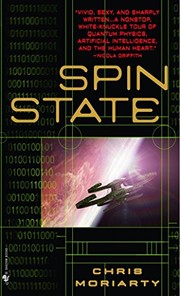
Chris Moriarty · 2003

Hard science fiction of a UN Peacekeeper in a world of AIs and genetic constructs.

Recommended by: Marc Andreessen
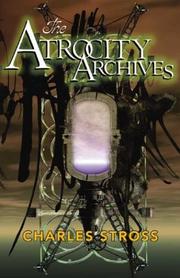
Charles Stross · 2004

Spy thriller and Lovecraftian comedy of an IT worker at a secret British agency.

Recommended by: Marc Andreessen
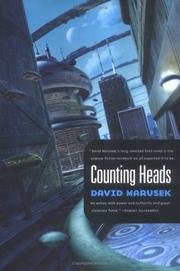
David Marusek · 2005

A novel of a future where robots do the work and people live for centuries.

Recommended by: Marc Andreessen
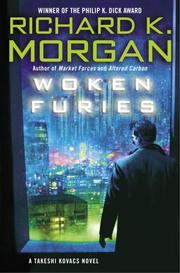
Richard Morgan · 2005

A noir science fiction novel of Takeshi Kovacs in the twenty-fifth century.

Recommended by: Marc Andreessen

Charles Stross · 2006

A science fiction novel of a man with missing memories inside a social experiment.

Recommended by: Marc Andreessen
Vernor Vinge · 2006

A poet cured of Alzheimer's wakes in 2025 San Diego to a world of smart lenses.

Recommended by: Marc Andreessen
Chris Moriarty · 2006

A clone defects to Israel with a genetic weapon that could wipe out humanity.

Recommended by: Marc Andreessen
Charles Stross · 2006

A secret-agency hacker must stop a billionaire raising a horror from the ocean.

Recommended by: Marc Andreessen

Ken MacLeod · 2007

A British patriot and French spy makes sense of a nuclear attack on Scotland.

Recommended by: Marc Andreessen

Ernest Cline · 2008

A novel of a teenager hunting 1980s-themed puzzles in a virtual world for a fortune.

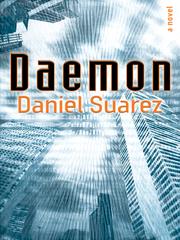
Daniel Suarez · 2009

A thriller about a computer program that runs on after its creator's death.

“If you read one book in 2009, read Daemon. It’s unusual for me to recommend a book so early in the year.” — Brad Feld

Source: Book: Daemon — Feld Thoughts

Recommended by: Balaji S. Srinivasan, Brad Feld and 3 others
Greg Egan · 2011

Hard science fiction in a universe where space and time follow different rules.

Recommended by: Patrick Collison
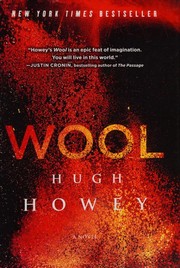
T4 Wool
Hugh Howey · 2011

People live underground, watching a ruined world outside through a fading view.

“One of them was Wool Omnibus Edition (Wool 1 – 5) which I gobbled down the past two days. The writer, Hugh Howey, has an inspirational arc which, if I ever get into writing scifi, I hope I follow. I love post-apocalyptical Earth stories that just dump you into the middle, take off like a shot, and leave it to you to catch up as you slowly piece together what is going on.” — Brad Feld

Source: Book: Wool Omnibus Edition (Wool 1 – 5) — Feld Thoughts

Recommended by: Brad Feld, Matt Mullenweg, Ev Williams

Peter Heller · 2012

A pilot survives with his dog after a sickness, then flies off in search of a voice.

Recommended by: Patrick O'Shaughnessy
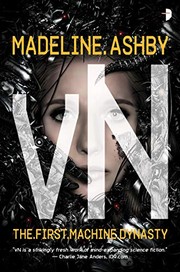
T4 vN
Madeline Ashby · 2012

A self-replicating humanoid robot raised in a mixed human and machine family.

Recommended by: Brad Feld

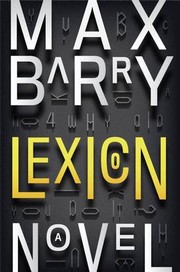
Max Barry · 2013

A thriller about a school that trains students to use words to control minds.

Recommended by: Radhika Jones
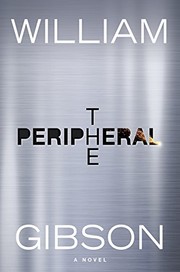
William Gibson · 2014

A woman testing a game for her brother witnesses a murder scheme.

Recommended by: Brad Feld

Eliot Peper · 2016

In a near future, inequality and surveillance push Oakland toward civil war.

“If you are a looking for an awesome sci-fi book to read, download Cumulus by Eliot Peper right now.” — Brad Feld

Source: Book: Cumulus — Feld Thoughts

Recommended by: Brad Feld, Ev Williams
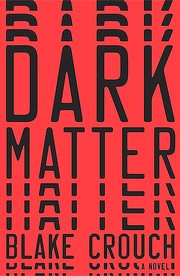
Blake Crouch · 2016

A science fiction thriller about a kidnapped physicist and the nature of reality.

“An annoying thing about Twitter Search is that it’s not good enough to help me find who tweeted at me that Dark Matter by Blake Crouch is something I should read.” — Brad Feld

Source: Book: Dark Matter — Feld Thoughts

Recommended by: Brad Feld, Paul Jarvis, Ran Segall and 1 other

Eliot Peper · 2016

A woman at Burning Man is pulled into unravelling a sinister mystery at its heart.

“Neon Fever Dream by Eliot Peper was outstanding.” — Brad Feld

Source: Book: Neon Fever Dream — Feld Thoughts

Recommended by: Brad Feld
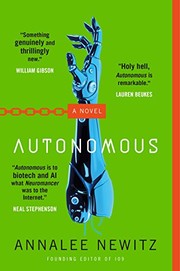
Annalee Newitz · 2017

A science fiction novel of a drug pirate and a robot in a world where all is owned.

Recommended by: Bertalan Meskó
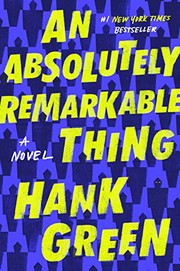
Hank Green · 2018

A novel of a young woman who becomes an overnight celebrity in something strange.

Recommended by: Zoë Foster Blake
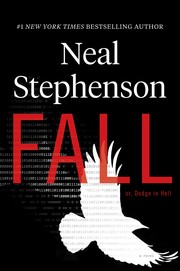
Neal Stephenson · 2019

A novel of a billionaire whose mind is uploaded to the cloud.

“They are Blake Crouch’s book Recursion and Neal Stephenson’s book Fall; or, Dodge in Hell. All three of these books are outstanding.” — Brad Feld

Source: Book: Recursion, Permutation City, and Fall — Feld Thoughts

Recommended by: Brad Feld, Naval Ravikant
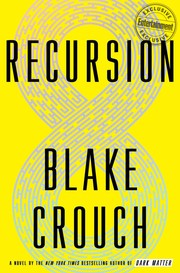
Blake Crouch · 2019

A New York detective looks into False Memory Syndrome, where memory makes reality.

“They are Blake Crouch’s book Recursion and Neal Stephenson’s book Fall; or, Dodge in Hell. All three of these books are outstanding.” — Brad Feld

Source: Book: Recursion, Permutation City, and Fall — Feld Thoughts

Recommended by: Brad Feld, Nat Eliason, Jordan Hughes and 1 other
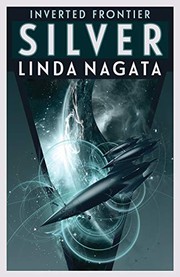
Linda Nagata · 2019

Urban, driven from his starship by a broken god, faces Lezuri's bid to return home.

Recommended by: Emmett Shear

Margaret Atwood · 2019

Gilead fifteen years on, told by three women: Daisy, Agnes and Lydia.

Hank Green · 2020

The sequel in which April May and others deal with the aftermath of the Carls.

Recommended by: Zoë Foster Blake
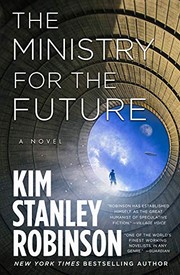
Kim Stanley Robinson · 2020

A novel of fictional eyewitness accounts of how climate change will affect everyone.

Recommended by: Bill Gates

Daniel Suarez

A thriller about autonomous drones that kill without human control.

“His previous two books – Daemon and Freedom(TM) were superb, but Kill Decision really nails it and takes you to a much more real, and completely terrifying place.” — Brad Feld

Source: Book: Kill Decision — Feld Thoughts

Recommended by: Brad Feld, Marc Andreessen
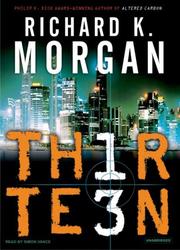
Richard Morgan

A man bred for aggression, a 'Thirteen', hunts down renegades of his own kind.

Recommended by: Marc Andreessen

More science fiction