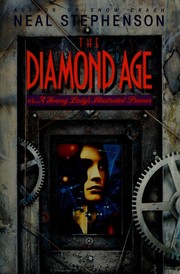
The Diamond Age
A novel of a nanotech future and a stolen copy of an interactive teaching book.
Summary
Stephenson's 1995 novel is set in a future where nanotechnology has made material goods nearly free through matter compilers connected to a shared feed, and where nation states have been replaced by phyles, meaning voluntary associations organised around culture and shared values rather than territory.
The plot follows a stolen copy of the Young Lady's Illustrated Primer, an interactive book commissioned by a neo-Victorian aristocrat for his granddaughter and designed to produce a subversive and capable person through adaptive individual instruction. The copy reaches Nell, a girl from the underclass, and the novel follows what the Primer does for a child with no other resources.
The education argument is the substance. The Primer works because it responds to the individual child, because it draws on her actual circumstances, and because it is backed by a human performer, a ractor named Miranda, who supplies the voice and the responsiveness that the software cannot. Stephenson's implicit point is that the human element is what makes it work, which is why mass-produced copies given to other children produce different results.
The cultural material concerns the neo-Victorian phyle, which adopted a strict code deliberately after concluding that a society without shared standards cannot function, and Stephenson treats this as a serious argument rather than as satire. The novel's structure deteriorates in the final third and the ending is widely considered unsatisfactory. The technology is imagined at a level of detail that slows the narrative. Its readership in technology circles comes from the Primer as a model of personalised education and from the phyle as a model of post-territorial affiliation.
Key takeaways 8
- An interactive book that adapts to an individual child's circumstances produces results that standardised instruction cannot.
- The human performer supplying voice and responsiveness is what makes the adaptive book work, which the technology alone does not replicate.
- Identical educational technology given to different children produces different outcomes depending on what surrounds it.
- Nation states can be replaced by voluntary associations organised around shared culture rather than around territory.
- A society that adopts strict shared standards deliberately, after observing what their absence produces, is presented as a serious position rather than as satire.
- Making material goods nearly free does not remove inequality, since status and capability become the scarce resources instead.
- Universal access to production capability requires a shared infrastructure that whoever controls it can restrict.
- The novel's structure deteriorates substantially in its final third, which most readers identify as its principal weakness.
Who should read it
Readers interested in personalised education, post-territorial affiliation and the limits of what technology alone accomplishes.
Who recommended it 5
Similar books 6
Chosen by shared topics, the entries that hold them, and the people who recommended both.
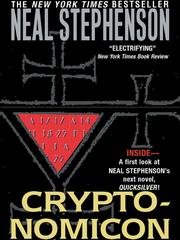
A novel of wartime codebreakers and their descendants building a data haven.
“My favorite is probably Cryptonomicon, which I think is a rare choice as a favorite” — Tim Ferriss
Recommended by: Tim Ferriss, Ev Williams, Marc Andreessen and 1 other
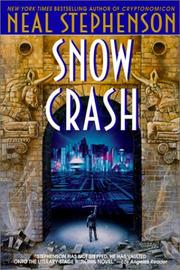
A novel of a hacker in a corporate-run America and its virtual world, the Metaverse.
Recommended by: Nat Eliason, Naval Ravikant, Alexis Ohanian and 12 others

In a near future, inequality and surveillance push Oakland toward civil war.
“If you are a looking for an awesome sci-fi book to read, download Cumulus by Eliot Peper right now.” — Brad Feld
Source: Book: Cumulus — Feld Thoughts
Recommended by: Brad Feld, Ev Williams
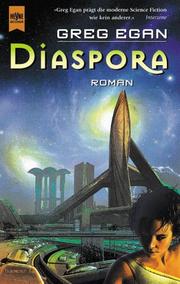
A hard science fiction novel of a thirtieth century where minds live in networks.
Recommended by: Naval Ravikant
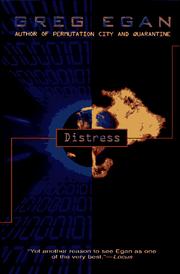
A science fiction novel of a journalist investigating a future world.
Recommended by: Naval Ravikant
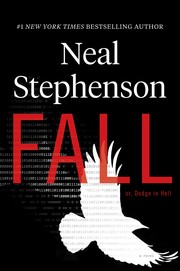
A novel of a billionaire whose mind is uploaded to the cloud.
“They are Blake Crouch’s book Recursion and Neal Stephenson’s book Fall; or, Dodge in Hell. All three of these books are outstanding.” — Brad Feld
Source: Book: Recursion, Permutation City, and Fall — Feld Thoughts
Recommended by: Brad Feld, Naval Ravikant