Updates

  1. Person pages list letters, writing, profiles and links as sortable tables with filters, and show each person's companies as links; Fund letters show each letter's description in its own column.
  2. Experts show a checked job title and a short description of each person; 30 more people have photographs.
  3. Every company, fund, university and publication the experts work for has a page listing the people there.
  4. Fund letters show each letter's thesis and filter by it; 225 person pages list the essays, columns and newsletter issues the person wrote.
  5. Person pages list every essay and newsletter issue a person wrote, and their own books as a table in List view.
  6. Recommends shows the five largest kinds of book and the rest under More; browse pictures load sooner.
  7. Podcasts and talks link the original episode, filter by Audio and video or Press, and list each publisher once.
  8. Pages are wider, Recommends has List and Grid, and a filter clicked again turns off.
  9. Book cards sit in a ruled grid with Open Library and Goodreads links and each book's one-line note.
  10. Funds is now Investors; each investor's styles are buttons that filter the table.
  11. Podcasts and talks on a person's page filter by year and publisher and show as a list or a grid of pictures.
  12. Quotes show only people's own words: 472 summaries written by list sites are gone.
  13. Country pages open from Browse again, and every link on the shelf lands on a page.
  14. Subject and person pages show their sections as tabs, and each book appears once on a person's page.
  15. Book cards show the quote, who said it and the source; grids show five cards to a row.
  16. On a phone, a menu holds the sections, search, Updates, Feedback and dark mode.
  17. Feedback takes a screenshot of the page with no browser prompt, opens a screenshot full size when you click it, and clears itself once sent.
  18. Book cards are centred, search names the topic each book sits in, and any text cut short shows whole on hover.
  19. Search groups its results by kind: people, companies, geographies, subjects, topics, books, funds, fund letters and papers.
  20. The Books table lists who recommended each book by name, and the browser tab names the section you are in.
  21. Feedback can take a screenshot of the page, or one you paste or choose, and opens in the corner beside Updates.
  22. Each rail button reopens its section where you left it, and Browse, Table and People show on every book and subject page.
  23. Filters grey out choices that hold nothing instead of hiding them, and Books › People filters by authors or recommenders.
  24. Feedback takes a subject line and up to three screenshots.
  25. Biographies are grouped by the person they are about: 41 new pages, from Abraham Lincoln to Lee Kuan Yew.
  26. Sport splits into 23 sports, and Religion into one topic per faith.
  27. Book lists show as cards: the cover, one recommendation quote and every recommender by name.
  28. Seventeen subjects that had two or three pages under different names now have one page each.
  29. Every page lists its Experts as authors and recommenders, with a link to them on the Experts tab.
  30. Economics, Financial history, Financial panics and Accounting are subjects of their own, with one page per financial crisis.
  31. Book, person and subject pages open inside the app, so the tabs stay in view.
  32. 996 more book covers, and photographs or logos for 227 more people and companies.
  33. Books › Browse shows every subject as cards, and the rail holds Fund letters, Papers, Experts, Books and Funds.
  34. Every topic over 150 books splits into narrower topics, each with a page of its own.

Send feedback

What is it?
Screenshots, up to 3 (optional)
or paste one with Ctrl+V

We use your email only to reply to you.

King Icahn

King Icahn

Mark Stevens
1993
T3 326 pages · about 5h 26m to read Open Librarygoodreads

The only full biography; Icahn cooperated then repudiated it.

Summary

Mark Stevens wrote this unauthorised biography of Carl Icahn covering his career from the 1960s through the early 1990s. It traces the arc from options arbitrage at Gruntal, through the risk arbitrage operation Icahn built, to the campaigns against Tappan, Marshall Field, Phillips Petroleum, Texaco and finally the acquisition of TWA.

Stevens sets out the method clearly. Icahn identified companies trading below the value of their assets or below what a buyer would pay, accumulated a position, and then forced a response by threatening a tender offer or a proxy contest. Whether the outcome was a sale of the company, a recapitalisation, or a payment to Icahn to go away, the position was profitable. Stevens documents the greenmail transactions in which target boards bought back Icahn's stake at a premium unavailable to other shareholders, and he is critical of them.

The TWA chapters are the most substantive. Icahn acquired the airline in 1985, took it private in 1988 in a transaction that loaded it with debt and paid himself, sold its London routes, and left it in bankruptcy. Stevens treats this as the point at which the shareholder-value argument became indefensible. The book is hostile, was written without Icahn's cooperation, and stops thirty years before the end of his career, including the Icahn Enterprises period and the later activist campaigns. It remains the fullest account of the formative period.

Key takeaways 7

  1. Icahn's method was to buy an undervalued position and then create the event that would realise the value, rather than waiting for one.
  2. Greenmail payments transferred value from remaining shareholders to the raider, which contradicts the shareholder-value justification offered for the activity.
  3. The threat of a tender offer was worth more than the offer itself, because it forced boards to act without requiring Icahn to fund an acquisition.
  4. Icahn's early options arbitrage taught him to look for mispriced claims on the same underlying asset, which is the structure of every campaign he ran.
  5. TWA's dismemberment showed that an activist who gains control faces a different problem from one who forces a sale, and Icahn was better at the second.
  6. Boards of the period had no defence against a determined accumulator because they had never faced one.
  7. Stevens argues that the discipline Icahn imposed on complacent managements was real, and that he captured most of the resulting value for himself.

Who should read it

Investors studying activist strategy who want the origin of the modern campaign playbook and a hostile account of what it cost the companies involved.

Similar books 6

Chosen by shared topics, the entries that hold them, and the people who recommended both.

Jeff Gramm · 2016

Eight activist letters over a century, from Graham in 1927, and what lay behind them.

Recommended by: Mohnish Pabrai
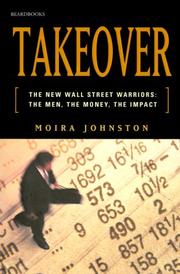
Moira Johnston · 1986

Contemporary reporting on the raiders, including his Phillips Petroleum fight.
Connie Bruck · 1988

How Milken's Drexel junk-bond desk financed the 1980s buyouts and hostile takeovers.

Recommended by: Mohnish Pabrai
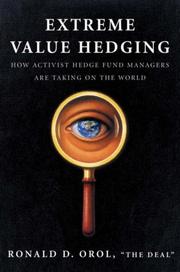
Ronald D. Orol · 2007

The activist hedge fund playbook, campaign by campaign.

Edward O. Thorp · 2017

From beating blackjack with maths to pricing warrants and running a hedge fund.

Philip L. Carret, Philip Carret · 1995

A fund manager of sixty years on investing, business and a long life.

Recommended by: Mohnish Pabrai

Where it sits in the reference 2

Biographies
Investment styles

Topics

Biography and MemoirInvestingInvestors, Traders and Gamblers