Updates

  1. Person pages list letters, writing, profiles and links as sortable tables with filters, and show each person's companies as links; Fund letters show each letter's description in its own column.
  2. Experts show a checked job title and a short description of each person; 30 more people have photographs.
  3. Every company, fund, university and publication the experts work for has a page listing the people there.
  4. Fund letters show each letter's thesis and filter by it; 225 person pages list the essays, columns and newsletter issues the person wrote.
  5. Person pages list every essay and newsletter issue a person wrote, and their own books as a table in List view.
  6. Recommends shows the five largest kinds of book and the rest under More; browse pictures load sooner.
  7. Podcasts and talks link the original episode, filter by Audio and video or Press, and list each publisher once.
  8. Pages are wider, Recommends has List and Grid, and a filter clicked again turns off.
  9. Book cards sit in a ruled grid with Open Library and Goodreads links and each book's one-line note.
  10. Funds is now Investors; each investor's styles are buttons that filter the table.
  11. Podcasts and talks on a person's page filter by year and publisher and show as a list or a grid of pictures.
  12. Quotes show only people's own words: 472 summaries written by list sites are gone.
  13. Country pages open from Browse again, and every link on the shelf lands on a page.
  14. Subject and person pages show their sections as tabs, and each book appears once on a person's page.
  15. Book cards show the quote, who said it and the source; grids show five cards to a row.
  16. On a phone, a menu holds the sections, search, Updates, Feedback and dark mode.
  17. Feedback takes a screenshot of the page with no browser prompt, opens a screenshot full size when you click it, and clears itself once sent.
  18. Book cards are centred, search names the topic each book sits in, and any text cut short shows whole on hover.
  19. Search groups its results by kind: people, companies, geographies, subjects, topics, books, funds, fund letters and papers.
  20. The Books table lists who recommended each book by name, and the browser tab names the section you are in.
  21. Feedback can take a screenshot of the page, or one you paste or choose, and opens in the corner beside Updates.
  22. Each rail button reopens its section where you left it, and Browse, Table and People show on every book and subject page.
  23. Filters grey out choices that hold nothing instead of hiding them, and Books › People filters by authors or recommenders.
  24. Feedback takes a subject line and up to three screenshots.
  25. Biographies are grouped by the person they are about: 41 new pages, from Abraham Lincoln to Lee Kuan Yew.
  26. Sport splits into 23 sports, and Religion into one topic per faith.
  27. Book lists show as cards: the cover, one recommendation quote and every recommender by name.
  28. Seventeen subjects that had two or three pages under different names now have one page each.
  29. Every page lists its Experts as authors and recommenders, with a link to them on the Experts tab.
  30. Economics, Financial history, Financial panics and Accounting are subjects of their own, with one page per financial crisis.
  31. Book, person and subject pages open inside the app, so the tabs stay in view.
  32. 996 more book covers, and photographs or logos for 227 more people and companies.
  33. Books › Browse shows every subject as cards, and the rail holds Fund letters, Papers, Experts, Books and Funds.
  34. Every topic over 150 books splits into narrower topics, each with a page of its own.

Send feedback

What is it?
Screenshots, up to 3 (optional)
or paste one with Ctrl+V

We use your email only to reply to you.

Learn to Earn

Learn to Earn

Peter Lynch, John Rothchild
1995
T3 272 pages · about 4h 32m to read Open Librarygoodreads

Introduction to business and investing aimed at beginners and teenagers.

Summary

Peter Lynch and John Rothchild wrote this for beginners, explicitly aimed at teenagers and young adults who have never owned a security. It is the simplest of Lynch's three books and the only one that starts from what a company is.

The first part is a history of American capitalism written for someone who has not encountered it: the colonial trading companies, the growth of railroads, the industrial consolidations, the 1929 crash and the Depression, the postwar expansion. Lynch uses this to make his central point, which is that the ownership of productive businesses has been the reliable route to long-run wealth accumulation and that the risk of not owning equities exceeds the risk of owning them. The second part covers practical mechanics: what a share is, how to read a balance sheet and income statement, what the standard ratios mean, how mutual funds work, and what brokers charge.

Running through it is Lynch's method from One Up on Wall Street: notice the products and shops you use, investigate the companies behind them, and understand the business before buying the stock. The book is dated in its specific examples, most of which are 1990s consumer companies, and in its treatment of costs, since index funds and zero-commission brokerage have transformed the arithmetic since. The argument for early and continuous equity ownership has held up.

Key takeaways 7

  1. Not owning equities is itself a risk position, and over long horizons it has been the more damaging one.
  2. Young investors have time as their principal advantage, and starting early matters more than selecting well.
  3. A share of stock is a fractional claim on a business, and anyone who cannot describe the business should not own the share.
  4. Ordinary consumers observe successful products before analysts write about them, which is a genuine informational advantage.
  5. Reading a company's balance sheet and income statement is within the reach of anyone willing to spend a few hours learning the vocabulary.
  6. Lynch argues that the history of American business shows creative destruction removing dominant firms regularly, so no holding is permanent.
  7. Costs and taxes compound against the investor exactly as returns compound for them.

Who should read it

Beginning investors, and parents or managers teaching them, who want a first book that starts from what a company is rather than from portfolio theory.

About Peter Lynch

Manager, Fidelity Magellan Fund 1977-1990

A documented 29% annualized record at Magellan plus three books that outlived their news cycle and put 'buy what you know' into general use.

Fidelity Magellan Fund

Similar books 6

Chosen by shared topics, the entries that hold them, and the people who recommended both.
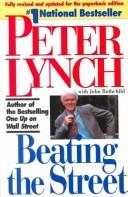
Peter Lynch, John Rothchild · 1993

Lynch's stock-by-stock walkthrough of how he picked them.

“Peter Lynch's books have some great insights [and] would be great for anyone to read.” — Julian Robertson

Source: Robertson on Peter Lynch's books

Recommended by: Julian Robertson, Mohnish Pabrai and 3 others

Peter Lynch, John Rothchild · 1989

The amateur's edge argument from the Magellan record.

“One book that probably made the biggest impact on my career in those early formidable years back in the day was Peter Lynch's 'One Up on Wall Street.'” — David Rolfe

Source: Rolfe on the book that most shaped his early career

Recommended by: David Rolfe, Francisco Garcia Parames and 9 others
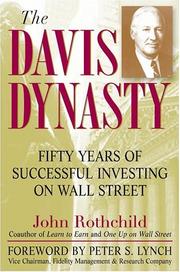
John Rothchild · 2001

Three generations compounding a fortune through insurance stocks

“When John Rothchild combines history and biography with investing in one package, history illuminates the biography and investing. This is a sparkling book on each level, but even more so as an…” — Peter Bernstein

Source: Bernstein on Rothchild mixing history, biography and investing

Recommended by: Mohnish Pabrai, Peter Bernstein and 1 other

Christopher Mayer · 2015

Subtitled Stocks That Return 100-to-1 and How to Find Them; expanded edition 2025.

Recommended by: Mohnish Pabrai

Thomas William Phelps · 1972

The 1972 original that Mayer updated; buy right and hold on.

Recommended by: Mohnish Pabrai

Where it sits in the reference 2

Investors
Journalists

Topics

Investing