Updates

  1. Person pages list letters, writing, profiles and links as sortable tables with filters, and show each person's companies as links; Fund letters show each letter's description in its own column.
  2. Experts show a checked job title and a short description of each person; 30 more people have photographs.
  3. Every company, fund, university and publication the experts work for has a page listing the people there.
  4. Fund letters show each letter's thesis and filter by it; 225 person pages list the essays, columns and newsletter issues the person wrote.
  5. Person pages list every essay and newsletter issue a person wrote, and their own books as a table in List view.
  6. Recommends shows the five largest kinds of book and the rest under More; browse pictures load sooner.
  7. Podcasts and talks link the original episode, filter by Audio and video or Press, and list each publisher once.
  8. Pages are wider, Recommends has List and Grid, and a filter clicked again turns off.
  9. Book cards sit in a ruled grid with Open Library and Goodreads links and each book's one-line note.
  10. Funds is now Investors; each investor's styles are buttons that filter the table.
  11. Podcasts and talks on a person's page filter by year and publisher and show as a list or a grid of pictures.
  12. Quotes show only people's own words: 472 summaries written by list sites are gone.
  13. Country pages open from Browse again, and every link on the shelf lands on a page.
  14. Subject and person pages show their sections as tabs, and each book appears once on a person's page.
  15. Book cards show the quote, who said it and the source; grids show five cards to a row.
  16. On a phone, a menu holds the sections, search, Updates, Feedback and dark mode.
  17. Feedback takes a screenshot of the page with no browser prompt, opens a screenshot full size when you click it, and clears itself once sent.
  18. Book cards are centred, search names the topic each book sits in, and any text cut short shows whole on hover.
  19. Search groups its results by kind: people, companies, geographies, subjects, topics, books, funds, fund letters and papers.
  20. The Books table lists who recommended each book by name, and the browser tab names the section you are in.
  21. Feedback can take a screenshot of the page, or one you paste or choose, and opens in the corner beside Updates.
  22. Each rail button reopens its section where you left it, and Browse, Table and People show on every book and subject page.
  23. Filters grey out choices that hold nothing instead of hiding them, and Books › People filters by authors or recommenders.
  24. Feedback takes a subject line and up to three screenshots.
  25. Biographies are grouped by the person they are about: 41 new pages, from Abraham Lincoln to Lee Kuan Yew.
  26. Sport splits into 23 sports, and Religion into one topic per faith.
  27. Book lists show as cards: the cover, one recommendation quote and every recommender by name.
  28. Seventeen subjects that had two or three pages under different names now have one page each.
  29. Every page lists its Experts as authors and recommenders, with a link to them on the Experts tab.
  30. Economics, Financial history, Financial panics and Accounting are subjects of their own, with one page per financial crisis.
  31. Book, person and subject pages open inside the app, so the tabs stay in view.
  32. 996 more book covers, and photographs or logos for 227 more people and companies.
  33. Books › Browse shows every subject as cards, and the rail holds Fund letters, Papers, Experts, Books and Funds.
  34. Every topic over 150 books splits into narrower topics, each with a page of its own.

Send feedback

What is it?
Screenshots, up to 3 (optional)
or paste one with Ctrl+V

We use your email only to reply to you.

Lehman Brothers: A Crisis of Value

Lehman Brothers: A Crisis of Value

Oonagh McDonald
2015
T3 288 pages · about 4h 48m to read Open Librarygoodreads

Focused on accounting and Repo 105.

Summary

Oonagh McDonald is a former British member of parliament and financial regulator, and she approaches the Lehman Brothers failure through the question of asset valuation rather than through narrative. Her argument is that Lehman failed because nobody, inside or outside the firm, could establish what its assets were worth, and that this uncertainty rather than any single exposure destroyed confidence.

She works through the specific valuation problems: the commercial real estate portfolio including the Archstone transaction, the residential mortgage holdings, the leveraged loan commitments, and the illiquid principal investments that had no observable market prices. She covers the Repo 105 transactions, in which Lehman characterised repurchase agreements as sales in order to remove assets from the balance sheet at quarter ends, and the Valukas examiner's report that documented them. She also examines the regulatory position, the consolidated supervised entity programme under which the Securities and Exchange Commission oversaw Lehman, and the question of whether the Federal Reserve could legally have lent against Lehman's collateral.

McDonald writes as a regulator, and the book is dense with document citation rather than reporting. She engages directly with Laurence Ball's argument that the Federal Reserve had the legal authority to save Lehman and chose not to, and reaches a different conclusion. The book assumes familiarity with the events and is not an introduction. Its contribution is the sustained focus on valuation, which most accounts of the failure treat as background.

Key takeaways 7

  1. Lehman failed because its asset values could not be established, not because a specific exposure was identified as fatal.
  2. Level three assets valued by internal models constituted a large enough share of the balance sheet to make reported equity uninformative.
  3. Repo 105 transactions removed assets from the reported balance sheet at quarter ends without changing the firm's actual position.
  4. The Archstone commercial property transaction committed capital at the top of the market and could not be syndicated afterwards.
  5. Consolidated supervised entity regulation gave the Securities and Exchange Commission responsibility without the examination capacity to exercise it.
  6. McDonald argues that Lehman lacked sufficient unencumbered collateral to borrow from the Federal Reserve, contradicting Ball's account.
  7. Counterparties withdrew from Lehman because they could not value its collateral, which made the funding run a valuation problem rather than a liquidity one.

Who should read it

Analysts and regulators who want the valuation and accounting mechanics of the Lehman failure rather than a narrative of the final weekend.

Similar books 6

Chosen by shared topics, the entries that hold them, and the people who recommended both.
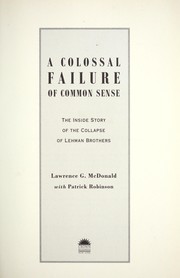
Lawrence G. McDonald, Patrick Robinson · 2009

Lehman Brothers' fall seen from its trading floor, and the warnings it ignored.

Laurence M. Ball · 2018

Evidence that the Fed could legally have saved Lehman Brothers in 2008.
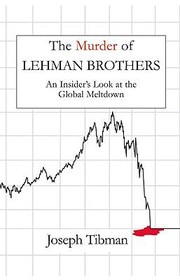
Joseph Tibman · 2009

An insider's account of the forces that led to Lehman's collapse and what followed.
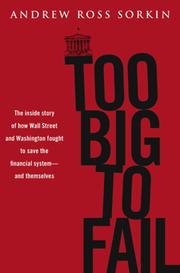
Andrew Ross Sorkin · 2009

Inside the meetings of bankers and regulators during the 2008 financial crisis.

Where it sits in the reference 2

Companies
Financial panics

Topics

Company HistoriesFinance and Markets