Updates

  1. Person pages list letters, writing, profiles and links as sortable tables with filters, and show each person's companies as links; Fund letters show each letter's description in its own column.
  2. Experts show a checked job title and a short description of each person; 30 more people have photographs.
  3. Every company, fund, university and publication the experts work for has a page listing the people there.
  4. Fund letters show each letter's thesis and filter by it; 225 person pages list the essays, columns and newsletter issues the person wrote.
  5. Person pages list every essay and newsletter issue a person wrote, and their own books as a table in List view.
  6. Recommends shows the five largest kinds of book and the rest under More; browse pictures load sooner.
  7. Podcasts and talks link the original episode, filter by Audio and video or Press, and list each publisher once.
  8. Pages are wider, Recommends has List and Grid, and a filter clicked again turns off.
  9. Book cards sit in a ruled grid with Open Library and Goodreads links and each book's one-line note.
  10. Funds is now Investors; each investor's styles are buttons that filter the table.
  11. Podcasts and talks on a person's page filter by year and publisher and show as a list or a grid of pictures.
  12. Quotes show only people's own words: 472 summaries written by list sites are gone.
  13. Country pages open from Browse again, and every link on the shelf lands on a page.
  14. Subject and person pages show their sections as tabs, and each book appears once on a person's page.
  15. Book cards show the quote, who said it and the source; grids show five cards to a row.
  16. On a phone, a menu holds the sections, search, Updates, Feedback and dark mode.
  17. Feedback takes a screenshot of the page with no browser prompt, opens a screenshot full size when you click it, and clears itself once sent.
  18. Book cards are centred, search names the topic each book sits in, and any text cut short shows whole on hover.
  19. Search groups its results by kind: people, companies, geographies, subjects, topics, books, funds, fund letters and papers.
  20. The Books table lists who recommended each book by name, and the browser tab names the section you are in.
  21. Feedback can take a screenshot of the page, or one you paste or choose, and opens in the corner beside Updates.
  22. Each rail button reopens its section where you left it, and Browse, Table and People show on every book and subject page.
  23. Filters grey out choices that hold nothing instead of hiding them, and Books › People filters by authors or recommenders.
  24. Feedback takes a subject line and up to three screenshots.
  25. Biographies are grouped by the person they are about: 41 new pages, from Abraham Lincoln to Lee Kuan Yew.
  26. Sport splits into 23 sports, and Religion into one topic per faith.
  27. Book lists show as cards: the cover, one recommendation quote and every recommender by name.
  28. Seventeen subjects that had two or three pages under different names now have one page each.
  29. Every page lists its Experts as authors and recommenders, with a link to them on the Experts tab.
  30. Economics, Financial history, Financial panics and Accounting are subjects of their own, with one page per financial crisis.
  31. Book, person and subject pages open inside the app, so the tabs stay in view.
  32. 996 more book covers, and photographs or logos for 227 more people and companies.
  33. Books › Browse shows every subject as cards, and the rail holds Fund letters, Papers, Experts, Books and Funds.
  34. Every topic over 150 books splits into narrower topics, each with a page of its own.

Send feedback

What is it?
Screenshots, up to 3 (optional)
or paste one with Ctrl+V

We use your email only to reply to you.

The Devil's Casino: Friendship, Betrayal, an

The Devil's Casino: Friendship, Betrayal, and the High-Stakes Games Played Inside Lehman Brothers

Vicky Ward
2010
T2 270 pages · about 4h 30m to read Open Librarygoodreads

Summary

Vicky Ward, a Vanity Fair contributor, wrote this account of Lehman Brothers focused on its internal culture and on the personal relationships among its senior executives, particularly Richard Fuld and Joseph Gregory.

The reporting covers the firm from the 1980s, including its period inside American Express, the 1994 spin-off, and the rebuilding under Fuld. Ward's central subject is the executive committee and the way Fuld's isolation and Gregory's management of internal politics affected decisions. She documents the promotion of loyalists over people with relevant experience, the removal of executives who raised concerns about the firm's real estate exposure, particularly Michael Gelband, and the compensation and spending culture among senior management.

The book was criticised on publication for its emphasis on the personal lives and social behaviour of executives and their spouses, which occupies substantial space and adds little to understanding the failure. Ward's sourcing is largely from people who had left the firm or been removed, which shapes the account. The material on how internal dissent was handled and on Gregory's role in personnel decisions is the useful part. Readers wanting the financial mechanics should go elsewhere, including to Oonagh McDonald or to the Valukas examiner's report.

Key takeaways 6

  1. Executives who raised concerns about Lehman's real estate exposure were removed rather than heard.
  2. Promotion at Lehman rewarded loyalty to the chief executive over relevant experience in the businesses being managed.
  3. Fuld's isolation from the trading floor meant he relied on Gregory's account of what the firm held.
  4. Gregory controlled personnel decisions and used them to manage internal politics rather than capability.
  5. Ward's sourcing is largely from departed executives, which shapes the account and should be weighed.
  6. The book's attention to executives' personal lives adds little to understanding the firm's failure.

Who should read it

Readers interested in how internal dissent was suppressed at a failing firm, treating the account's sourcing and emphasis with caution.

Similar books 6

Chosen by shared topics, the entries that hold them, and the people who recommended both.
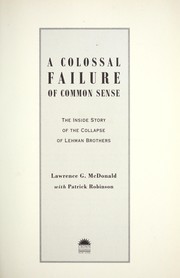
Lawrence G. McDonald, Patrick Robinson · 2009

Lehman Brothers' fall seen from its trading floor, and the warnings it ignored.

Oonagh McDonald · 2015

Focused on accounting and Repo 105.

Laurence M. Ball · 2018

Evidence that the Fed could legally have saved Lehman Brothers in 2008.
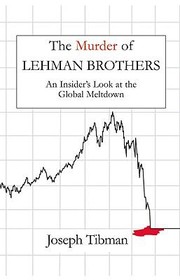
Joseph Tibman · 2009

An insider's account of the forces that led to Lehman's collapse and what followed.
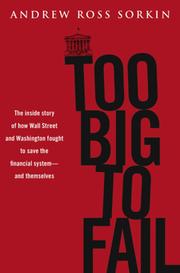
Andrew Ross Sorkin · 2009

Inside the meetings of bankers and regulators during the 2008 financial crisis.

Where it sits in the reference 2

Companies
Financial panics

Topics

Company HistoriesFinance and Markets